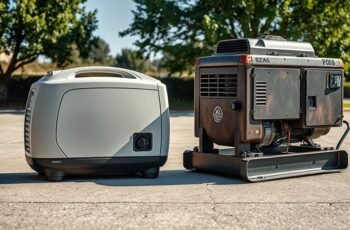
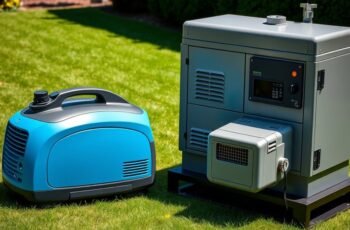
When evaluating portable power solutions, understanding the fundamental differences between inverter generators and battery power stations is essential. Each offers distinct technical advantages and limitations that impact performance, efficiency, and suitability for specific environments. Our analysis aims to clarify these distinctions, enabling informed decisions based on detailed assessments of use cases and operational characteristics. To optimize your power management strategy, it’s vital to take into account how these devices align with your specific needs and expectations.
Key Takeaways
- Inverter generators provide higher power output suitable for demanding appliances, while battery stations excel in silent, portable, and sensitive electronics use.
- Generators run on fuel, offering longer runtime and scalability; battery stations rely on internal batteries, ideal for quiet, indoor applications.
- Inverter generators are better for outdoor, remote, and camping scenarios; battery stations are optimal for indoor, noise-sensitive environments.
- Generators produce more noise and require fuel management; battery stations operate silently, with capacity and recharge time as limitations.
- Use inverter generators for high-demand, outdoor use; choose battery stations for quiet, short-term, or renewable energy applications.
How Do Inverter Generators Work and What Are Their Advantages?
While traditional generators produce a steady flow of power, inverter generators utilize advanced electronics to modify and refine that output. They convert AC power into DC, then invert it back to clean, stable AC, resulting in highly consistent power. This process enhances fuel efficiency by adjusting engine speed to match the load demand, reducing fuel consumption during lighter use. Additionally, inverter generators are designed to operate at lower RPMs, which considerably lowers noise levels, making them suitable for quiet environments like camping or residential areas. Their precise power output minimizes voltage fluctuations, protecting sensitive electronic devices. Overall, inverter generators offer a combination of optimized fuel consumption and reduced noise, enabling more efficient and discreet operation compared to traditional models.
What Are Battery Power Stations and How Do They Function?
What exactly are battery power stations, and how do they operate? These devices store electrical energy, typically from renewable sources like solar or wind, allowing users to achieve grid independence and reliable power during outages. They consist of high-capacity batteries, power management systems, and inverters to convert stored DC into usable AC power.
Key aspects include:
- Energy Storage: They accumulate energy during peak production, enabling continuous power supply even when renewable sources are inconsistent.
- Power Conversion: Inverters efficiently transform DC from batteries into AC, supporting various devices.
- System Integration: They can be integrated with renewable energy setups, optimizing for sustainability and independence from the grid.
This technical synergy ensures stable, portable power in diverse applications.
Comparing Inverter Generators and Battery Power Stations: Power Output and Run Time
When comparing inverter generators and battery power stations, we analyze their power output capabilities and run times to determine suitability for various applications. We assess how each device balances runtime durability, efficiency, and overall performance under different load conditions. This comparison allows us to identify which option offers best power delivery and endurance for specific energy needs.
Power Output Capabilities
How do inverter generators and battery power stations compare regarding power output and run time? Inverter generators typically provide higher continuous wattage, making them suitable for demanding appliances, while battery stations excel in steady, clean power for sensitive electronics. When evaluating fuel efficiency, inverter generators convert fuel into power more effectively but generate more noise levels, which can be a consideration in quiet environments. Battery power stations, on the other hand, depend on stored energy, offering silent operation but limited run times based on capacity.
- Inverter generators deliver higher peak power, ideal for heavy-duty use but with increased noise levels.
- Battery power stations prioritize silent, stable output but face constraints in sustained power duration.
- Both systems’ power output capabilities influence their suitability for different applications and operational efficiency.
Runtime Durability
Have you ever considered how long inverter generators versus battery power stations can sustain operation under typical use? In regarding of runtime durability, inverter generators generally offer longer operation times due to their fuel efficiency, especially during extended use. However, their continuous runtime is limited by fuel capacity, often requiring refueling after several hours. Battery power stations, on the other hand, depend on their internal battery capacity, which can provide hours of power but is constrained by battery size and charge cycles. Noise levels also influence runtime practicality; inverter generators tend to be noisier, which can affect prolonged use in quiet environments. Overall, battery stations excel in quietness and quick rechargeability, but inverter generators provide a more sustained power output for longer durations, albeit with trade-offs in noise and fuel consumption.
Efficiency and Performance
In evaluating efficiency and performance, it’s important to compare how inverter generators and battery power stations deliver power output and sustain runtime under various loads. Inverter generators typically produce consistent power, making them suitable for high-demand applications, while battery power stations excel in steady, moderate loads with silent operation.
- Power output: Inverter generators can handle larger loads, especially with solar integration, but often generate more noise levels. Battery stations offer cleaner, quieter energy, ideal for sensitive electronics.
- Run time: Generators depend on fuel, with runtime fluctuating based on load, whereas battery stations provide predictable, often longer, runtimes in moderate use.
- Efficiency: Battery systems convert stored energy with minimal loss, while inverter generators may have energy losses due to mechanical components.
Which Device Is Better for Different Use Cases and Environments?
Choosing between an inverter generator and a battery power station depends heavily on the specific use case and environment. For outdoor activities or remote locations, inverter generators excel due to their scalability, fuel independence, and compatibility with renewable energy sources like solar. Conversely, battery power stations are ideal for indoor use, silent operation, and environments requiring minimal noise levels. They’re also better suited for quick, portable power needs, especially where noise restrictions exist. The table below summarizes key considerations:
| Use Case | Device Preference |
|---|---|
| Remote camping, RVs | Inverter generator (renewable energy) |
| Indoor events, offices | Battery power station (quiet, clean) |
| Emergency backup | Both, depending on power needs |
This analysis helps identify the most suitable device based on environmental constraints and energy sources.
Pros and Cons of Inverter Generators You Should Know
Inverter generators offer high-quality, stable power, making them reliable for sensitive electronics, though their performance can vary under heavy loads. Their compact design enhances portability and convenience, but this often limits fuel capacity and runtime. Understanding these trade-offs is essential for selecting the right power solution for specific applications.
Power Quality and Reliability
While inverter generators are often praised for their portability and efficiency, their power quality and reliability can vary considerably depending on design and usage conditions. Voltage stability is essential for sensitive electronics, and some models may experience power fluctuations under heavy loads or rapid demand changes. These fluctuations can compromise device safety and performance.
- Voltage stability: High-quality inverter generators maintain consistent voltage output, ensuring smooth operation for sensitive electronics.
- Power fluctuations: Cheaper models may exhibit sudden power drops or surges, impacting reliability.
- Engine stability: Variations in engine speed can lead to inconsistent power delivery, especially during prolonged use or under variable loads.
Understanding these factors helps determine whether an inverter generator meets your reliability expectations for critical applications.
Portability and Convenience
Portability and convenience are among the primary advantages of inverter generators, making them attractive for users who need flexible power solutions. Their compact design and lightweight construction facilitate easy transportation, ideal for camping, outdoor events, or emergency backup. Fuel efficiency is a significant benefit, as inverter generators typically adjust engine speed based on load, reducing fuel consumption and extending operational time. Additionally, their low noise levels—sometimes as quiet as a normal conversation—enhance usability in sensitive environments like campsites or residential areas. However, this convenience can come with trade-offs, such as limited power output compared to larger generators. Overall, inverter generators excel in scenarios demanding mobility and quiet operation, where fuel efficiency and minimal noise are critical factors.
Pros and Cons of Battery Power Stations You Should Know
Battery power stations offer a compelling alternative to traditional power sources due to their inherent efficiency and ease of use, but they also present specific limitations that warrant careful consideration. Their benefits include silent operation, which drastically reduces noise levels—a vital factor for sensitive environments. Additionally, solar integration enhances their sustainability and off-grid independence, making them ideal for renewable energy setups. However, they face constraints such as limited capacity and longer recharge times, especially after extensive use.
Battery power stations are efficient, silent, and eco-friendly but limited by capacity and recharge times.
- Limited capacity can restrict prolonged power needs, requiring multiple units or supplemental sources.
- Recharge times may affect continuous usage, especially in cloudy conditions.
- Solar integration offers eco-friendly benefits but depends on sunlight availability, impacting reliability.
How to Choose Between an Inverter Generator and a Battery Power Station
Choosing between an inverter generator and a battery power station depends on a thorough assessment of your specific power needs, operational environment, and long-term goals. We evaluate energy storage capacity to determine if portable, large-scale power is necessary or if quick, short-term use suffices. Fuel efficiency is essential when considering inverter generators, especially for extended use, as they rely on fuel consumption and emissions. Battery power stations excel in environments requiring silent operation, low maintenance, and minimal fuel dependence, making them ideal for regular, predictable use. Additionally, the choice hinges on operational constraints: inverter generators are better for high power outputs and remote locations, while battery stations provide cleaner, more sustainable energy solutions for indoor or sensitive settings.
Best Practices for Using Portable Power Devices Safely and Efficiently
To maximize safety and efficiency when operating portable power devices, we must adhere to established best practices that minimize risks and optimize performance. Proper charging safety protocols are essential; always use manufacturer-approved chargers, avoid overcharging, and operate in well-ventilated areas to prevent overheating. When storing devices, follow storage tips such as keeping batteries in a cool, dry environment, avoiding exposure to extreme temperatures, and disconnecting batteries during prolonged inactivity to preserve capacity and lifespan. Additionally, regularly inspect power units for damage or corrosion.
Follow proper charging, storage, and maintenance practices to ensure safety and extend portable power device lifespan.
- Ensure proper charging safety by monitoring charging cycles and avoiding incompatible chargers.
- Implement effective storage tips to prevent battery degradation.
- Follow safety guidelines for operational ventilation and maintenance to optimize device lifespan and performance.
Frequently Asked Questions
What Is the Typical Lifespan of an Inverter Generator Versus a Battery Power Station?
Inverter generators typically last 1,500 to 3,000 hours with high fuel efficiency and moderate noise levels, while battery power stations often endure 2 to 10 years, emphasizing longevity and quiet operation over fuel efficiency.
How Environmentally Friendly Are Inverter Generators Compared to Battery Power Stations?
We find battery power stations more environmentally friendly than inverter generators, as they produce zero fuel emissions and considerably reduce noise pollution. In contrast, inverter generators emit pollutants and generate more noise, impacting ecological and community health.
Can Inverter Generators and Battery Power Stations Be Used Together?
Yes, inverter generators and battery power stations can work together in hybrid power solutions, forming combined energy systems that optimize efficiency and reliability, seamlessly integrating renewable and traditional power sources for versatile, resilient energy management in diverse applications.
What Maintenance Is Required for Inverter Generators and Battery Power Stations?
We perform routine checks on fuel efficiency, inspect for leaks, and clean components regularly for inverter generators, while monitoring battery health and ensuring proper storage for power stations; both prioritize low noise levels and efficient operation through scheduled maintenance.
Are There Any Safety Concerns Specific to Inverter Generators or Battery Power Stations?
They say “safety first,” and we agree. Inverter generators pose risks with fuel leaks and higher noise levels, while battery stations have electrical shock hazards; both demand proper handling to guarantee safety and ideal fuel efficiency.
Conclusion
In weighing inverter generators against battery power stations, it’s clear that each has distinct strengths tailored to specific needs. As the old saying goes, “Choose your tools wisely,” because understanding their capabilities guarantees ideal performance. By analyzing power output, environment, and usage duration, we can make informed decisions. Ultimately, selecting the right device means balancing efficiency, sustainability, and practicality—empowering us to meet our energy demands intelligently and responsibly.