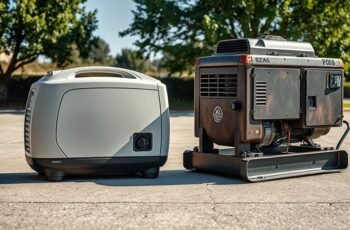
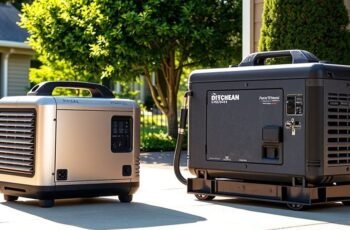
When evaluating power backup options for outages, we recognize that inverter generators and grid systems serve distinct roles, each with specific technical advantages and limitations. Understanding how these solutions operate, their installation requirements, and long-term performance is essential for making an informed decision. As we analyze their features side by side, it becomes clear that selecting the most appropriate backup depends on your unique needs—yet, the right choice isn’t always immediately obvious.
Key Takeaways
- Inverter generators offer portable, immediate power for sensitive electronics, ideal for short-term emergencies or off-grid use.
- Grid backup systems provide stable, long-term energy supply with automatic switching during outages, suitable for permanent setups.
- Inverter generators require refueling and maintenance, while grid systems depend on infrastructure but need less frequent upkeep.
- Grid backup solutions typically have lower environmental impact and noise levels compared to fuel-powered inverter generators.
- The best option depends on mobility needs, budget, environmental priorities, and whether the outage is short-term or long-term.
How Do Inverter Generators and Grid Power Backups Work?
Although inverter generators and grid power backups operate through different mechanisms, both aim to deliver reliable energy during outages or in remote locations. Inverter generators convert DC power to AC, providing clean, stable electricity suitable for sensitive devices. They often incorporate battery storage systems, enabling quick startup and power smoothing, which enhances their performance during intermittent power demands. Grid power backups, on the other hand, rely on the existing electrical grid, often integrated with renewable sources like solar panels. These systems utilize battery storage to store excess renewable energy, ensuring a continuous supply during outages. This integration allows for more sustainable energy management, reducing reliance on fossil fuels. Both options leverage battery storage, but their core operational differences influence their suitability for different applications and energy resilience strategies.
Comparing Installation and Setup Processes for Both Options
Installing and setting up inverter generators typically involves assembling the unit, connecting fuel sources, and configuring control panels, often on a portable basis that requires minimal electrical expertise. The installation complexity remains relatively low, emphasizing ease of setup and mobility. In contrast, grid power backup options—such as standby generators—demand more extensive installation procedures, including electrical wiring, transfer switches, and integration with existing infrastructure, which increases overall installation difficulty. From an energy efficiency perspective, inverter generators are designed to adjust output based on load, optimizing fuel consumption and reducing waste during setup. Conversely, grid backup systems are generally less flexible in energy efficiency, as they operate at full capacity once installed. Overall, inverter generators offer a streamlined, less complex installation process, while grid options involve more thorough preparation.
Cost Breakdown: Which Solution Is More Affordable Long-Term?
When evaluating long-term affordability, we consider initial purchase costs alongside ongoing maintenance and operational expenses. Inverter generators typically require a higher upfront investment but may incur lower maintenance costs over time, while grid backup solutions often involve lower initial expenses but potential higher costs related to infrastructure and energy consumption. Analyzing these financial factors helps determine which option offers better value across their respective lifespans.
Initial Purchase Expenses
Initial purchase expenses for inverter generators and grid power backup systems vary considerably, impacting long-term affordability. Inverter generators typically require a higher upfront investment due to advanced technology, including battery efficiency components for seamless power transfer, which adds to initial costs. Conversely, grid backup systems often involve substantial initial expenditures for infrastructure setup, such as inverters and transfer switches. Fuel consumption influences cost differences: inverter generators, though more efficient in fuel use, still demand ongoing fuel expenses, whereas grid systems avoid fuel costs entirely but require significant installation investments. When evaluating initial costs, it’s essential to contemplate these factors, as the higher initial expense of inverter generators may be offset by their efficiency and lower operational costs over time.
Maintenance and Running Costs
Maintenance and operating costs considerably influence the long-term affordability of inverter generators versus grid power backup systems. Inverter generators typically require regular maintenance, including spark plug replacements, oil changes, and filter cleaning, which can accumulate over time. Conversely, grid backup systems with integrated battery storage often involve higher initial costs but lower ongoing expenses, especially when combined with renewable integration. Batteries need periodic replacement, impacting long-term costs, but reduce fuel consumption and emissions. Grid systems also benefit from fewer moving parts, minimizing maintenance. While renewable integration can offset operational costs by harnessing sustainable energy, it may require additional investment upfront. Overall, inverter generators tend to have predictable, lower maintenance costs, but energy storage solutions with renewable integration can offer cost savings and environmental benefits over extended periods.
Reliability and Performance During Power Outages
Inverter generators generally demonstrate more consistent performance during power outages due to their advanced voltage regulation and stable power output capabilities. They adapt quickly to varying loads, maintaining steady voltage and frequency, which guarantees critical devices operate reliably. Their power source, often fuel-based, offers continuous, clean power, minimizing fluctuations. Battery capacity in inverter systems can supplement short-term power needs, but depends on the system’s design. Performance relies on:
- Precise voltage regulation for sensitive electronics
- Rapid response to load changes
- Lower risk of power surges
- Consistent frequency stability
- Reliability under fluctuating demands
While grid power backup is generally more stable long-term, inverter generators excel in delivering dependable, quality power during outages, especially when the power source’s capacity aligns with load requirements for critical systems.
Portability and Flexibility: Which Is Better for Different Situations?
We consider how ease of transportation and adaptability to specific needs influence the suitability of inverter generators versus grid backup options. Portable generators typically excel in mobility, making them ideal for off-grid or emergency scenarios, while grid solutions offer stability but less flexibility. Analyzing these factors helps determine which backup method best aligns with different situational requirements.
Ease of Transportation
When evaluating backup power options, the question of portability and flexibility often determines suitability for specific situations. In terms of ease of transportation, inverter generators offer notable portable convenience due to their compact, lightweight design, facilitating quick deployment across varied locations. Conversely, grid power backups involve minimal transportation considerations, as they require extensive installation infrastructure, increasing installation complexity and limiting mobility.
Key factors include:
- Size and weight of the unit
- Ease of carrying or wheeling
- Fuel capacity and refueling logistics
- Infrastructure requirements
- Suitability for frequent relocation
Inverter generators are ideal for scenarios demanding mobility, while grid backups excel in stationary, permanent setups. Understanding these distinctions helps select the most effective solution based on transportation needs and operational flexibility.
Adaptability to Needs
Evaluating backup power options requires considering how well each solution can adapt to varying operational demands and environments. In terms of adaptability, inverter generators excel due to their portability and flexible power output, enhancing user convenience across diverse situations. Their energy efficiency allows for optimized fuel consumption, making them suitable for short-term or remote applications. Grid power backup, while less portable, offers continuous, stable energy supply with minimal user intervention, ideal for long-term needs. Its fixed infrastructure provides less flexibility but ensures reliable energy delivery during outages. Ultimately, inverter generators are better suited for scenarios requiring mobility and quick setup, whereas grid backup offers consistent power with less user management in stationary environments. The choice hinges on specific needs for energy efficiency and operational flexibility.
Maintenance Needs and Durability of Inverter Generators vs Grid Backups
Inverter generators generally require more frequent maintenance due to their complex electronic components and precision-engineered parts, which can be sensitive to dirt, moisture, and wear over time. Their advanced electronics demand regular checks to sustain optimal performance, especially in fuel efficiency and noise reduction. In contrast, grid backups involve minimal ongoing upkeep, primarily limited to system inspections and component replacements. Key factors include:
Inverter generators need more maintenance due to sensitive electronics and precision parts, unlike low-maintenance grid backup systems.
- Component sensitivity to environmental conditions
- Higher susceptibility to wear and tear
- Need for regular cleaning to prevent dirt buildup
- Electronic parts that may require firmware updates
- Overall durability influenced by usage patterns and maintenance routine
While inverter generators excel in providing clean, stable power, their maintenance needs can impact long-term durability compared to the more robust, low-maintenance nature of grid backup systems.
Environmental Impact and Noise Levels of Each Backup Option
While inverter generators are often praised for their clean power output, their environmental impact is influenced by fuel consumption and emissions, which tend to be higher than those of grid backup systems during extended use. They rely on fossil fuels, increasing their carbon footprint, especially compared to grid power sourced increasingly from renewable energy sources. Consequently, inverter generators contribute more to greenhouse gas emissions per unit of energy produced. In contrast, grid systems, especially as renewable energy integration expands, generally have a lower environmental impact. Regarding noise levels, inverter generators typically operate more quietly than traditional generators, but their noise emissions still surpass the near-silent operation of grid power. Overall, grid backup options tend to be more sustainable and less disruptive environmentally and acoustically.
Which Backup Solution Is Easier to Use for Non-Technical Users?
When choosing a backup power solution for non-technical users, ease of operation becomes a critical factor. Inverter generators generally require minimal setup, with straightforward start-up procedures and simple refueling. Grid power backup options, especially those involving battery storage with solar integration, often feature automated systems that activate seamlessly during outages. These solutions typically include user-friendly interfaces and remote monitoring, reducing the need for technical knowledge.
Key factors influencing ease of use include:
- Automated switching mechanisms
- Intuitive control interfaces
- Minimal maintenance requirements
- Integration with smart home systems
- Clear, concise user instructions
Battery storage with solar integration simplifies power management, offering plug-and-play functionality, whereas inverter generators emphasize manual operation. Overall, battery-based systems tend to be more accessible for non-technical users.
Making the Right Choice: Factors to Consider Based on Your Needs
Choosing the right backup power solution depends heavily on evaluating your specific needs and priorities. Key factors include energy efficiency and user convenience, which directly impact long-term costs and ease of operation. Inverter generators excel in energy efficiency, providing cleaner power with less fuel consumption, making them suitable for sensitive electronics. Grid power backups, such as automatic transfer switches, offer superior user convenience through seamless switching during outages, reducing manual intervention. Consider your load requirements—if you need reliable power for critical devices, an inverter generator’s precise output can be advantageous. Conversely, if minimizing maintenance and maximizing ease of use are priorities, grid backup options may be preferable. Ultimately, a detailed assessment of your energy demands and user experience expectations will guide you toward the most effective solution.
Frequently Asked Questions
How Long Can Inverter Generators Run on a Single Tank of Fuel?
Inverter generators typically run for 6 to 12 hours on a single tank, depending on fuel efficiency and load. Their runtime capacity varies with power demands, making them a reliable, fuel-efficient backup during outages for essential power needs.
What Safety Features Are Included in Modern Inverter Generators?
Modern inverter generators include safety features like automatic shut-off for overloads, low-oil alerts, and integrated circuit protection, all enhancing fuel efficiency and noise reduction. These technical safeguards guarantee reliable, quiet operation during power outages.
Can Grid Power Backups Support High-Energy Appliances Simultaneously?
Grid power backups can support high-energy appliances simultaneously, especially when integrated with renewable sources and advanced energy storage systems, ensuring stable, efficient power delivery during outages. This combination enhances capacity and reliability for demanding loads.
How Do Weather Conditions Affect the Performance of Inverter Generators?
Weather conditions profoundly influence inverter generators’ performance, with climate impact causing potential fluctuations in power output and reliability. Their weather resilience varies, so understanding local weather patterns helps optimize backup strategies during outages and extreme conditions.
Are There Any Tax Incentives or Rebates for Installing Backup Power Systems?
We discover that tax credits and rebate programs substantially support solar and backup power system investments, providing financial incentives that foster future-focused, functional, and financially feasible energy solutions, ultimately boosting basic backup power system affordability and accessibility.
Conclusion
Ultimately, choosing between inverter generators and grid backup options is like selecting the right tool for a diverse landscape. Inverter generators act as nimble explorers, ready to adapt to sudden terrain changes, while grid backups serve as the sturdy foundation, supporting long-term stability. By analyzing your environment and needs, you can craft a resilient power strategy—one that illuminates your path through outages with precision and confidence.