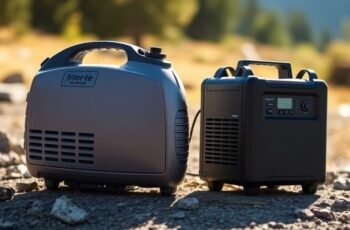
Inverter generators excel in providing clean, stable power, while conventional generators offer higher power capacities at lower initial costs. Both serve specific needs, yet choosing between them involves evaluating efficiency, noise levels, and long-term value. We aim to clarify these distinctions, but understanding which type truly aligns with your home backup requirements requires a closer look at their operational differences and practical implications.
Key Takeaways
- Inverter generators produce cleaner, stable power suitable for sensitive electronics, making them ideal for home backup needs.
- They are more fuel-efficient and eco-friendly, reducing operational costs and emissions over time.
- Inverter models operate quieter and are more portable, beneficial for noise-sensitive environments and easy transport.
- Conventional generators offer higher power output at a lower initial cost, fitting larger load requirements.
- The choice depends on household power needs, budget, and preference for quiet, efficient, and portable backup solutions.
How Do Inverter and Conventional Generators Work?
While both inverter and conventional generators convert mechanical energy into electrical energy, they do so through distinct processes that impact their performance and output quality. Conventional generators operate via a simple, linear process: a motor turns a rotor connected to an alternator, producing AC power at a constant speed, which affects fuel efficiency and power stability. In contrast, inverter generators utilize advanced electronics to produce AC power, initially converting it to DC and then inverting it back to clean, stable AC. This process allows inverter models to adjust engine speed based on load, enhancing fuel efficiency. Additionally, inverter generators feature compact, lightweight designs with improved portability features, making them ideal for mobile applications. These differences directly influence operational efficiency and ease of transport in various use cases.
What Are the Key Advantages and Disadvantages of Each Generator Type?
Conventional and inverter generators each offer distinct advantages and disadvantages that influence their suitability for different applications. Conventional generators typically provide higher power output and are more cost-effective upfront, but often have lower fuel efficiency, leading to increased operational costs. They produce a stable sine wave, but their engine speed fluctuates with load, increasing noise and environmental impact. In contrast, inverter generators excel in fuel efficiency due to advanced electronic control, reducing emissions and environmental impact. They deliver cleaner power with consistent output, making them ideal for sensitive electronics. However, inverter models usually come at a higher initial cost and have lower maximum power capacity. Overall, choosing between them depends on balancing fuel efficiency, environmental considerations, power needs, and budget constraints.
Which Generator Is Better for Different Home Backup Power Needs?
When choosing a generator for home backup, we must consider the power requirements of essential appliances and whether the generator can meet those needs effectively. Noise level preferences also influence the choice, as inverter generators typically operate more quietly than conventional ones. Balancing these factors guarantees peak performance aligned with specific home backup scenarios.
Power Requirements Compatibility
Determining which generator type— inverter or conventional—best suits specific home backup power needs hinges on understanding their respective power output capabilities and how they match your household’s consumption profile. Inverter generators typically provide cleaner, more stable power with variable output, making them suitable for sensitive electronics and lower power demands. Conventional generators offer higher maximum wattage, ideal for larger loads but often lack the precision required for delicate devices. When evaluating compatibility, consider fuel efficiency, as inverter models often consume less fuel at partial loads, reducing operational costs. Additionally, their lower emissions translate to a reduced environmental impact, aligning with eco-conscious priorities. Proper assessment of your home’s peak and continuous power requirements guarantees the selected generator meets your needs efficiently and sustainably.
Noise Level Preferences
Given the importance of minimizing noise disturbances during power outages, evaluating each generator type’s noise level is crucial for selecting the most suitable option for your home backup needs. Inverter generators typically feature superior sound insulation and noise mitigation technologies, resulting in markedly lower decibel levels—often around 50-60 dB—comparable to normal conversation. Conversely, conventional generators generally produce higher noise levels, frequently exceeding 70 dB, which can be disruptive in residential settings. When considering noise level preferences, the quieter operation of inverter models makes them ideal for environments requiring minimal disturbance, such as nighttime use or noise-sensitive areas. Precise sound insulation and noise mitigation features are critical factors that influence the overall acoustic profile, directly affecting suitability based on your home’s noise mitigation preferences.
How Do Costs and Maintenance Compare Between Inverter and Conventional Generators?
When comparing costs and maintenance, we examine initial purchase prices, routine service requirements, and long-term operational expenses. Inverter generators generally have higher upfront costs but lower maintenance needs, while conventional models often require more frequent upkeep. Analyzing these factors allows for a precise assessment of total lifecycle costs and operational efficiency.
Upfront Purchase Expenses
Initially, inverter generators generally incur higher upfront costs compared to conventional models due to their advanced electronic components and compact design. A detailed pricing analysis reveals that inverter units often command a premium, reflecting their technological sophistication and efficiency. Brand reputation considerably influences costs, with well-established brands offering higher-priced models that assure reliability and superior performance. Although the initial investment is greater, these generators typically provide enhanced fuel efficiency and quieter operation, which can justify the expense over time. In contrast, conventional generators usually have lower purchase prices but may lack the refined engineering and durability associated with reputable brands. Ultimately, selecting between the two depends on balancing initial cost against long-term value and trust in brand reputation.
Routine Maintenance Needs
While the higher upfront investment in inverter generators reflects their advanced technology, evaluating ongoing maintenance costs is equally important for a complete comparison. Inverter generators typically require less routine maintenance due to their simpler, more efficient design, which minimizes wear and tear. Their superior fuel efficiency reduces fuel consumption and associated costs over time, translating to lower operational expenses. Additionally, inverter generators often produce cleaner emissions, resulting in a reduced environmental impact. Conventional generators, with their more complex engines and less efficient fuel use, demand more frequent maintenance, including spark plug replacements and carburetor cleaning. Overall, inverter generators not only offer potential savings in maintenance and fuel but also contribute positively to environmental considerations, making them a more sustainable option for home backup power.
Long-Term Operational Costs
Over the long term, inverter generators typically incur lower total operational costs compared to conventional models due to their greater fuel efficiency and reduced maintenance requirements. Their advanced inverter technology allows for precise engine control, optimizing fuel consumption and decreasing overall fuel costs. This enhanced fuel efficiency directly reduces the frequency and volume of fuel purchases, translating into significant savings over time. Additionally, inverter generators generate cleaner power, leading to less strain on engine components and consequently lowering maintenance and repair expenses. From an environmental impact perspective, the decreased fuel consumption results in reduced emissions, aligning with eco-conscious priorities. Overall, these factors contribute to a more cost-effective and environmentally responsible choice, making inverter generators advantageous for long-term home backup power solutions.
What Factors Should You Consider When Choosing a Backup Generator?
When selecting a backup generator, it’s essential to evaluate several critical factors that influence performance, reliability, and cost-effectiveness. Key considerations include fuel efficiency, environmental impact, power output, and noise levels. These factors determine operational costs, environmental compliance, and suitability for your home. Here’s a quick comparison:
| Factor | Inverter Generator | Conventional Generator |
|---|---|---|
| Fuel Efficiency | Higher, optimized for variable loads | Lower, consumes more fuel |
| Environmental Impact | Lower emissions, eco-friendly | Higher emissions, less eco-conscious |
| Power Output | Stable, suitable for sensitive devices | Less stable, heavier load handling |
| Noise Levels | Quieter operation | Louder, more disruptive |
Prioritize these factors based on your specific needs for ideal backup power.
Is an Inverter or Conventional Generator the Right Choice for Your Home?
Determining whether an inverter or conventional generator is the best fit for your home depends on your specific power needs, budget, and environmental priorities. When evaluating suitability, consider these factors:
- Fuel efficiency: Inverter generators typically offer higher fuel efficiency due to variable engine speeds, reducing operational costs over time.
- Portability concerns: Inverter models are generally more compact and lightweight, making them easier to transport and store; conventional generators tend to be bulkier and heavier.
- Power stability: Inverters produce cleaner, stable power suitable for sensitive electronics, whereas conventional generators may require additional filtering.
Ultimately, if fuel efficiency and portability are priorities, an inverter may be the better choice. For larger power demands and lower initial costs, a conventional generator could be more appropriate.
Frequently Asked Questions
How Long Can Each Generator Run on a Full Tank?
On a full tank, inverter generators typically run 8-12 hours, and conventional generators last 10-15 hours, depending on fuel efficiency and maintenance needs. We analyze these factors to determine the most efficient backup power solutions for your home.
Are Inverter Generators Quieter Than Conventional Ones?
We find inverter generators are particularly quieter than conventional ones, with lower noise levels due to their advanced inverter technology, which also enhances fuel efficiency. This makes them more suitable for environments requiring minimal sound disturbance.
Can Inverter Generators Power Large Appliances Simultaneously?
Inverter generators can power large appliances simultaneously, thanks to their stable power output and fuel efficiency; they also maintain low noise levels, making them ideal for handling high-load demands in a quieter, more efficient manner.
What Safety Features Are Common in Inverter Generators?
Inverter generators feature safety shutoffs, overload protection, and low oil alerts, contrasting with traditional models. Combined with fuel efficiency and noise reduction, these features enhance operational safety, making them ideal for sensitive environments and prolonged use.
How Do Weather Conditions Affect Generator Performance?
Weather conditions considerably impact generator performance; inverter generators offer superior weather resilience, making them ideal for storm preparedness. They operate efficiently in diverse conditions, ensuring reliable power supply during adverse weather, unlike conventional models vulnerable to environmental factors.
Conclusion
Ultimately, choosing between an inverter and conventional generator hinges on our specific power needs and priorities. Inverter generators offer unmatched stability, efficiency, and quiet operation, making them ideal for sensitive electronics and residential use. Conventional models, while more powerful and budget-friendly initially, fall short in noise and efficiency. For most homeowners seeking reliable, clean power, investing in an inverter generator is akin to harnessing a technological marvel—powerful, precise, and remarkably efficient.