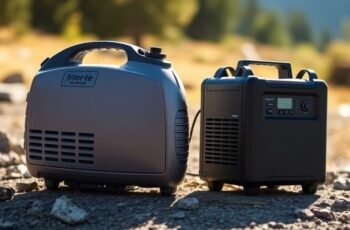
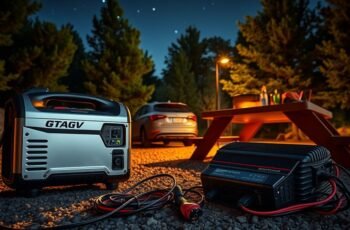
When selecting power sources for camping and off-grid trips, understanding the differences between inverter generators and solar generators is vital. Each offers distinct advantages and limitations that can greatly impact your experience. To determine which best aligns with your needs, it’s essential to evaluate factors such as power output, environmental impact, cost, and portability. Exploring these aspects thoroughly will help you make an informed decision tailored to your specific adventure requirements.
Key Takeaways
- Inverter generators provide reliable, quick power with fuel flexibility, ideal for extended camping or off-grid use.
- Solar generators operate silently and sustainably, perfect for eco-conscious campers in noise-sensitive areas.
- Inverter generators offer portability and consistent output, while solar units depend on sunlight and may require multiple panels for efficiency.
- Solar generators have higher upfront costs but lower ongoing expenses and minimal maintenance over time.
- Choose inverter generators for versatile, continuous power; opt for solar generators for quiet, eco-friendly off-grid adventures.
Understanding the Basics of Inverter and Solar Generators
While both inverter and solar generators serve as portable power sources, they operate on fundamentally different principles. Inverter generators convert fuel into electrical energy through internal combustion, producing AC power with high efficiency and stable output. Battery efficiency is vital here, as it determines how effectively the stored energy is used during operation. Charging methods are typically gasoline, propane, or dual-fuel, allowing quick refueling for extended use. Solar generators, however, rely on photovoltaic panels to convert sunlight into electrical energy stored in batteries, emphasizing renewable energy sources. Their charging methods include solar panel input and, in some cases, AC or DC wall outlets. Understanding these core differences helps us evaluate each generator’s suitability based on battery efficiency, charging flexibility, and intended application.
How Do Inverter Generators Work and What Are Their Advantages?
Inverter generators produce power by converting DC electricity to AC through electronic circuitry, resulting in cleaner and more stable output. Their advanced inverter technology allows for variable engine speeds, which improves fuel efficiency and reduces noise. These features collectively enhance performance and reliability in sensitive electronic applications.
How Inverter Generators Generate Power
Inverter generators produce power by converting direct current (DC) into alternating current (AC) through a process that involves sophisticated electronic components, such as inverters and microprocessors. This conversion process allows for cleaner, more stable electricity suitable for sensitive devices. Modern inverter generators leverage advanced battery technology to store energy efficiently, enhancing their overall fuel efficiency and enabling seamless power output even during fluctuating loads. The inverter’s ability to modulate engine speed based on demand minimizes fuel consumption, making these units highly economical for off-grid use. Precise control of the power output reduces noise and harmonic distortion, ensuring safer operation. Overall, this combination of innovative technology makes inverter generators a reliable, efficient, and clean power source for camping and remote applications.
Benefits of Inverter Technology
Have you ever wondered what makes inverter generators more efficient and reliable than traditional models? The key lies in their inverter design, which converts DC power into AC power with remarkable precision. This process allows for cleaner, stable electricity, reducing the risk of damaging sensitive devices. Additionally, inverter technology optimizes battery efficiency by adjusting engine speed to match power demand, rather than running at constant full speed. This dynamic operation minimizes fuel consumption and reduces emissions. The sophisticated inverter design guarantees consistent output quality, making these generators ideal for sensitive electronics. Overall, the benefits of inverter technology include improved fuel economy, quieter operation, and enhanced power stability, making them a superior choice for portable power needs during camping and off-grid trips.
What Makes Solar Generators a Sustainable Choice for Off-Grid Camping?
Solar generators utilize renewable energy sources, converting sunlight into electricity with minimal environmental impact. They produce zero emissions during operation, making them an eco-friendly option for off-grid camping. This combination of sustainability and clean energy benefits underscores their growing appeal in remote environments.
Renewable Energy Source
Because solar generators harness energy directly from the sun, they offer a truly renewable and sustainable power source ideal for off-grid camping. Their high battery capacity allows for efficient storage of solar energy, ensuring a reliable power supply during variable sunlight conditions. Unlike fossil fuel-based generators, solar units operate with exceptional fuel efficiency, converting sunlight directly into usable electricity without consuming fuel or emitting pollutants. This process minimizes ongoing costs and reduces environmental impact, making solar generators inherently sustainable. Their reliance on sunlight as a renewable resource eliminates the need for refueling and reduces dependency on finite fuel supplies. Consequently, solar generators provide a clean, efficient, and environmentally friendly power solution tailored for eco-conscious campers seeking off-grid independence.
Zero Emissions Benefits
Since zero emissions are central to sustainable off-grid power solutions, solar generators stand out by producing electricity without releasing pollutants. Their reliance on advanced battery technology and energy storage systems enables clean energy conversion without combustion emissions. This markedly reduces environmental impact during camping or remote trips. Properly designed solar generators incorporate high-capacity batteries, ensuring consistent power availability even when sunlight is limited. This combination of renewable energy and efficient energy storage makes them a sustainable choice for eco-conscious users.
| Feature | Benefit |
|---|---|
| Battery technology | High energy density, durable, recyclable |
| Energy storage | Stabilizes power supply during variable conditions |
| Zero emissions | No pollutants or greenhouse gases |
| Sustainability | Reduced environmental footprint over time |
Comparing Power Output and Runtime: Which Generator Meets Your Energy Needs?
When evaluating inverter and solar generators, gauging their power output and runtime is essential to determine which device aligns with your energy requirements. Power output depends on the continuous wattage and surge capacity, directly impacting the ability to run multiple devices simultaneously. Battery capacity greatly influences runtime, with larger capacities providing extended operation during off-grid use. Charging speed is also critical; inverter generators typically offer rapid refueling via fuel, while solar generators depend on sunlight, affecting recharge times and overall availability. To meet specific energy demands, consider both the maximum power output and how quickly each generator can replenish its stored energy. Precise assessment of these factors ensures you select a generator capable of sustaining your equipment over your planned duration.
Portability and Ease of Use: Which Generator Is Better for Camping Trips?
Choosing the right generator for camping trips hinges on portability and ease of use, as these factors directly influence convenience and practicality in outdoor settings. Inverter generators typically feature compact, lightweight designs with advanced portability features such as integrated handles and ergonomic frames, making them easy to transport and set up. Their battery efficiency ensures consistent power output with minimal fuel consumption, which enhances portability by reducing the need for frequent refueling. Solar generators, on the other hand, often benefit from lightweight, foldable panels and compact battery packs, which simplify carrying and storage. While solar units may require more initial setup, their battery efficiency allows for extended use without noise or fuel concerns. Overall, inverter generators excel in immediate portability, whereas solar generators emphasize ease of handling through modular, lightweight components.
Noise Levels and Environmental Impact: Which Option Is Quieter and Greener?
While both inverter and solar generators are designed to minimize environmental impact, their electric noise levels and ecological footprints differ markedly. Inverter generators operate with internal combustion engines, producing electric noise that can reach 60-70 decibels, which may disturb natural settings. Their environmental footprint includes emissions from fuel combustion and noise pollution, affecting local ecosystems. Conversely, solar generators produce virtually no electric noise during operation, relying on photovoltaic panels to convert sunlight into electricity, resulting in a minimal ecological footprint. Solar units contain no moving parts or emissions, making them inherently greener. Overall, solar generators are the quieter and more environmentally friendly option for off-grid applications, markedly reducing noise pollution and ecological impact during extended camping or outdoor trips.
Cost Considerations and Long-Term Savings for Inverter vs Solar Generators
Cost considerations play a pivotal role in selecting between inverter and solar generators, as initial investment and operational expenses differ considerably. A detailed cost analysis reveals that inverter generators typically require a lower upfront cost but incur higher fuel and maintenance expenses over time. Conversely, solar generators involve a substantial initial investment due to panel and battery costs but benefit from minimal ongoing operational expenses. When evaluating long-term savings, solar generators often prove more economical, especially in remote or off-grid scenarios where fuel costs and maintenance can accumulate rapidly. While inverter generators may seem more affordable initially, their operational costs can offset initial savings over extended use. Ultimately, understanding these cost dynamics enables informed decisions aligned with budget constraints and long-term energy needs.
Maintenance, Durability, and Reliability in Off-Grid Conditions
When evaluating inverter and solar generators for off-grid use, resistance to wear and tear is vital for long-term performance. We must consider how each system maintains power consistency and reliability under varying environmental conditions. Analyzing these factors helps determine which generator type offers superior durability and dependable operation.
Wear and Tear Resistance
Inverter generators are generally designed with fewer moving parts and advanced cooling systems, which enhance their resistance to wear and tear under demanding conditions. Their construction undergoes rigorous durability testing, ensuring high wear resistance in off-grid environments. This design minimizes mechanical failure risks and extends operational lifespan. To visualize, consider the following:
| Component | Wear Resistance Level | Durability Testing Status |
|---|---|---|
| Engine Assembly | High | Extensive |
| Cooling System | Moderate | Continuous |
| Electrical Components | High | Periodic |
This structured approach boosts reliability, making inverter generators well-suited for prolonged off-grid use, where resilience against wear determines overall performance and dependability.
Power Consistency and Reliability
Ensuring consistent power output and reliable operation in off-grid conditions requires robust design and maintenance strategies for both inverter and solar generators. Battery capacity directly influences power reliability, as larger capacities provide longer runtimes and buffer against fluctuations. Charging methods are critical; inverter generators depend on fuel-powered alternators, offering immediate power with minimal downtime, but require regular refueling and maintenance. Solar generators rely on photovoltaic panels, with charging efficiency affected by sunlight availability and panel condition. Proper maintenance of batteries, including monitoring charge cycles and avoiding deep discharges, is essential to sustain performance. Durability in harsh environments demands rugged construction and protective features. Ultimately, selecting a generator with appropriate battery capacity and reliable charging methods ensures sustained power consistency and operational dependability off-grid.
Which Generator Offers Better Flexibility for Different Camping Scenarios?
Choosing the right generator for camping depends heavily on the specific scenarios you encounter, as each type offers distinct advantages. Inverter generators excel in providing consistent power with low noise levels, making them ideal for delicate electronics and extended use in varied weather conditions. They are portable, lightweight, and compatible with essential camping gear, allowing flexibility across different environments. Solar generators, on the other hand, offer silent, emission-free operation, which is advantageous in remote locations or areas with strict noise regulations. Their reliance on sunlight makes weather conditions a critical factor, but they can be expanded with multiple panels for increased capacity. Overall, inverter generators tend to offer greater versatility across diverse camping scenarios due to their reliability and adaptability to changing weather and gear requirements.
Making the Right Choice: Factors to Consider When Choosing Your Off-Grid Power Source
Selecting the appropriate off-grid power source requires careful consideration of several key factors that influence performance, reliability, and suitability for your specific needs. Fuel efficiency is crucial, as it directly impacts operational cost and endurance during extended trips. A generator’s fuel consumption rate determines how long it can run without refueling, whereas solar options rely on renewable energy, minimizing ongoing costs. Additionally, brand reputation plays a significant role; established brands often provide more reliable, durable products with better customer support and warranty services. Evaluating these factors helps guarantee you choose a power source that balances efficiency, longevity, and trustworthiness. Ultimately, understanding your energy demands and researching reputable brands allows for an informed decision tailored to your off-grid lifestyle.
Frequently Asked Questions
How Long Do Inverter and Solar Generators Typically Last With Regular Use?
We find inverter generators last about 1,000-2,000 hours with regular use, influenced by battery capacity and motor wear, while solar generators can last 20+ years, thanks to minimal moving parts and high fuel efficiency.
Can Solar Generators Store Enough Energy for Multiple Days of Camping?
Solar generators can store energy for multiple days, depending on their battery capacity and power output. We find that larger capacity units with higher power output efficiently support extended camping trips, ensuring consistent power supply without recharging frequently.
Are Inverter Generators Safe to Run Inside Tents or Enclosed Spaces?
Inverter generators are safe indoors, thanks to their low noise levels and advanced circuitry, but we still advise caution. Always guarantee proper ventilation for indoor safety, as running them in enclosed spaces can risk carbon monoxide buildup.
Do Solar Generators Require Sunlight to Operate Effectively?
Solar generators don’t require direct sunlight to operate effectively; they rely on charging methods like grid power or portable panels. Their battery capacity determines runtime, but sunlight improves efficiency and recharge speed, making them versatile for off-grid use.
What Are the Best Maintenance Practices for Inverter and Solar Generators?
Like a well-oiled machine, regular maintenance extends battery lifespan and enhances fuel efficiency. We recommend cleaning terminals, checking for corrosion, and following manufacturer guidelines to keep inverter and solar generators operating at peak performance.
Conclusion
Ultimately, choosing between inverter and solar generators is like selecting the right gear for an expedition—each has its strengths tailored to specific terrains. Inverter generators deliver reliable, rapid power, much like a seasoned guide, while solar generators are the silent guardians of sustainability, akin to a steady stream. By aligning your energy demands, environmental values, and adventure style, you’ll harness the perfect power source to keep your off-grid journey running smoothly, no matter the landscape.