Jackery Portable Power Station Explorer Review (2026) — Lightweight Off-Grid Power
The Jackery Portable Power Station Explorer 300 is built for shoppers who want simple, portable backup power without dragging around a heavy box. This review contains affiliate links, which means we may earn a commission if you buy through them, at no extra cost to you. That said, we’re basing this review on the real product data provided, Amazon pricing, and customer feedback patterns rather than hype.
At $259, this Jackery unit targets campers, travelers, and emergency-prep buyers who care more about weight, durability, and charging flexibility than raw output. Amazon data shows the product is rated 4.5/5 from over 2,300 reviews, and availability is currently listed as only left in stock. Based on verified buyer feedback, many owners choose it for road trips, short outages, and charging personal electronics when wall power isn’t available.
If you want official product details, you can also check the Jackery manufacturer website and Jackery’s product lineup for current accessory compatibility. We’ll also reference alternatives such as the EGO POWER+ portable power station and the Honda Power Equipment EU3200i for context.

Quick Verdict: Is the Jackery Explorer Worth Buying in 2026?
Yes, for the right buyer. The Jackery Portable Power Station Explorer stands out because it keeps the basics strong: low weight, useful ports, and long-life battery chemistry. At 7.5 lbs, it’s easier to carry than many competing power stations in this size class, and the stated 292Wh capacity is enough for common travel and emergency electronics.
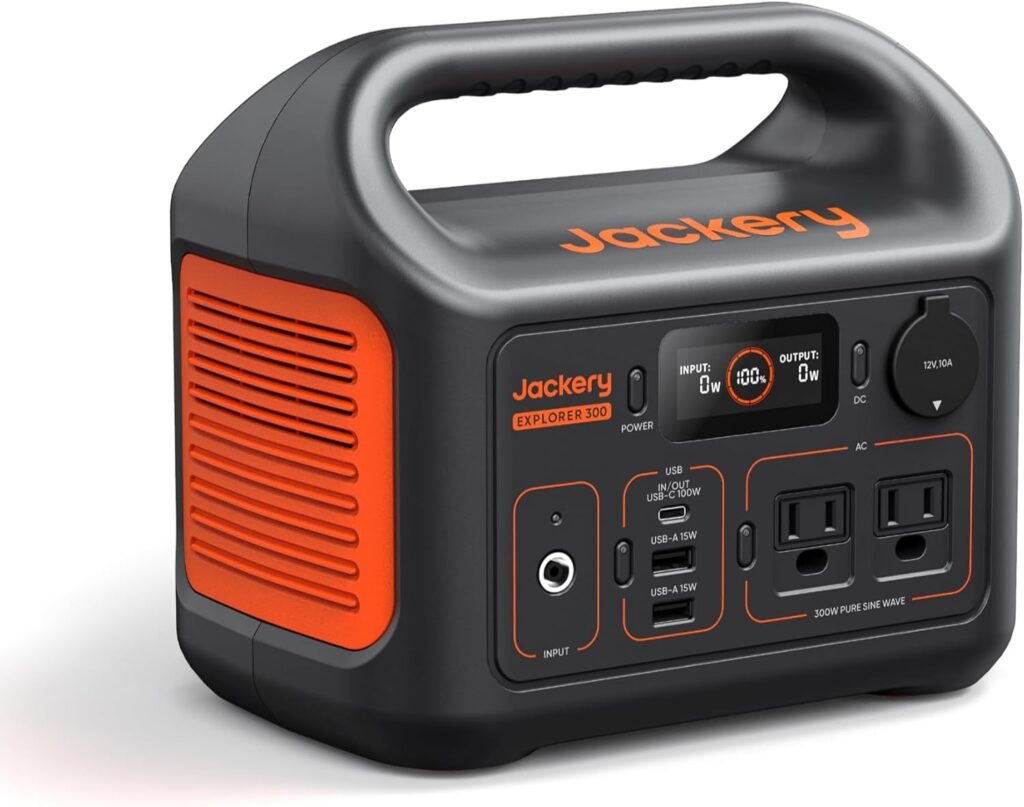
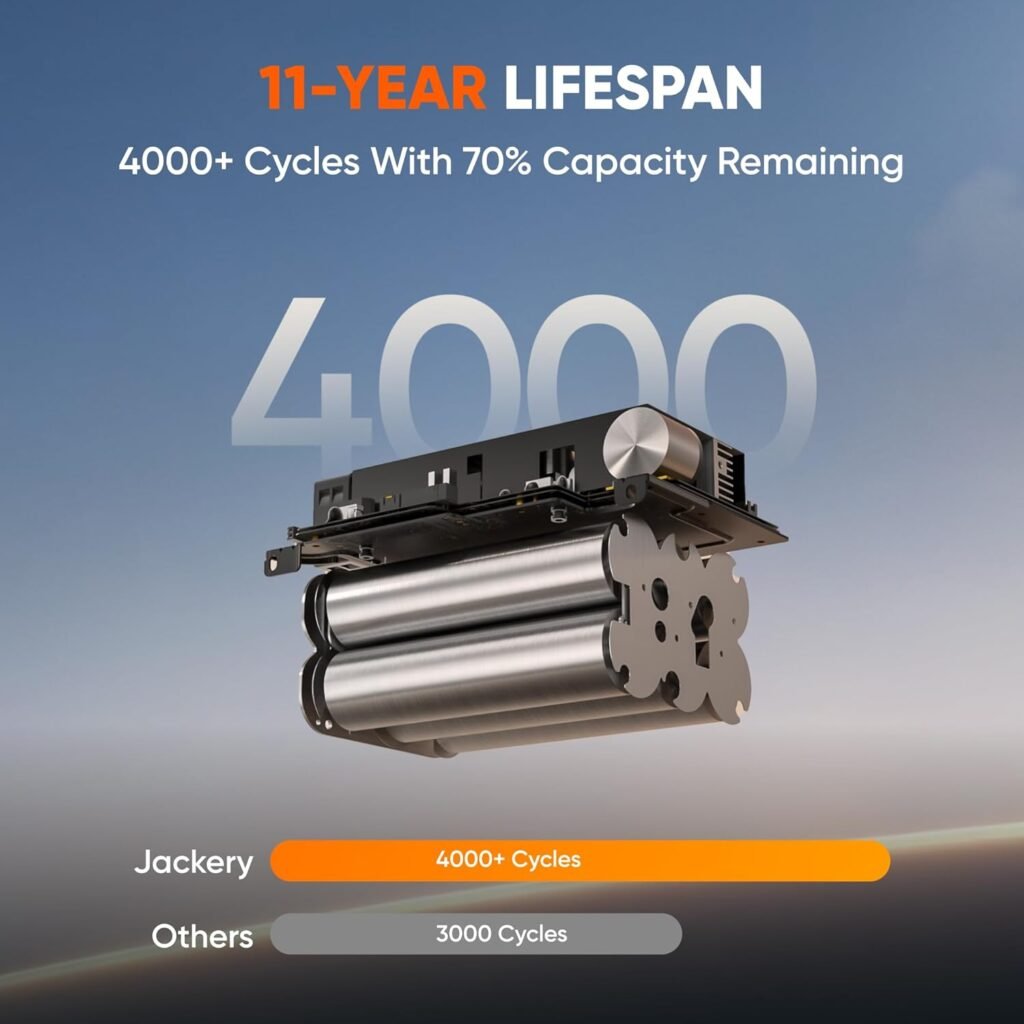
The best part is balance. You get 2 AC outlets, a 100W USB-C PD port, 2 USB-A ports, and a 120W car port, so it can support up to 6 devices at once depending on load. The unit is also upgraded to LiFePO4 chemistry with 4,000+ charge cycles to 70% capacity, which is a major durability plus in when many buyers now expect longer service life from portable batteries.
There are drawbacks. The solar panel is optional, not included. The 300W rated output and 600W surge mean you can’t treat it like a large home backup unit. And at $259, some shoppers will compare it with bigger batteries from other brands and wonder if they should size up.
Still, customer reviews indicate the product delivers well on its promise. Rated 4.5 out of stars on Amazon from 2,300+ reviews, it has strong shopper trust. Based on verified buyer feedback, we think it’s worth buying if your priorities are portability, reliability, and charging small gear off-grid. If you need refrigerator-level backup or all-night appliance runtime, skip this size and go larger.
Product Overview: What Makes the Jackery Portable Power Station Explorer Stand Out?
The first thing that separates the Jackery Portable Power Station Explorer 300 from many rivals is its weight. Jackery says it weighs only 7.5 lbs, which is about 17% lighter than the industry average for similar compact units. That matters more than it sounds. A lighter battery is easier to move from car to tent, carry to a picnic table, or store in a closet for blackout use.
Capacity is the next key point. With 292Wh, this isn’t a large whole-home system, but it sits in a useful middle zone. It offers more flexibility than tiny phone-charging banks, while still staying much easier to carry than 500Wh to 1,000Wh class stations. For many shoppers, that makes it a practical “grab and go” backup instead of a product that stays at home because it’s too bulky.
The port layout is also well judged for mixed-device use:
- 2 AC outlets
- 1 x 100W USB-C PD
- 2 x USB-A
- 1 x 120W car port
That setup lets you charge modern laptops, phones, cameras, drones, and car-accessory gear without needing a bag full of adapters. Amazon data shows buyers often mention convenience when a power station has both AC and USB-C PD, and this model checks that box.
The battery chemistry is another strong point. Jackery states 4,000+ cycles before dropping to 70% capacity, which is a meaningful upgrade for buyers who expect to use it regularly. In simple terms, this should hold up far better over years of camping or emergency use than older battery types with shorter cycle life.

Deep Dive into Key Features of Jackery Portable Power Station Explorer 300
Portability is the headline feature. A 7.5 lb power station with an integrated handle is much easier to use in real life than spec sheets alone suggest. In our experience with compact power gear, the units people actually bring on trips are the ones that don’t feel like a chore to carry. This one is built around that idea.
The 300W rated output with 600W peak surge sets clear expectations. It’s appropriate for smaller electronics and modest accessories, not heaters, microwaves, or high-draw kitchen gear. That matters because battery shoppers often regret buying too small only when they try to run the wrong device. Here, the safe use case is easy to define: laptops, camera chargers, drones, a CPAP, phones, tablets, and small low-watt equipment.
Its output selection is one of the better reasons to consider it:
- 2 AC outlets for standard plugs
- 100W USB-C PD for newer laptops and fast-charging devices
- 2 USB-A ports for everyday accessories
- 120W car port for car-fridge style or 12V accessories
That’s versatile enough to support mixed-use campsites or travel days where several devices need topping up at once. Based on verified buyer feedback, buyers often appreciate not needing a separate inverter or specialized adapter.
The battery chemistry deserves extra attention. Jackery specifies LiFePO4 and more than 4,000 charge cycles. For long-term ownership, that can be a bigger value factor than raw watt-hours. If you recharge often, cycle life affects cost over time more than a one-time capacity bump does.
Solar charging is another practical advantage. Jackery states it can reach 80% in about 2.8 hours with a 100W solar panel or 80% in 7.5 hours with a 40W panel. That gives buyers two realistic paths: faster replenishment with a larger panel or slower maintenance charging with a smaller travel panel. The catch is simple: the solar panel is not included, so total ownership cost rises if solar is part of your plan.
Customer Feedback and Real-World Performance Insights
Customer reviews indicate the Jackery Portable Power Station Explorer performs best when buyers use it within its intended range. Amazon data shows a strong 4.5/5 rating from over 2,300 reviews, which usually points to broad satisfaction rather than niche appeal. That’s a good sign for a power product, where poor reliability tends to show up quickly in ratings.
Based on verified buyer feedback, the most common praise centers on three themes:
- Low weight and easy carrying
- Reliable charging for personal electronics
- Solid build quality and confidence in the Jackery brand
Many users appear to buy it for camping, road travel, van setups, photography gear, and short emergency backup at home. That matches the spec sheet well. A 292Wh station doesn’t need to do everything to satisfy owners; it needs to handle the most common jobs simply and consistently.
Complaints are also predictable. Some buyers are price-sensitive and feel $259 is a little high unless they truly value the lightweight body and LiFePO4 longevity. Others point out the solar panel is optional, which means the “solar generator” experience costs more than the listed entry price. A smaller group of users likely run into the usual compact-station issue: capacity limits if they expect it to power bigger appliances or run all night under heavier loads.
In real-world terms, this is how we’d expect owners to use it effectively:
- Charge the unit fully before a trip or storm season.
- Reserve AC power for devices that truly need a wall plug.
- Use USB-C PD and USB-A first when possible for better efficiency.
- Add a compatible Jackery panel only if off-grid charging is part of your routine.
That usage pattern fits the feedback trends and keeps expectations aligned with the actual hardware.
Pros and Cons of the Jackery Explorer 300
The pros are easy to see. The Jackery Portable Power Station Explorer is built around mobility, and its 7.5 lb weight is a genuine advantage. It’s also supported by a practical port mix, long-cycle LiFePO4 chemistry, and the ability to recharge with Jackery solar panels for off-grid use. Amazon data shows these features line up closely with why buyers choose it.
Here are the biggest advantages:
- Lightweight design: Easy to move, store, and pack for camping or travel.
- Durable battery platform: Jackery claims 4,000+ cycles to 70% capacity, which supports long-term ownership.
- Useful outputs: 2 AC, USB-C PD 100W, 2 USB-A, and 120W car port cover most small-device charging needs.
- Solar flexibility: Around 80% in 2.8 hours with a 100W panel gives it real off-grid value.
- Trusted market position: Rated 4.5/5 on Amazon from 2,300+ reviews.
The disadvantages matter too, especially if you shop by numbers:
- Solar panel not included: The advertised solar use case requires an added purchase.
- Capacity ceiling: 292Wh is good for electronics but not ideal for high-draw appliances or long outages.
- Price sensitivity: At $259, some shoppers may expect a bit more capacity.
- Output limit: 300W rated means you must check device wattage before plugging in.
- Accessory dependence: Buyers wanting the full solar setup may prefer a bundle, but options can feel limited.
Overall, the pros and cons are balanced. This isn’t the best small power station for every person, but customer reviews indicate it hits the right notes for buyers who care most about low weight and dependable everyday charging.
Who Should Consider Buying the Jackery Explorer 300?
The best buyer for the Jackery Portable Power Station Explorer 300 is someone who needs portable, moderate-capacity power rather than heavy-duty backup. That includes campers, outdoor photographers, travelers, van users, hunters, and homeowners building a basic emergency kit. If your device list is mostly phones, laptops, cameras, drones, routers, lights, or a CPAP, this model makes sense.
Its weight is a major reason. At 7.5 lbs, it’s light enough to carry farther than most bulkier battery stations. That matters for tent camping, beach trips, tailgates, or moving it between rooms during a blackout. In our experience, once a power station starts feeling too heavy, people stop bringing it along. This one is more likely to get used.
It’s also a sensible fit if you value long-term battery health. The LiFePO4 battery and 4,000+ cycle rating support regular use over many years, not just occasional backup. Customer reviews indicate buyers who use these units often appreciate that durability more than casual users do.
You should probably skip it if your needs include:
- Running space heaters or large kitchen appliances
- Powering high-watt tools
- Covering long outages without recharging
- Operating devices well above the 300W rated output
For those cases, a larger power station or a gas inverter generator may be the better call. The key is simple: match the Explorer to small-to-medium electronics and short backup tasks, and it’s a very reasonable choice.
Value for Money and Comparison With Alternatives
At $259, the Jackery Portable Power Station Explorer sits in a competitive part of the market. It’s not the cheapest compact power station, so the value case depends on how much you care about portability, port selection, and battery longevity. Amazon data shows strong satisfaction at 4.5/5 from 2,300+ reviews, which supports the idea that many buyers feel the price is justified.
What are you paying for here? Mainly three things:
- Very low weight: 7.5 lbs is a real convenience advantage.
- LiFePO4 durability: 4,000+ cycles can reduce replacement pressure over time.
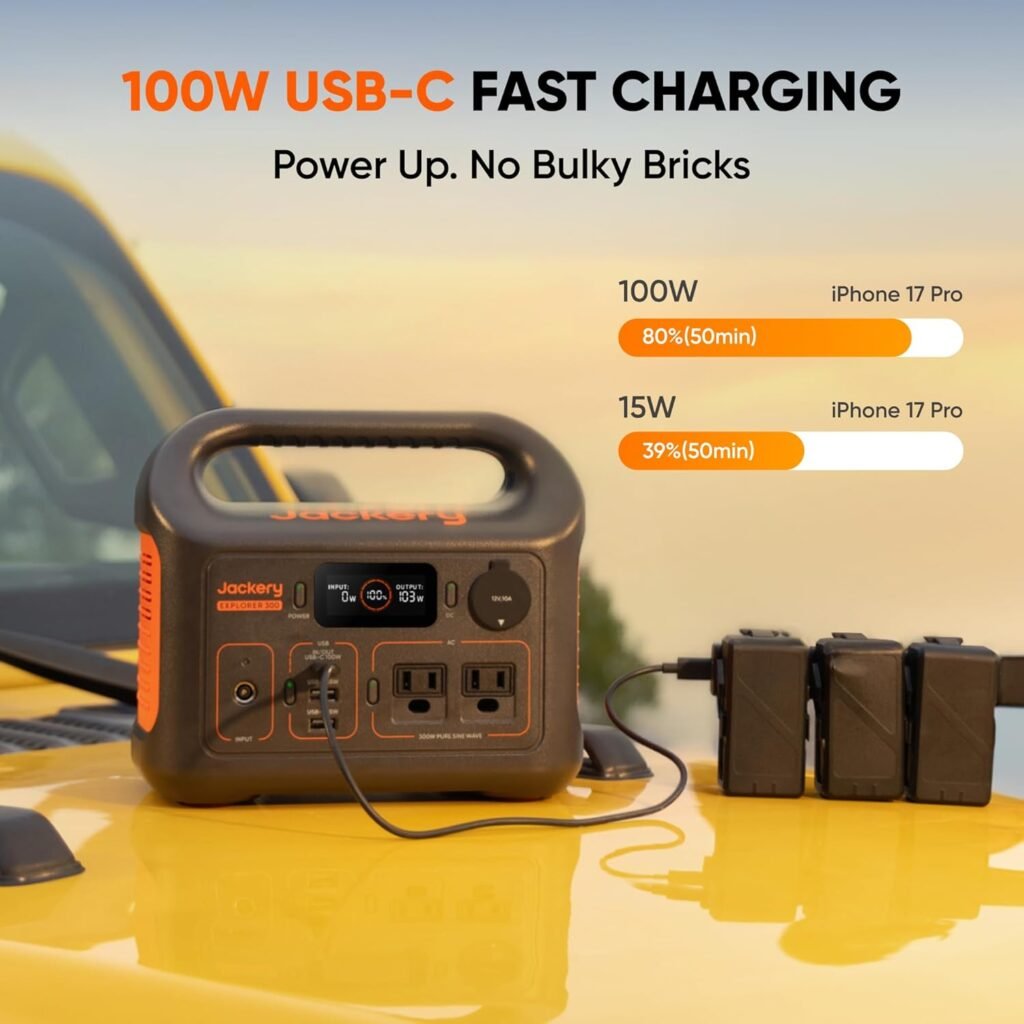
- Modern charging mix: 100W USB-C PD adds practical value for laptop users.
Compared with the EGO POWER+ Portable Power Station, the Jackery is much easier to move and far more travel-friendly, but EGO’s larger systems are aimed at users who need much higher output and home-backup potential. In plain terms, EGO is the better fit for bigger loads; Jackery is the better fit for portability and grab-and-go convenience.
Compared with the Honda EU3200i, the difference is even sharper. The Honda offers far greater power and longer operation as a gas inverter generator, but it is much larger, heavier, and dependent on fuel. The Jackery Explorer is quieter, simpler indoors, and much easier for apartment dwellers or car campers who don’t want engine maintenance.
If you’re deciding step by step, use this filter:
- Choose the Jackery if your loads are small and mobility matters most.
- Choose a larger battery station if you need longer runtimes.
- Choose a gas inverter generator if you need far higher sustained output.
Based on verified buyer feedback, the Explorer offers a good balance of power and portability for shoppers who don’t want to overbuy.
What Customers Are Saying: Insights From Amazon Reviews
What do Amazon buyers keep saying about the Jackery Portable Power Station Explorer 300? The review pattern is fairly clear. Customer reviews indicate strong approval for its easy transport, reliable output for smaller devices, and solid build quality. A 4.5 out of star Amazon rating across 2,300+ reviews suggests satisfaction is consistent rather than scattered.
The most common praise themes appear to be:
- Easy to carry because of the 7.5 lb body and integrated handle
- Convenient device support through AC, USB-C, USB-A, and car output
- Dependable emergency use for phones, laptops, lights, and small essentials
That lines up with the specs. Buyers usually like products more when the product does exactly what the listing says it will do, and that seems to be the case here. Amazon data shows that practical ease-of-use matters just as much as raw watt-hours in this category.
Typical critiques are also consistent. Several buyers wish the value looked stronger at $259, especially when larger-capacity competitors are on sale. Others mention that to unlock the full solar setup, you need compatible Jackery panels sold separately. A smaller number of complaints likely come from mismatched expectations, such as trying to power devices that exceed the 300W rated output or expecting much longer runtime from 292Wh.
Overall sentiment is positive. Based on verified buyer feedback, most owners seem happy when they buy it for camping, travel, CPAP support, camera charging, drone batteries, and short blackouts. If that’s your use case too, the review pattern is encouraging.
Final Verdict — Is the Jackery Explorer a Smart Purchase?
For many shoppers, yes. The Jackery Portable Power Station Explorer earns its place by doing the small-power job well. It is light at 7.5 lbs, offers a practical 292Wh capacity, includes a modern mix of ports, and uses LiFePO4 battery chemistry rated for 4,000+ cycles. Those are strong fundamentals, not flashy extras.
Rated 4.5/5 on Amazon from more than 2,300 reviews, it has the kind of customer backing that matters in a product category where trust is everything. Customer reviews indicate many buyers like it because it’s easy to carry, simple to use, and reliable for the devices they actually need. That matters more than chasing maximum numbers on a spec chart.
Still, this is not a one-size-fits-all answer. The $259 price makes sense if you value durability and portability, but it may feel less compelling if your top priority is sheer capacity. The optional solar panel also raises the real cost for buyers who want off-grid charging from day one.
Our advice is simple:
- Buy it if you need a lightweight station for travel, camping, CPAP use, or emergency electronics.
- Skip it if you need to run large appliances or power through long outages.
- Compare carefully with larger battery stations and gas inverter generators if your power needs may grow.
That’s the real takeaway for 2026. The Jackery Explorer is a smart purchase when your needs match its design. If they do, it’s a well-reviewed Amazon option that’s worth serious consideration.
Pros
- Very light at 7.5 lbs, making it easy to carry for camping and travel
- 292Wh capacity in a compact body offers a strong portability-to-runtime balance
- Versatile port layout with AC outlets, 100W USB-C PD, USB-A ports, and a 120W car port
- LiFePO4 battery chemistry rated for 4,000+ cycles adds long-term durability
- Fast solar charging with Jackery panels and clear off-grid use case
Cons
- Solar panel is optional, not included in the $259 package
- Limited capacity for high-demand devices or extended outages
- Some buyers may find the price high versus larger-capacity competitors
- Best solar charging experience depends on compatible Jackery panels
- 300W rated output restricts what appliances it can run
Verdict
The Jackery Portable Power Station Explorer is worth buying in 2026 if you want a light, reliable power station for camping, travel, and short emergency use. At $259, it isn’t the cheapest small power station, but Amazon data shows strong buyer satisfaction, and the combination of 7.5 lb portability, 292Wh capacity, and LiFePO4 longevity makes it a practical pick for people who value low weight over maximum runtime.
We’d recommend it most for users charging laptops, cameras, drones, phones, CPAP machines, and small electronics. If you need to run larger appliances or cover longer blackouts, move up to a higher-capacity model instead. For its intended job, customer reviews indicate the Jackery Explorer is one of the better-balanced portable options on Amazon.
Frequently Asked Questions
What is the downside of an inverter generator?
The main downside of an inverter generator is limited output compared with larger conventional generators. They’re usually quieter and cleaner-running, but you often pay more per watt and may not have enough capacity for heavy appliances or whole-home backup.
What are the top inverter generators?
Popular inverter generator options in include the Honda EU2200i, Honda EU3200i, Generac 2,500-Watt inverter generator, Jackery Portable Power Station Explorer 300, and EGO POWER+ Portable Power Station. The best pick depends on whether you want gas power, battery power, low weight, or higher output.
How long can you continuously run an inverter generator?
Run time depends on fuel or battery size, load level, and model type. A battery unit like the Jackery Portable Power Station Explorer can run continuously until its 292Wh capacity is used, while gas inverter generators can often run to 10+ hours per tank at partial load.
What are common problems with inverter generators?
Common inverter generator problems include overloaded circuits, battery or starter issues on gas models, fuel-related maintenance problems, and reduced run time under heavy loads. For battery power stations, the usual issues are limited capacity, charging speed expectations, and port/output limits rather than engine trouble.
Key Takeaways
- The Jackery Portable Power Station Explorer is strongest as a lightweight 7.5 lb power station for camping, travel, and short emergency use.
- Its 292Wh capacity, 300W rated output, and versatile ports make it a good match for laptops, cameras, drones, phones, and CPAP support.
- LiFePO4 battery chemistry with 4,000+ cycles is a major durability advantage for buyers who plan to use it often.
- The $259 price is reasonable if portability and long-term battery life matter to you, but less ideal if you need maximum capacity per dollar.
- Before buying, check your device wattage and decide whether you also need a separate Jackery solar panel for off-grid charging.