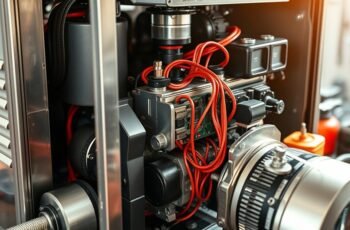
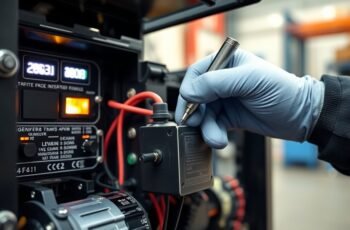
Addressing generator power issues can often feel like steering through a complex puzzle, where small clues reveal underlying problems. By systematically examining each component—from fuel delivery to electrical output—we gain a clearer picture of potential faults. Understanding the interconnected nature of these systems is vital for effective diagnosis and sustained reliability. To guarantee your generator operates smoothly, it’s necessary to recognize the key indicators and troubleshooting steps that can prevent costly downtime.
Key Takeaways
- Check fuel supply for contamination, proper flow, and filter blockages to ensure consistent power delivery.
- Inspect electrical wiring, circuit breakers, and connections for damage or looseness.
- Test voltage and frequency output to identify fluctuations or deviations from rated values.
- Verify cooling system function, including fans and radiators, to prevent overheating.
- Monitor load levels and distribute power evenly to avoid overloading or underloading.
What Are Common Generator Power Problems?
Generator power problems often stem from electrical or mechanical faults that disrupt ideal performance. Common issues include fuel supply interruptions, where inadequate generator fuel leads to inconsistent operation or shutdowns. Cooling systems also play a critical role; if cooling is insufficient, overheating occurs, causing components to fail or trigger safety shutoffs. Fuel contamination or improper storage can clog filters and reduce efficiency, while cooling system malfunctions—such as faulty fans or coolant leaks—compromise temperature regulation. These faults result in power fluctuations, reduced output, or generator failure. Diagnosing these problems requires analyzing fuel delivery systems for blockages or leaks and inspecting cooling components for proper operation. Addressing these core issues helps restore reliable power and prevents further mechanical damage.
How to Check Your Generator’s Fuel System?
Since fuel delivery directly influences a generator’s performance, it’s essential to thoroughly inspect the fuel system for potential issues. We start by checking for fuel contamination, which can occur from water, debris, or microbial growth, leading to clogging or inefficient combustion. Next, we examine the fuel pump’s operation, ensuring it’s delivering the correct volume and pressure; a failing pump can cause inconsistent fuel flow and power fluctuations. We also inspect fuel filters for blockages or dirt buildup, as these restrict flow and contribute to contamination. Any signs of discoloration, sediment, or corrosion in the fuel tank indicate contamination that needs removal. Proper inspection of these components helps identify whether fuel system issues are causing power problems, ensuring reliable generator operation.
Is Your Generator Overloading or Underloading?
To guarantee peak generator performance, we need to distinguish between overloading and underloading conditions. Recognizing signs of overload—such as voltage dips and frequent trips—and symptoms of underloading, like inconsistent power output, is essential. Proper load management techniques help maintain efficiency and prevent potential equipment damage.
Recognizing Overloading Signs
Overloading a generator can lead to immediate operational issues and long-term damage if left unaddressed. Recognizing overloading signs is essential for maintaining ideal performance and preventing costly repairs. Signs include:
- Frequent Voltage Fluctuations – indicative of excessive load stressing the alternator and affecting generator fuel efficiency.
- Overheating – due to sustained high current, which can compromise alternator maintenance and reduce lifespan.
- Unusual Noises or Vibrations – signaling overloaded components struggling to handle the load.
- Reduced Power Output – despite high load demands, suggesting the generator is operating beyond its capacity.
Monitoring these signs helps identify overloading early, ensuring proper load management and safeguarding generator components.
Identifying Underloading Symptoms
While underloading a generator may seem less problematic than overloading, it can still cause significant operational inefficiencies and long-term issues. Underloading often results in suboptimal fuel efficiency, as the generator operates below its ideal load capacity, leading to unnecessary fuel consumption. Additionally, low loads tend to cause irregular engine operation, increasing noise levels and reducing noise reduction effectiveness. This inconsistent operation can accelerate component wear and compromise overall reliability. Detecting underloading symptoms involves monitoring output fluctuations, observing unusually high idle speeds, and noting inconsistent power delivery. Recognizing these signs early enables adjustments that optimize fuel efficiency and maintain noise levels within acceptable ranges, ensuring the generator operates smoothly and prolongs its service life.
Proper Load Management Techniques
Are we guaranteeing the generator operates within its ideal load range? Proper load management is essential for optimizing energy efficiency and minimizing environmental impact. Overloading strains components, increasing fuel consumption, and risking damage, while underloading leads to inefficiency and unnecessary emissions. To balance load effectively, consider these techniques:
- Regularly monitor load levels using precise instrumentation.
- Distribute loads evenly to prevent overtaxing specific circuits.
- Avoid sudden load fluctuations by planning for gradual power shifts.
- Schedule maintenance to guarantee the generator’s capacity aligns with current demands.
Adhering to these principles ensures the generator runs efficiently, reduces fuel waste, and lowers emissions, ultimately supporting a sustainable and cost-effective energy strategy. Proper load management is fundamental to maintaining operational stability and environmental responsibility.
How to Inspect the Generator’s Electrical Components?
To accurately diagnose electrical issues, we start by inspecting the wiring connections for signs of corrosion, looseness, or damage that could disrupt power flow. Next, we test the circuit breakers to guarantee they haven’t tripped or become faulty, which can prevent the generator from supplying consistent power. These steps are essential for identifying faults that may be causing power inconsistencies or failures.
Check Wiring Connections
Before testing the generator’s electrical components, we must carefully inspect all wiring connections to guarantee they are secure and free of damage. Proper Wiring Inspection confirms that loose or corroded connections aren’t causing power issues. Connection Tightening is essential to eliminate intermittent contact points that can disrupt operation.
Key steps include:
- Visually examine all wiring for signs of wear, corrosion, or fraying.
- Confirm that all connectors are properly seated and engaged.
- Use a multimeter to check for continuity across connections.
- Tighten any loose terminals or bolts to prevent voltage drops.
This systematic approach helps identify potential electrical faults and ensures the generator’s wiring system maintains peak integrity for reliable power output.
Test Circuit Breakers
Since circuit breakers are critical for protecting the generator’s electrical system, we need to verify their proper operation by inspecting them thoroughly. During generator maintenance, testing circuit breakers ensures they trip correctly under overload conditions, safeguarding the system against power load fluctuations. We begin by visually inspecting for signs of damage or corrosion, then use a multimeter or breaker tester to verify continuity and trip functionality. It’s crucial to simulate overload scenarios to confirm the breaker responds appropriately, preventing potential damage during operation. Accurate testing helps identify underlying issues that could cause failure under high power loads, ensuring the generator operates reliably. Proper circuit breaker inspection is indispensable for maintaining system integrity and avoiding unexpected power disruptions.
What Role Do the Cooling and Ventilation Systems Play?
Cooling and ventilation systems are critical for maintaining ideal operating temperatures within a generator, directly influencing its performance and longevity. The efficiency of cooling depends on peak cooling effectiveness and proper ventilation airflow, preventing overheating that can cause component failure. Proper airflow ensures heat dissipation from hot zones, maintaining consistent temperature levels.
Effective cooling and ventilation are essential for optimal generator performance and extended lifespan.
Key aspects include:
- Cooling efficiency ensures heat removal matches the generator’s load, preventing thermal stress.
- Ventilation airflow needs to be unobstructed for maximum heat exchange.
- Regular inspection of cooling fins and radiators avoids dust buildup, which hampers heat transfer.
- Adequate airflow management minimizes thermal cycling, reducing wear on internal parts.
Understanding these factors helps guarantee the generator operates within safe temperature ranges, prolonging its service life.
How to Test the Voltage and Frequency Output?
To accurately assess a generator’s performance, testing its voltage and frequency output provides essential insights into its operational integrity. Using a digital multimeter, we measure voltage at the generator terminals, ensuring it aligns with rated values, typically around 120V or 240V. For frequency, a frequency meter or multimeter with frequency measurement is necessary; it should read close to 60 Hz for North American systems. Consistent voltage and frequency indicate stable operation, which is critical for generator safety and maximum fuel efficiency. Variations may signal underlying issues, such as worn brushes or governor malfunctions, affecting performance. Regular testing helps prevent unexpected failures, ensuring safe operation and prolonging the generator’s lifespan. Accurate readings are fundamental for diagnosing power irregularities and maintaining reliable power output.
When Should You Consider Professional Maintenance?
Regular maintenance by a professional becomes necessary when a generator exhibits persistent performance issues, such as inconsistent voltage output, unusual noises, or frequent tripping of circuit breakers. Elevated generator noise can indicate internal component wear, while decreased fuel efficiency suggests engine or carburetor problems. Recognizing these signs early helps prevent further damage and costly repairs. Consider professional intervention when:
- You notice abnormal generator noise during operation, indicating potential mechanical issues.
- Fuel consumption increases despite unchanged load demands, signaling inefficiencies.
- Voltage inconsistencies or frequent breaker trips compromise power reliability.
- Routine maintenance reveals corrosion, worn parts, or degraded lubricants affecting performance.
Timely professional maintenance guarantees ideal generator operation, preserves fuel efficiency, and mitigates unexpected power failures.
How Can Regular Maintenance Prevent Power Issues?
Consistent maintenance routines play a vital role in preventing power issues by ensuring all generator components operate at their best. Regular inspections and adjustments optimize fuel efficiency, reducing unnecessary fuel consumption and emissions. Well-maintained fuel systems prevent clogging and leaks, directly impacting operational reliability. Additionally, routine cleaning of parts like filters and cooling systems minimizes wear and tear, which can cause power fluctuations. Properly maintained generators also operate more quietly, as worn or dirty components often contribute to increased noise levels. By adhering to a scheduled maintenance plan, we can detect potential issues early, ensuring consistent power output and extending equipment lifespan. Ultimately, proactive maintenance not only enhances efficiency and noise reduction but also mitigates the risk of unexpected failures.
What Are Practical Troubleshooting Tips for Sudden Power Loss?
Sudden power loss in a generator can be caused by a variety of mechanical, electrical, or fuel-related issues that require immediate diagnosis. To troubleshoot effectively, start by inspecting generator noise; unusual sounds may indicate belt or bearing failure disrupting operation. Next, evaluate fuel efficiency—poor consumption can signal clogged filters or fuel delivery issues, leading to power drops. Check electrical connections for loose wires or faulty components that could interrupt current flow. Finally, verify the fuel supply itself, ensuring there’s no contamination or blockage restricting flow. Addressing these areas systematically helps identify root causes quickly, restoring stable operation and preventing further damage. Accurate diagnosis minimizes downtime and maintains ideal generator performance under varying load conditions.
Frequently Asked Questions
How Do Environmental Factors Affect Generator Performance?
Environmental factors like poor fuel quality and reduced cooling efficiency can greatly impair generator performance, causing overheating, fuel clogging, and operational instability, which we analyze to optimize maintenance and guarantee reliable power output in varying conditions.
What Are Signs of Internal Engine Wear?
Signs of internal engine wear resemble a fading symphony—rising engine noise and oil discoloration signal internal friction and deterioration, indicating the need for prompt inspection. These symptoms symbolize the engine’s declining health and impending failure.
Can Generator Size Impact Power Stability?
Yes, generator capacity directly impacts power stability; undersized units often cause power fluctuation under load, while appropriately rated generators guarantee consistent output. Proper capacity selection ensures reliable performance and minimizes internal strain leading to potential issues.
How Do You Identify Electrical Shorts in a Generator?
We detect electrical shorts by monitoring voltage fluctuation, which increases sharply during a circuit overload. Nearly 60% of generator failures stem from undiagnosed shorts, making early identification essential for maintaining power stability and preventing costly damage.
What Safety Precautions Should Be Taken During Troubleshooting?
We prioritize safety by wearing appropriate gear, including insulated gloves and eye protection, and ensuring an emergency shutdown procedure is accessible. These precautions minimize electrical hazards and allow quick response during troubleshooting, maintaining a secure diagnostic environment.
Conclusion
In summary, addressing generator power issues requires a systematic, analytical approach, from inspecting fuel and electrical systems to guaranteeing proper cooling. Regular maintenance notably reduces unexpected failures—studies show that properly maintained generators last 30% longer and experience 25% fewer outages. By understanding these diagnostic steps, we can optimize performance, extend equipment lifespan, and guarantee reliable power supply, especially during critical moments. Staying vigilant and proactive is essential for effective generator management.