When we troubleshoot portable generators, we start with a systematic inspection of critical components like fuel systems, spark plugs, air filters, and carburetors, since these are often the root of operational issues. Proper diagnosis involves checking for fuel delivery problems, ignition faults, and electrical stability. Addressing these areas promptly can prevent minor issues from escalating, but understanding the nuances of each component’s behavior is essential—so, let’s explore the specific symptoms and solutions that keep your generator reliable.
Key Takeaways
- Check fuel quality, flow, and filters to prevent starting issues and improve efficiency.
- Inspect spark plugs, air filters, and carburetor for clogs or wear to address stalling problems.
- Ensure electrical connections are tight and voltage regulation components are functioning properly.
- Regularly perform maintenance like oil changes, cleaning vents, and lubricating moving parts.
- Diagnose unusual noises or vibrations by inspecting mechanical components and mufflers for damage.
How to Diagnose Common Portable Generator Issues
When troubleshooting portable generator issues, it’s essential to start with a systematic diagnosis to identify the root cause accurately. We begin by inspecting fuel efficiency, checking for signs of fuel contamination or leaks, which can impair combustion efficiency and reduce runtime. Evaluating the carburetor, fuel filter, and tank guarantees proper fuel flow, preventing engine stalling or poor performance. Simultaneously, we assess noise levels; excessive noise often indicates mechanical issues such as loose components or worn-out mufflers. Vibrations or unusual sounds can also signal internal problems. By carefully analyzing these factors—fuel system integrity and noise patterns—we can pinpoint inefficiencies or malfunctions. This detailed approach helps in implementing precise repairs, optimizing fuel usage, and achieving quieter operation.
Troubleshooting Starting Problems in Your Generator
Troubleshooting starting problems in your generator requires a systematic approach to identify the specific component or condition causing the failure to start. First, verify the fuel supply and confirm the fuel is fresh, as stale fuel can reduce fuel efficiency and hinder starting. Check the spark plug for signs of fouling or wear, which can impede ignition. Inspect air filters for clogging, since restricted airflow affects combustion and noise levels. Lastly, examine the carburetor for clogs or improper adjustments that could compromise starting performance.
Systematically check fuel, spark plug, air filters, and carburetor to troubleshoot generator starting issues.
- Confirm fuel is clean and properly delivered, avoiding clogged fuel lines
- Test spark plug functionality and replace if necessary
- Clean or replace air filters to enhance airflow
- Adjust carburetor settings for ideal fuel mixture
What to Do When Your Generator Won’t Stay Running
If your generator starts but then stalls or shuts down unexpectedly, the issue often stems from fuel delivery inconsistencies, carburetor malfunctions, or ignition problems. To diagnose, first check the fuel system for clogs or leaks, guaranteeing clean, fresh fuel for maximum fuel efficiency. A dirty or gummed carburetor can disrupt proper air-fuel mixture, causing unstable running; cleaning or rebuilding it may restore consistent operation. Ignition issues, such as worn spark plugs or faulty wiring, can also cause sudden shutdowns. Additionally, consider the generator’s load; overloading can reduce fuel efficiency and increase noise levels, leading to instability. Regular maintenance, including carburetor cleaning and spark plug replacement, helps guarantee smooth operation, noise reduction, and consistent runtime.
Addressing Power Output and Voltage Fluctuations
Voltage fluctuations and inconsistent power output often indicate underlying issues with the generator’s internal regulation system or electrical connections. These problems directly impact voltage regulation and compromise power stability, risking damage to connected devices. To address this, we should:
- Inspect and tighten all electrical connections to guarantee proper contact and eliminate resistance.
- Test the voltage regulation system with a multimeter to verify it maintains steady output within manufacturer specifications.
- Check for worn or damaged brushes, regulators, or control boards that can cause unstable voltage regulation.
- Analyze load conditions; overloading the generator can lead to voltage drops and fluctuations.
Maintaining Your Generator to Prevent Future Breakdowns
Regular maintenance is essential to guarantee your generator operates reliably and minimizes the risk of unexpected breakdowns. Consistent oil changes, air filter replacements, and spark plug inspections ensure peak engine performance, directly impacting fuel efficiency. Properly maintaining fuel systems prevents clogging and carburetor buildup, which can reduce fuel consumption and extend runtime. Regularly cleaning and lubricating moving parts minimizes wear, contributing to quieter operation and noise reduction. Monitoring coolant levels and inspecting ventilation pathways help prevent overheating, preserving component integrity. Additionally, keeping the generator’s exterior and cooling vents clean reduces airflow restrictions, aiding in noise management. Implementing a scheduled maintenance routine based on manufacturer guidelines not only enhances fuel efficiency but also guarantees the generator operates smoothly, reliably, and quietly over its lifespan.
Frequently Asked Questions
How Often Should I Perform Routine Maintenance on My Portable Generator?
We recommend performing routine maintenance every 50 to 100 hours of operation, focusing on fuel stability and adhering to the oil change schedule. Regular checks guarantee peak generator performance and longevity, preventing costly repairs and ensuring reliable power supply.
Can I Use Synthetic Oil in My Generator?
Yes, you can use synthetic oil in your generator. It offers superior oil compatibility, enhanced lubrication, and temperature stability, especially under heavy loads or extreme conditions, ensuring ideal engine performance and longer intervals between maintenance.
What Type of Fuel Is Best for Long-Term Storage?
We recommend using stabilized, ethanol-free gasoline for long-term storage due to superior fuel stability. Always store in airtight, approved storage containers, and consider fuel stabilizers to prevent degradation and phase separation over extended periods.
Is It Safe to Run My Generator Indoors?
Running a generator indoors is like inviting danger inside; always guarantee proper indoor ventilation and use carbon monoxide detectors. Never operate a generator indoors, as high CO levels can silently threaten lives despite apparent safety precautions.
How Do I Test My Generator’s Circuit Breaker?
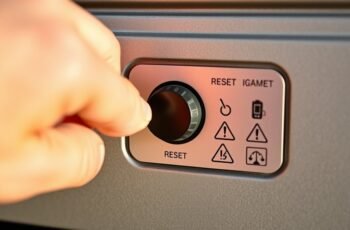
We test our generator’s circuit breaker by first resetting it, then following specific testing procedures, such as pressing the test button or simulating overloads, to guarantee proper operation and safety, confirming it trips and resets correctly.
Conclusion
Just like a finely tuned engine, our generators require regular attention to run smoothly. By systematically diagnosing issues—checking fuel, spark, air filters, and electrical connections—we can prevent outages and extend their lifespan. Staying proactive is like maintaining a well-oiled machine, ensuring consistent power delivery. With diligent troubleshooting and maintenance, we keep our generators reliable, ready to perform under pressure, much like a steadfast anchor in a storm—crucial and unwavering when it matters most.