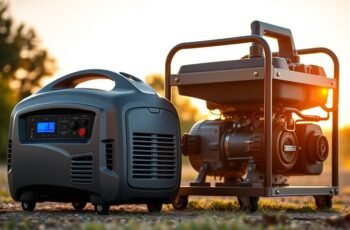
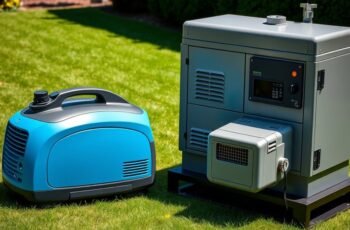
Did you know that inverter generators can achieve up to 40% better fuel efficiency than traditional gas models? While their smaller tanks mean shorter runtimes, their ability to adjust power output minimizes waste and reduces operational costs. Conversely, gas generators with larger tanks offer longer durations but often at higher fuel consumption rates. Understanding these trade-offs is essential for selecting the right option based on your specific needs and budget constraints.
Key Takeaways
- Inverter generators have smaller fuel tanks but offer more efficient fuel use and quieter operation for portable, low-to-moderate power needs.
- Gas generators typically have larger tanks, longer runtime, but consume more fuel and produce higher noise levels.
- Inverter models adjust power output to load, reducing fuel consumption and operating costs over time.
- Gas generators are generally cheaper upfront but incur higher long-term fuel and maintenance costs.
- Proper maintenance and load management in both types extend engine life, optimize efficiency, and reduce overall costs.
How Do Inverter Generators and Gas Generators Differ in Runtime?
While both inverter generators and traditional gas generators rely on internal combustion engines, their runtimes differ considerably due to design and efficiency factors. Inverter generators typically have smaller fuel tanks, limiting their fuel storage capacity, which results in shorter runtimes unless refueled frequently. Conversely, gas generators often feature larger tanks, extending operational periods between refills. Noise levels also influence runtime usability; inverter models operate more quietly, making them suitable for prolonged use in noise-sensitive environments. This reduced noise often correlates with efficient fuel use, but overall runtime hinges on tank size and consumption rate. Gas generators, while noisier, tend to consume fuel more rapidly relative to load, affecting continuous operation time. Ultimately, both fuel storage capacity and noise levels are critical factors in determining the effective runtime of each generator type.
What Factors Affect the Efficiency of Each Generator Type?
The efficiency of inverter and gas generators is primarily influenced by design features, combustion processes, and operational conditions. Factors such as fuel storage capacity directly impact runtime and fuel utilization efficiency. Inverter generators often feature advanced cooling systems that reduce noise levels, enhancing operational efficiency in quiet environments. Conversely, gas generators with larger fuel tanks may offer extended runtime but tend to generate more noise. Additionally, the precision of combustion controls affects fuel burn efficiency, with inverter units typically optimized for cleaner, more complete combustion.
| Factor | Impact on Efficiency | Typical Generator Type |
|---|---|---|
| Fuel Storage | Determines runtime and fuel utilization | Larger tanks benefit gas gen |
| Noise Levels | Influences operational efficiency in quiet zones | Inverter generators excel |
| Combustion Control | Affects fuel burn completeness | Both types depend on design |
Comparing Fuel Consumption and Operating Costs
We will compare how inverter and gas generators differ in fuel efficiency and how that impacts overall operating costs. Extended use highlights significant variations in consumption patterns, affecting long-term expenses. Understanding these differences helps in selecting the most cost-effective option for specific power needs.
Fuel Efficiency Differences
In evaluating fuel efficiency, inverter generators generally consume less fuel per hour than traditional gas generators due to their advanced power management systems. This efficiency translates into lower operating costs and reduced emissions, which helps meet strict emission standards. Additionally, inverter generators optimize fuel storage by adjusting fuel consumption based on load, preventing waste.
| Feature | Traditional Gas Generator | Inverter Generator |
|---|---|---|
| Fuel Consumption Rate | Higher | Lower |
| Emission Standards | Less strict | Meets stricter standards |
| Fuel Storage Efficiency | Moderate | Enhanced |
| Power Management | Basic | Advanced |
| Operating Cost | Higher | Lower |
Operating Cost Variations
How markedly do fuel consumption differences impact overall operating costs between inverter and traditional gas generators? Inverter generators typically consume less fuel due to their variable speed operation, which enhances efficiency, thereby reducing ongoing costs. This lower fuel use also correlates with a smaller environmental impact, as emissions decrease proportionally. Conversely, traditional gas generators often run at a constant speed, leading to higher fuel consumption and increased costs over time. Additionally, inverter models tend to have lower noise levels, which can be advantageous in sensitive environments, further influencing operational considerations. While initial costs may be higher for inverter units, their fuel efficiency and reduced environmental footprint generally offset this difference, making them a more cost-effective choice for long-term operation.
Consumption for Extended Use
When considering extended use, fuel consumption patterns substantially influence the long-term operating costs of inverter versus traditional gas generators. Inverter generators typically optimize fuel efficiency, reducing overall consumption during prolonged operation, which minimizes fuel storage needs and associated costs. They also tend to operate at lower noise levels, making them suitable for extended use in sensitive environments. Conventional gas generators often consume more fuel due to less efficient combustion and higher RPM operation, increasing both operating costs and fuel storage requirements. Over time, the efficiency gains of inverters result in lower fuel costs and reduced environmental impact. Noise level advantages further enhance their suitability for extended use, especially in residential or noise-sensitive settings. Ultimately, analyzing these consumption patterns helps determine the most cost-effective choice for long-term, continuous operation.
Which Generator Offers Better Value for Your Budget?
Determining which generator offers better value for your budget requires a careful analysis of upfront costs, operational expenses, and overall longevity. Inverter generators generally have higher initial prices but feature more efficient fuel storage options and lower noise levels, which can reduce ongoing costs and improve usability. Gas generators often have lower upfront costs but tend to consume more fuel over time and produce higher noise levels, potentially increasing operational expenses and limiting placement flexibility. When evaluating value, consider how fuel efficiency impacts long-term expenses, and how noise levels influence usability in different environments. While inverter models may require a larger initial investment, their energy efficiency and quieter operation often lead to better overall value for budget-conscious users seeking durability and convenience.
How Maintenance Impacts Long-Term Cost and Performance
Regular maintenance considerably influences both the long-term costs and reliability of generators, as neglected service can lead to increased repair frequency and expenses. Inverter generators typically require less frequent repairs due to their sophisticated design, while gas generators may incur higher costs over time with more frequent repairs. Ultimately, consistent upkeep extends engine lifespan, ensuring sustained performance and minimizing total ownership costs.
Regular Service Requirements
How frequently a generator requires maintenance substantially influences its long-term cost and performance stability. Inverter generators, often using advanced fuel types like gasoline or propane, typically demand less frequent servicing due to their sophisticated inverter technology, which reduces wear and noise levels. Gas generators, especially those with simpler carbureted systems, tend to need more regular maintenance, such as oil changes and spark plug replacements, impacting ongoing costs. Noise levels also play a role; quieter inverter models usually have tighter tolerances, necessitating precise adjustments that influence service intervals. Regular servicing ensures peak fuel efficiency and reduces the risk of breakdowns, but the frequency varies considerably between fuel types and generator designs. Proper maintenance planning is essential to manage long-term costs and maintain stable, reliable performance.
Repair Frequency and Costs
Since maintenance frequency directly influences repair costs, understanding the differences between inverter and gas generators is essential for long-term performance. Inverter generators typically require less frequent repairs due to their advanced design and quieter noise levels, which reduce wear on components. Gas generators often demand more frequent repairs, driven by more extensive maintenance schedules and higher operating noise levels that accelerate part degradation.
| Aspect | Inverter Generator | Gas Generator |
|---|---|---|
| Maintenance Schedule | Longer intervals, fewer repairs | Shorter intervals, more repairs |
| Repair Frequency | Less frequent, due to durability | More frequent, due to wear and noise |
| Repair Costs | Generally lower, fewer part replacements | Higher, more extensive repairs needed |
| Noise Levels | Quieter operation reduces component stress | Louder, increases wear over time |
| Long-Term Cost Impact | Lower due to reduced repair frequency | Higher, due to increased repair demands |
Impact on Engine Longevity
Maintaining generators properly can considerably influence engine longevity, directly impacting long-term performance and operational costs. Regular maintenance routines, including oil changes, air filter replacements, and spark plug inspections, are critical for maximizing engine durability. Proper maintenance reduces wear and tear, ensuring the engine runs smoothly and efficiently over time. Neglecting these tasks accelerates engine degradation, leading to increased noise levels due to loose components and carbon buildup. Inverter generators, with their advanced control systems, often experience less stress on engine parts, prolonging lifespan when maintained correctly. Conversely, poorly maintained gas generators tend to produce higher noise levels and require more frequent repairs, ultimately raising long-term costs. Therefore, diligent maintenance directly correlates with enhanced engine durability and quieter operation, optimizing both performance and cost-efficiency.
Ideal Use Cases: When to Choose Inverter vs Gas Generators
Choosing between inverter and gas generators depends largely on the specific application and operational requirements. For portable convenience, inverter generators excel due to their compact size and lightweight design, making them ideal for camping, tailgating, or remote work sites. Their quieter operation also addresses noise considerations, which is essential in residential or sensitive environments. Gas generators, on the other hand, are better suited for larger-scale applications like home backup power or construction sites, where portability is less vital and higher power output is necessary. By understanding these use cases, we can select the appropriate generator type based on the importance of portability, noise levels, and power demands, ensuring peak performance tailored to each scenario.
Tips for Maximizing Runtime and Efficiency in Both Types
To maximize runtime and efficiency in both inverter and gas generators, it’s essential to optimize fuel consumption and operation practices. Proper fuel storage prevents degradation and ensures consistent performance, while managing load demands avoids unnecessary fuel use. Regular maintenance keeps components running smoothly, reducing noise and improving efficiency.
| Tip | Benefit |
|---|---|
| Store fuel properly | Maintains fuel quality, prolongs generator life |
| Use load management | Minimizes waste, enhances runtime |
| Install noise barriers | Reduces noise, enables longer operation |
Focusing on noise reduction techniques enhances user experience and allows extended operation in sensitive environments. Efficient fuel use combined with strategic practices optimizes both runtime and overall generator performance.
Frequently Asked Questions
How Do Noise Levels Compare Between Inverter and Gas Generators?
We find inverter generators produce markedly lower sound levels than traditional gas generators, thanks to their advanced noise comparison technology and sound-dampening designs. This results in quieter operation, ideal for sensitive environments or outdoor activities where noise reduction matters.
Are Inverter Generators Safer for Sensitive Electronic Devices?
Inverter generators act like gentle guardians, providing cleaner, stable power that enhances electrical safety and device compatibility. They minimize voltage fluctuations, making them safer for sensitive electronics, and guarantee ideal performance through precise, consistent energy delivery.
Which Generator Type Is More Environmentally Friendly?
We find inverter generators more environmentally friendly due to their superior fuel efficiency, resulting in a lower carbon footprint. This efficiency minimizes fuel consumption and emissions, making them a better choice for eco-conscious users seeking sustainable power solutions.
How Do Startup Times Differ Between Inverter and Gas Models?
We find inverter generators typically start faster due to advanced electronic controls, enhancing fuel efficiency and portability features, whereas gas models may have slightly longer startup times, impacting immediate power availability and operational convenience.
Can Inverter Generators Handle Heavy-Duty or Industrial Tasks?
We believe inverter generators can handle heavy-duty tasks, thanks to their impressive industrial capacity and power output, but their efficiency and durability may fall short compared to traditional gas models for prolonged, industrial-scale operations.
Conclusion
In our analysis, inverter generators are like precision instruments—compact, efficient, and tuned for ideal performance, especially in noise-sensitive settings. Gas generators resemble steady workhorses—larger, reliable, but less adaptable and more costly over time. Choosing the right tool depends on your specific needs. By understanding these nuances, you can navigate the energy landscape with confidence, ensuring your power source is both a reliable partner and a cost-effective ally in your endeavors.