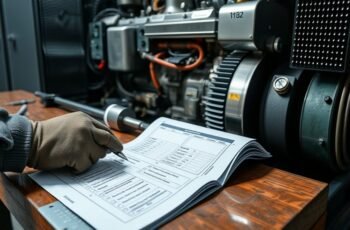
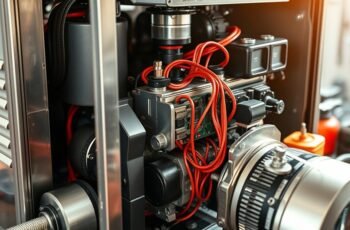
Think of your inverter generator as the heart of your portable power system, quietly working behind the scenes. To keep it beating steadily, regular cleaning is essential—removing dust, dirt, and debris that can hinder airflow and cause overheating. Proper maintenance not only extends its lifespan but also guarantees reliable performance when you need it most. To achieve this, we need to follow precise steps that balance safety with technical thoroughness, starting with the basics of shutdown and disconnection.
Key Takeaways
- Turn off and disconnect the generator, allowing it to cool before cleaning to ensure safety.
- Clean the exterior with a soft brush and microfiber cloth, using mild cleaning solutions if needed.
- Remove and inspect the air filter; clean or replace it to maintain proper airflow.
- Use compressed air or a brush to remove dust and debris from cooling fins and exhaust components.
- Regularly check and maintain internal components like spark plugs and oil levels to ensure optimal performance.
Why Regular Cleaning Is Essential for Your Inverter Generator
Have you ever considered how neglecting regular cleaning can impact the performance and longevity of your inverter generator? Dust, dirt, and debris accumulate over time, clogging vents and cooling components, which directly affects fuel efficiency. When airflow is restricted, the engine must work harder, consuming more fuel and increasing operational costs. Additionally, buildup on internal parts can cause friction and wear, leading to potential mechanical failures. Regular cleaning also plays a vital role in noise reduction; a cleaner exterior and engine components operate more smoothly, diminishing vibrations and sound output. Maintaining a clean generator ensures maximum airflow, reduces strain on engine parts, and minimizes noise levels, ultimately extending your inverter generator’s lifespan and maintaining its peak performance.
Preparing Your Workspace and Gathering Cleaning Supplies
Before starting the cleaning process, we need to carefully prepare our workspace to guarantee safety and efficiency. Choose a well-ventilated area with a flat, stable surface, free of clutter. Confirm the workspace is protected with drop cloths or old newspapers to catch debris and spills. Gather all necessary cleaning supplies, including microfiber cloths, soft brushes, degreasers, and protective gear. Follow safety precautions such as wearing gloves and eye protection to prevent injuries. Proper storage tips include organizing tools in accessible containers and keeping flammable items away from the generator. Use the table below to keep your supplies and safety measures organized:
| Supplies | Safety Precautions |
|---|---|
| Microfiber cloths | Wear gloves and eye protection |
| Soft brushes | Confirm good ventilation |
| Degreasers | Keep flammable items separate |
| Protective gear | Store supplies safely when not in use |
How to Safely Turn Off and Disconnect Your Generator
To guarantee safe shutdown, we start by turning off the engine using the proper sequence to prevent fuel or oil issues. Next, we disconnect the power cables carefully, ensuring no residual current remains. Following these steps minimizes electrical hazards and prepares the generator for safe cleaning.
Turn Off Engine Properly
When shutting down your inverter generator, it’s essential to follow a specific sequence to guarantee safe operation and prevent damage. First, reduce the load gradually by turning off any connected appliances, which helps maintain ideal fuel efficiency and minimizes abrupt temperature changes in the engine. Next, allow the generator to run at idle for a few minutes; this stabilizes internal components and promotes noise reduction during shutdown. Once stabilized, switch the fuel valve to the off position to prevent fuel from entering the carburetor, reducing the risk of vapor lock or fuel leakage. Finally, press the engine stop button or turn the ignition switch to the off position. Properly turning off the engine ensures smooth operation, preserves fuel efficiency, and maintains quieter operation during subsequent uses.
Disconnect Power Safely
After shutting down the engine and reducing the load, it’s important to carefully disconnect your inverter generator from the power sources. Prioritize electrical safety by turning off the main circuit breaker or disconnect switch before unplugging devices. Always wear appropriate personal protective equipment, such as insulated gloves and safety glasses, to prevent electrical shock or injury. Follow the recommended sequence to prevent voltage spikes or damage. Use the table below to understand the disconnect process:
| Step | Action |
|---|---|
| Turn off load devices | Disconnect all connected appliances |
| Turn off generator switches | Switch off the main power control |
| Unplug power cords | Carefully disconnect cables from outlets |
Removing Dust, Dirt, and Debris From Exterior Surfaces
To effectively remove dust, dirt, and debris from the exterior surfaces, we recommend using a soft brush or cloth to gently loosen particles without scratching the finish. Applying a mild cleaning solution guarantees dirt is lifted without damaging sensitive components. Afterward, rinse thoroughly with water and dry completely to prevent moisture buildup.
Use Soft Brush or Cloth
Cleaning the exterior surfaces of your inverter generator begins with carefully removing dust, dirt, and debris using a soft brush or cloth. Gentle dusting is vital to prevent scratching or damaging sensitive components. We recommend using a soft cloth for flat surfaces and a gentle brush for vents, crevices, and textured areas. Make sure the cloth is slightly damp, not wet, to effectively pick up dust without moisture seeping into internal parts. When brushing, use light, sweeping motions to dislodge particles without exerting excessive pressure. Avoid abrasive materials or stiff brushes that could scratch or gouge the surface. Consistent, gentle dusting with a soft cloth or brush maintains the generator’s exterior integrity while effectively removing accumulated debris, guaranteeing peak performance and longevity.
Apply Mild Cleaning Solution
Applying a mild cleaning solution helps effectively remove residual dust, dirt, and debris that may remain after the initial dusting. We recommend using appropriate cleaning solutions formulated for electrical equipment, guaranteeing they are non-corrosive and gentle on surfaces. Apply the solution sparingly with soft cleaning tools, such as microfiber cloths or soft brushes, to avoid scratching or damaging the exterior. Focus on areas with stubborn grime, gently working the solution into crevices and textured surfaces. It’s essential to avoid excessive moisture; a light spray or damp cloth will suffice. Proper application of cleaning solutions with suitable tools assures thorough cleaning without compromising the integrity of the generator’s exterior, setting the stage for subsequent rinsing and drying steps.
Rinse and Dry Thoroughly
Have you confirmed that all residual cleaning solution and loosened debris are thoroughly rinsed from the generator’s exterior? Proper rinsing is essential to prevent residue buildup that could cause corrosion or electrical issues. Use a gentle stream of water to wash away dust, dirt, and any remaining cleaning agents, paying close attention to crevices and vents. After rinsing, conduct a careful surface inspection to identify any missed spots or stubborn dirt. Once satisfied, dry the exterior with a clean microfiber cloth or compressed air to prevent water spots and corrosion. Incorporate this rinsing step into your regular cleaning schedule to maintain peak performance and prolong the lifespan of your inverter generator. Thorough drying ensures no moisture remains that could lead to future damage.
Cleaning the Air Filter and Combustion Components
Since the air filter and combustion components play a critical role in maintaining ideal engine performance, it’s essential to perform thorough cleaning regularly. For air filter maintenance, remove the filter carefully, then inspect it for dirt, debris, or damage. Clean paper filters by tapping out loose dirt or gently vacuuming, while foam or fabric filters should be washed with mild soap and water, then dried thoroughly. During combustion component inspection, check for carbon buildup, oil deposits, or wear on spark plugs and valves. Use a brush or compressed air to remove deposits, ensuring no debris enters the engine during reassembly. Proper cleaning and inspection help maintain best airflow and combustion efficiency, preventing potential performance issues or damage.
Checking and Cleaning the Exhaust and Cooling Fins
Regularly inspecting and cleaning the exhaust and cooling fins are essential steps to guarantee peak generator performance and prevent overheating. During exhaust inspection, check for soot buildup, carbon deposits, and any blockages that could restrict airflow or exhaust flow. Remove debris carefully using a brush or compressed air, avoiding damage to sensitive components. For cooling fin maintenance, examine the fins for dust, dirt, or corrosion that could impair heat dissipation. Use compressed air or a soft brush to clear accumulated debris, ensuring fins remain unobstructed. Proper cooling fin maintenance enhances heat transfer efficiency, reducing the risk of overheating during operation. Regular attention to these components not only prolongs the lifespan of your inverter generator but also guarantees it runs safely and efficiently under load.
Tips for Maintaining Your Generator’s Performance After Cleaning
After completing the cleaning process, it’s essential to implement specific maintenance practices to guarantee your inverter generator maintains peak performance. Establishing a consistent maintenance schedule—checking oil levels, inspecting air filters, and verifying fuel system integrity—is vital for longevity and efficiency. Regularly monitor the cooling fins and ventilation system to prevent overheating. Incorporate troubleshooting tips into your routine, such as listening for abnormal noises or noticing fluctuations in power output, to identify potential issues early. Keep detailed records of maintenance activities to track performance trends and schedule preventive upkeep. Properly maintaining your generator after cleaning minimizes downtime, reduces repair costs, and assures reliable operation during critical moments. Staying disciplined with these practices is key to maximizing your inverter generator’s lifespan and performance.
Frequently Asked Questions
How Often Should I Clean My Inverter Generator?
We suggest adhering to a maintenance timetable with a cleaning frequency of every 50-100 hours of operation or quarterly, whichever comes first, to guarantee peak performance and durability of your inverter generator through thorough, technical cleaning.
Can I Use Water to Clean Electrical Parts?
We advise against water safety risks when electrical cleaning; for example, using water on electrical parts can cause short circuits. Instead, we recommend dry methods like compressed air, ensuring safe, effective electrical cleaning without damaging sensitive components.
What Safety Gear Should I Wear During Cleaning?
We wear protective gloves and eye protection to prevent electrical shocks, chemical exposure, and debris injury during cleaning. This safety gear guarantees we handle cleaning agents and tools securely, minimizing risks associated with inverter generator maintenance.
Is It Necessary to Change Oil Before Cleaning?
Think of your inverter generator’s engine as a finely tuned instrument; an oil change is crucial before cleaning, aligning with your maintenance schedule to prevent contamination and guarantee peak performance during the cleaning process.
How Do I Prevent Future Dust Buildup?
We prevent future dust buildup by regularly performing air filter maintenance and inspecting for debris, while scheduling fuel system cleaning to avoid clogging, ensuring ideal airflow and fuel efficiency, which prolongs inverter generator lifespan and maintains peak performance.
Conclusion
By diligently disconnecting, dusting, and delicately detailing each component, we guarantee our inverter generators operate at their best. Regular, thorough cleaning prolongs performance, prevents potential problems, and preserves power. Properly maintained, your generator remains a reliable, resilient resource ready for any situation. Consistent care cultivates confidence, curtails costly repairs, and keeps your power source pristine and prepared, ensuring peace of mind during every use. Proper prevention, precise pruning, and persistent preservation are key to longevity.