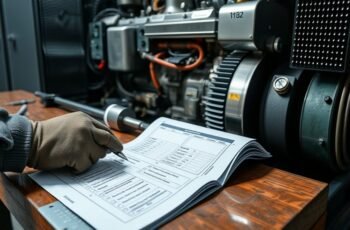
Think of a generator as the heartbeat of a vital operation—its reliability hinges on consistent maintenance. Skipping routine checks is like neglecting a pulse, risking unexpected failures when it’s most needed. Establishing a disciplined maintenance schedule isn’t just best practice; it’s indispensable for ensuring performance and longevity. To truly understand how to optimize your generator’s uptime, it’s essential to examine the specific tasks and intervals that keep it running smoothly.
Key Takeaways
- Establish weekly, monthly, quarterly, and annual maintenance routines to ensure consistent generator performance.
- Regularly inspect and test fuel quality, filters, and lines to prevent clogging and efficiency loss.
- Monitor battery health, charge levels, and connections to avoid startup failures.
- Conduct detailed checks on cooling systems, oil levels, and exhaust components to maintain optimal operation.
- Document maintenance activities to identify trends, schedule proactive repairs, and prevent unexpected failures.
How to Assess Your Generator’s Maintenance Needs
To accurately assess your generator’s maintenance needs, it’s essential to perform a systematic evaluation of its current operational condition. We focus on key performance indicators such as fuel efficiency, which directly impacts operational costs and indicates potential issues with fuel delivery or engine performance. Monitoring noise reduction levels also provides insight into mechanical integrity; increased noise can signal worn components or misalignments. Conducting a thorough inspection of fuel lines, filters, and exhaust systems helps identify inefficiencies or deterioration that could compromise performance. Additionally, tracking fluctuations in fuel consumption and unusual operational sounds allows us to pinpoint maintenance requirements proactively. This analytical approach guarantees that we maintain peak efficiency, minimize downtime, and extend the lifespan of the generator while staying alert to signs of emerging problems.
Establishing a Weekly and Monthly Maintenance Routine
Establishing a consistent weekly and monthly maintenance routine is essential for guaranteeing the reliable operation and longevity of your generator. Regular checks of fuel quality help prevent contamination and fuel system blockages, which can impair performance. We recommend inspecting fuel for water or debris and ensuring it’s stored properly. Additionally, battery inspection should be prioritized to verify charge levels, clean terminals, and check for corrosion, as a weak battery can cause startup failures. These routine tasks enable early detection of potential issues, reducing downtime and costly repairs. Maintaining a disciplined schedule assures that critical components remain in excellent condition, supporting overall generator reliability. By systematically monitoring fuel quality and battery status, you establish a foundation for effective maintenance and long-term operational stability.
Key Tasks for Quarterly and Annual Generator Checks
Building on routine weekly and monthly checks, implementing quarterly and annual inspections helps guarantee the generator remains dependable over the long term. Critical tasks include extensive generator fuel testing to confirm fuel quality and prevent clogging or corrosion, which can compromise performance. Additionally, conducting a thorough battery inspection is essential to verify electrolyte levels, terminal connections, and overall health, reducing the risk of unexpected failure.
Key tasks include:
- Performing generator fuel testing to detect contamination or degradation.
- Conducting detailed battery inspections for corrosion, charge retention, and connection integrity.
- Verifying cooling systems, oil levels, and filter conditions to maintain ideal operational temperatures and lubrication.
These measures ensure sustained reliability and efficiency of the generator system.
Troubleshooting Common Maintenance Issues
When addressing common maintenance issues, systematic troubleshooting is essential to quickly identify and resolve problems that can impair generator performance. We focus on issues affecting fuel efficiency and noise reduction, which are critical for peak operation. Fuel inefficiency often indicates clogged filters, fuel line blockages, or injector malfunctions, requiring precise diagnostics to restore proper combustion. Excessive noise may stem from loose components, worn mounts, or exhaust system leaks, necessitating targeted inspections. By analyzing vibrations, abnormal sounds, and performance metrics, we can pinpoint root causes efficiently. This structured approach ensures minor issues don’t escalate, maintaining generator reliability and efficiency. Consistent troubleshooting helps sustain ideal fuel consumption and noise levels, reducing operational costs and extending equipment lifespan.
Tips for Staying on Track With Your Generator Maintenance Schedule
To guarantee your generator operates reliably, we need to proactively adhere to a consistent maintenance schedule, as neglecting routine tasks can lead to performance degradation or unexpected failures. Staying organized ensures maximum fuel efficiency and noise reduction.
To stay on track:
- Regularly schedule inspections and record maintenance activities to monitor performance trends and identify issues early.
- Prioritize fuel system checks, as clean fuel filters and proper fuel quality enhance efficiency and prevent unplanned downtime.
- Implement a noise reduction protocol by ensuring soundproofing and vibration dampening components are maintained, which also supports consistent operation.
Frequently Asked Questions
What Are the Signs of a Failing Generator?
We notice failing generators through declining fuel efficiency, increased noise levels, irregular startup or shutdown, and unusual vibrations, indicating mechanical issues or wear. Regular monitoring helps detect these signs early, preventing costly breakdowns and ensuring reliable operation.
How Do Environmental Factors Affect Generator Maintenance?
Environmental impacts and climate considerations dramatically accelerate generator wear and tear, demanding meticulous maintenance. Extreme temperatures, humidity, and pollution can cause corrosion and component failure, so regular inspections and adaptive strategies are vital for ideal generator performance.
Can I Perform Maintenance Tasks Myself or Hire a Professional?
We recommend evaluating your technical skills before attempting DIY tips; for complex or safety-critical tasks, hiring professional services guarantees proper maintenance, reduces risks, and maintains generator reliability, especially considering environmental factors that impact proper operation and longevity.
What Safety Precautions Should I Follow During Maintenance?
We always wear personal protective gear, like gloves and goggles, as if guarding a treasure. We follow strict emergency procedures, ensuring safety during maintenance, because overlooking precautions risks hazards, just like ignoring safety signs in a complex maze.
How Often Should I Replace Major Generator Components?
We recommend replacing major generator components based on their expected lifespan and regular component inspection results; typically, critical parts are checked annually, and replacements are scheduled proactively to guarantee peak performance and prevent unexpected failures.
Conclusion
By adhering to a structured maintenance schedule, we act as the skilled navigators guiding our generator through calm and storm alike. Regular inspections and timely interventions are the compass and map, ensuring reliable power when it matters most. Staying vigilant with routine checks not only extends the lifespan of your equipment but also keeps downtime at bay. In this technical voyage, proactive maintenance is the steady course that leads to operational excellence and peace of mind.