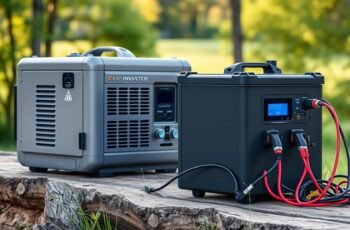
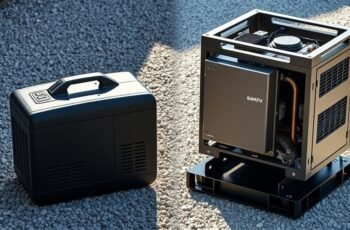
Reliability in backup energy sources is the backbone of resilient power solutions, yet it often feels like comparing apples and oranges. Inverter generators adapt seamlessly to fluctuating loads, providing stable power regardless of environmental factors. Wind systems, however, are at the mercy of nature’s unpredictability, demanding additional storage and maintenance. Understanding which option offers consistent performance amid varying conditions requires a closer look at their operational dependability and durability. Let’s explore these differences in detail.
Key Takeaways
- Inverter generators provide immediate, on-demand backup power regardless of environmental conditions, ensuring higher reliability during outages.
- Wind power systems depend on wind availability, making their backup capacity intermittent and less dependable.
- Inverter generators operate consistently with stable power output, while wind systems fluctuate with weather and wind patterns.
- Inverter generators require minimal maintenance and are less affected by environmental factors, enhancing long-term reliability.
- Wind systems require energy storage solutions and are more susceptible to environmental variability, reducing their backup reliability.
How Do Inverter Generators Provide Reliable Backup Power?
Inverter generators deliver reliable backup power by producing a stable and consistent electricity output, which is essential during power outages or in off-grid situations. They achieve this through advanced inverter technology that modulates engine speed based on load demands, enhancing fuel efficiency and reducing emissions. This dynamic adjustment minimizes fuel consumption, making them more economical for prolonged use. Additionally, inverter generators operate at lower noise levels compared to conventional models, thanks to their inverter mechanism and sound-dampening design. This combination of high fuel efficiency and quiet operation ensures consistent power delivery without disturbing the environment or users. Their ability to adapt output precisely to demand makes them a dependable choice for sensitive electronics and critical equipment, reinforcing their role as a reliable backup power source.
What Factors Affect Wind Power System Reliability?
While inverter generators are valued for their consistent power output and efficiency, wind power systems face a different set of challenges that influence their reliability. Key factors include variability in wind speeds, which directly impacts energy production consistency. Additionally, the ability to effectively integrate solar systems enhances overall stability and grid independence, reducing reliance on fluctuating wind resources. Maintenance complexities, such as turbine component wear and tear, also affect system uptime. Environmental conditions—like extreme weather—can cause operational disruptions. Infrastructure quality, including tower and transmission line robustness, plays a vital role. Ultimately, technological advancements in turbine design and control systems are critical to mitigating intermittency and improving reliability in variable conditions.
Comparing Operational Dependability During Power Outages
During power outages, the operational dependability of inverter generators and wind power systems diverges considerably due to their inherent characteristics. Inverter generators provide immediate, on-demand power, making them highly reliable during outages; their grid integration is straightforward, ensuring consistent backup. Conversely, wind power systems depend on wind availability, which can be intermittent, reducing dependability unless paired with energy storage. While wind turbines have a lower environmental impact during operation, their reliance on environmental conditions limits consistent output. Inverter generators, though less eco-friendly, deliver predictable performance, essential during grid failures. Hence, in terms of operational dependability during outages, inverter generators excel in reliability, whereas wind power systems’ dependence on environmental factors hampers their immediate backup capacity.
Maintenance and Durability: Which System Requires Less Frequent Repairs?
Evaluating maintenance and durability, inverter generators generally require less frequent repairs due to their simpler mechanical design and fewer moving parts. Their design minimizes wear and tear, which positively impacts fuel efficiency by reducing mechanical inefficiencies. When considering cost considerations, inverter generators tend to have lower maintenance costs over time. Key factors include:
- Fewer components prone to failure
- Simplified electronic control systems
- Robust build quality suited for long-term use
- Less sensitivity to environmental stressors
In contrast, wind power systems involve complex mechanical parts like turbines and gearboxes, which demand more regular inspections and repairs. While wind systems excel in sustainability, their maintenance needs directly influence overall durability and operational costs, making inverter generators a more reliable choice for low-maintenance backup power.
Which Backup Energy Source Offers Consistent Performance in Different Environments?
Choosing a backup energy source that maintains consistent performance across diverse environments requires careful analysis of their operational stability under varying conditions. Wind power systems excel in open, windy areas, offering reliable generation when wind patterns are stable, but performance can fluctuate with weather changes, impacting grid independence. Conversely, inverter generators deliver steady power regardless of environmental variables, thanks to onboard fuel and advanced regulation. Solar integration presents a unique challenge; while solar panels can provide consistent output in sunny climates, their efficiency drops in cloudy or shaded conditions, reducing reliability. Consequently, the most consistent backup depends on environmental context and the system’s ability to adapt, with inverter generators generally providing more predictable performance across different environments, especially when maintaining grid independence is a priority.
Frequently Asked Questions
What Is the Initial Cost Difference Between Inverter Generators and Wind Power Systems?
We find inverter generators typically cost less upfront, with lower installation expenses, making them more accessible initially. Wind power systems involve higher capital investment due to infrastructure and installation complexities, resulting in a significant cost comparison favoring inverter generators.
How Quickly Can Each System Be Deployed During an Emergency?
We find inverter generators deploy rapidly, with minimal setup complexity, making them ideal for emergency use within hours. Conversely, wind power systems require extensive setup and infrastructure, leading to longer deployment times, often days or weeks, depending on scale and location.
Are There Any Environmental Restrictions for Installing Wind Power Systems?
Are environmental restrictions a barrier? We analyze environmental impact and regulatory compliance, noting that wind systems face restrictions like noise and site zoning, but careful planning minimizes ecological disruption and guarantees adherence to regulations.
Which System Has a Smaller Carbon Footprint Over Its Lifespan?
We find wind power systems typically have a smaller carbon footprint over their lifespan because they generate renewable energy with minimal carbon emissions, unlike inverter generators, which rely on fossil fuels, increasing their environmental impact over time.
How Do Noise Levels Compare Between Inverter Generators and Wind Turbines?
Like a whispering breeze compared to a roaring engine, wind turbines produce markedly lower sound levels, reducing noise pollution. Inverter generators, although quieter than traditional models, still generate higher decibel levels, impacting nearby environments differently.
Conclusion
After analyzing both options, we see inverter generators as the steady heartbeat in emergencies—reliable, adaptable, unaffected by weather. Like a lighthouse guiding ships safely through storms, they provide consistent power regardless of environmental chaos. While wind systems are impressive and eco-friendly, their dependence on unpredictable weather makes them less dependable for critical backup needs. Ultimately, choosing a system that guarantees unwavering performance is essential for peace of mind when it matters most.