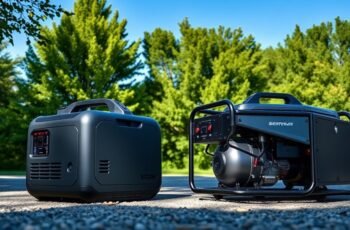
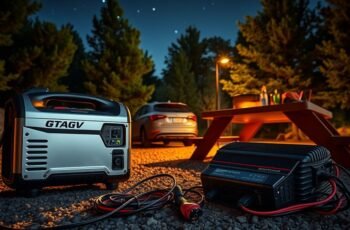
We compare inverter generators and UPS systems to understand which backup solution offers better protection for your devices. We examine their distinct mechanisms, advantages, and limitations to determine suitability for different scenarios. Each system’s performance depends on factors like power quality, runtime, and environmental conditions. As we analyze these aspects, you’ll see that choosing the right backup involves more than just capacity—it hinges on specific needs and device sensitivity.
Key Takeaways
- UPS systems provide immediate, stable, and noise-free power, ideal for sensitive electronics and indoor environments.
- Inverter generators offer higher power output and longer runtime, suitable for outdoor, heavy-duty use.
- UPS systems deliver clean, surge-protected power with minimal noise, reducing risk of device damage.
- Inverter generators produce cleaner sine wave power but generate noticeable noise at higher loads.
- Choosing depends on environment, noise tolerance, device sensitivity, and need for portability and runtime.
How Do Inverter Generators and UPS Systems Protect Your Devices Differently?
While both inverter generators and UPS systems serve to protect your devices during power disruptions, they do so through fundamentally different mechanisms. Inverter generators convert fuel into electricity, offering high fuel efficiency, which makes them suitable for extended use. They produce a stable sine wave output, but their noise levels can be significant, especially at higher loads, potentially causing disturbances. Conversely, UPS systems provide immediate backup power through stored energy in batteries, ensuring seamless changeover without interruption. They do not rely on fuel, making their operation quieter and more environmentally friendly. The primary distinction lies in their energy source: fuel versus stored electrical energy, which influences their noise levels and fuel efficiency. Understanding these differences helps clarify their specific protective roles during power outages.
Which Backup Solution Is Better for Sensitive Electronics?
When it comes to protecting sensitive electronics, choosing the right backup solution is essential because these devices require stable, clean power to operate safely and accurately. UPS systems generally deliver consistent, surge-protected power with low noise levels, ensuring minimal risk of damage or operational errors. They also tend to have a shorter battery lifespan, necessitating regular replacements, but their rapid response time effectively guards against power fluctuations. In contrast, inverter generators produce cleaner power than conventional generators, but their noise levels can be higher, and their batteries typically last longer, reducing maintenance frequency. For sensitive electronics, UPS systems are often preferable due to their ability to provide a stable, noise-free power supply with immediate backup, crucial for delicate components and data integrity.
Evaluating Power Quality: Inverter Generators vs UPS Systems
Evaluating power quality is essential to understanding how inverter generators and UPS systems perform in real-world applications. Both systems aim to deliver stable, clean power, but their effectiveness varies based on factors like waveform purity, voltage regulation, and noise levels. Inverter generators typically produce a sine wave but can generate noise that affects sensitive electronics. UPS systems, on the other hand, provide consistent, filtered power, often with pure sine wave output, minimizing electromagnetic interference. Battery longevity is also key; UPS batteries may degrade over time, impacting overall power stability. Noise levels from inverter generators can be disruptive, while UPS systems operate quietly.
- Smooth power delivery that protects sensitive devices
- Consistent voltage regulation under load
- Minimal electromagnetic interference and noise
- Reliable battery longevity for sustained backup
- Quiet operation minimizing user disturbance
Cost, Maintenance, and Practicality: Choosing the Right Backup System
Choosing the appropriate backup system requires careful consideration of both initial costs and ongoing maintenance expenses, as these factors substantially influence overall practicality. Inverter generators typically demand higher upfront investment but offer longer battery life, reducing frequency of replacements and maintenance costs over time. They also tend to operate with lower noise levels, making them suitable for quieter environments. Conversely, UPS systems often have lower initial costs and minimal maintenance requirements, but their battery life diminishes with repeated cycles, increasing replacement frequency and costs. Practicality depends on usage patterns: for continuous, heavy-duty needs, inverter generators may be more cost-effective long-term. Evaluating these factors allows us to select a backup solution aligned with operational demands, budget constraints, and environmental considerations.
Which Backup Solution Fits Your Needs Best: Inverter Generator or UPS?
Determining the most suitable backup solution depends on analyzing your specific operational requirements, environmental constraints, and budget considerations. An inverter generator offers high power output, longer battery longevity, and is ideal for outdoor or remote use, but it generates higher noise levels. Conversely, a UPS provides immediate, clean power with minimal noise, making it perfect for sensitive electronics and indoor environments.
Consider these factors:
- Will your priority be quiet operation or portable power?
- How critical is battery longevity for your setup?
- Are environmental noise regulations a concern?
- Do your devices require consistent, sine wave power?
- Is budget allocation leaning towards initial investment or ongoing maintenance?
Frequently Asked Questions
How Long Can Each Backup Solution Power Devices During an Outage?
Battery capacity determines power duration for UPS systems, typically lasting 5-15 minutes, while inverter generators offer longer runtime—several hours—depending on fuel capacity and load. Both depend on device power demands and system specifications.
Are Inverter Generators and UPS Systems Environmentally Friendly Options?
Like pioneers of progress, we find inverter generators and UPS systems increasingly eco-friendly, especially when powered by renewable energy sources, reducing carbon footprint. They offer cleaner operation and lower emissions, aligning with sustainable, environmentally conscious technology standards.
Can Inverter Generators and UPS Systems Be Used Together for Enhanced Protection?
We can combine inverter generators and UPS systems for enhanced protection, leveraging renewable energy sources and extending battery lifespan; however, careful integration guarantees compatibility and efficiency, preventing overloads and maintaining stable power output for sensitive devices.
What Are the Noise Level Differences Between Inverter Generators and UPS Systems?
Imagine a whisper amid a storm—our inverter generators excel in sound insulation and noise reduction, producing markedly lower decibel levels than UPS systems. This technical advantage guarantees quieter operation, ideal for sensitive environments and uninterrupted peace.
How Do Weather Conditions Affect the Performance of Each Backup Solution?
Weather conditions impact inverter generators more, especially in rain or snow, affecting solar compatibility and portability. UPS systems are more resilient, but extreme cold can reduce battery efficiency, influencing overall backup reliability in adverse weather.
Conclusion
Choosing between inverter generators and UPS systems is like selecting the right shield for a battle—each offers unique protection tailored to specific challenges. Inverter generators are our rugged, long-lasting armor for outdoor ventures, while UPS systems are our precise, instant defense for sensitive electronics. By understanding their strengths and limitations, we can strategically deploy the right backup solution, ensuring our devices remain protected and operational, no matter the environment or threat.