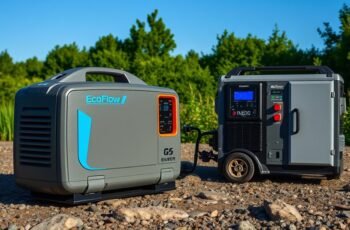
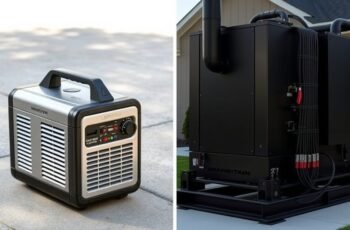
Exploring the landscape of power generation options is like charting a course through a complex maze, where each choice offers distinct advantages and limitations. Inverter and hybrid generators represent two sophisticated solutions, each tailored to specific needs and environments. Understanding their operational differences, efficiency profiles, and practical applications is essential for making an informed decision. As we explore these technologies, you’ll discover which aligns best with your requirements—and what trade-offs might be involved in your selection.
Key Takeaways
- Inverter generators produce stable, clean power ideal for sensitive electronics and are quieter, while hybrid generators combine fuel and battery systems for efficiency.
- Inverter models are more portable, lightweight, and cost-effective initially, suitable for camping and residential use.
- Hybrid generators offer higher overall power and better fuel efficiency, making them suitable for long-term, eco-conscious applications.
- Inverter generators excel in low-noise environments and require less maintenance, whereas hybrids may have higher initial costs and complexity.
- Choose an inverter generator for portability and stable power needs; select a hybrid if integrating renewable energy or prioritizing fuel savings.
How Do Inverter Generators Work and What Sets Them Apart?
Although inverter generators may appear similar to traditional models, their core technology markedly differs, primarily in how they produce and regulate power. They utilize a nonlinear control system that converts DC power into AC power, enabling precise voltage and frequency regulation. This process enhances fuel efficiency by adjusting engine speed to match the load, reducing unnecessary fuel consumption. Additionally, inverter generators are equipped with advanced inverters that greatly minimize noise output, making them quieter than conventional generators. This combination of fuel efficiency and noise reduction stems from their ability to modulate engine operation based on demand, unlike traditional models that run at a constant speed regardless of load. These technological advantages make inverter generators highly efficient and user-friendly, particularly in environments requiring low noise levels.
What Are Hybrid Generators and How Do They Operate?
Hybrid generators combine multiple power sources, typically integrating internal combustion engines with battery systems, to optimize efficiency and flexibility. They dynamically switch between or simultaneously utilize fuel-based and electric power, depending on load demands. This integration allows for precise control over power output and improved fuel economy, making them adaptable for various applications.
Hybrid Generator Functionality
Hybrid generators combine the advantages of traditional fuel-powered engines with advanced inverter technology to optimize power output and fuel efficiency. They operate by adjusting engine speed based on load demand, reducing unnecessary fuel consumption and minimizing noise levels. This dynamic control allows the generator to run at variable speeds, providing only the power needed at any moment, which notably enhances fuel efficiency. The inverter component ensures stable, clean power output suitable for sensitive electronics. Additionally, noise levels are noticeably lower compared to conventional generators because the engine runs at lower speeds during light loads. This combination of features makes hybrid generators highly efficient for both fuel consumption and noise reduction, offering a practical solution for users seeking quieter operation and longer runtime without sacrificing power quality.
Power Source Integration
Hybrid generators operate by integrating multiple power sources—typically a fuel-powered internal combustion engine and an inverter system—to produce reliable electricity. This combination enables the unit to optimize efficiency and adapt to varying power demands. They support different fuel types, such as gasoline, propane, or dual-fuel systems, enhancing versatility. Safety features like automatic shutdown, overload protection, and proper ventilation are standard to mitigate risks associated with fuel combustion and electrical output. The table below illustrates key aspects:
| Feature | Description |
|---|---|
| Fuel Types | Gasoline, propane, dual-fuel |
| Power Source Integration | Combines engine and inverter for efficiency |
| Safety Features | Automatic shutdown, overload protection |
Comparing Power Output and Efficiency: Which Is Better for Your Needs?
When evaluating power output and efficiency, understanding the distinct operational characteristics of inverter and hybrid generators is essential. Inverter generators deliver stable, clean power suitable for sensitive electronics, with power output optimized through inverter technology, which adjusts engine speed based on load. Hybrid generators combine traditional and inverter elements, potentially offering higher overall power but often with less precise regulation. Fuel efficiency is generally higher in inverter models due to their variable speed operation, reducing fuel consumption during lower loads. Noise levels are also lower in inverter generators because of their quieter, electronically controlled engines. Hybrid generators may produce more noise, especially at higher output levels, and their efficiency depends on how well they balance traditional and inverter functionalities. Choosing the right model depends on your power needs and operational priorities.
Portability, Noise, and Fuel Consumption: Which Generator Fits Your Lifestyle?
Selecting the right generator for your lifestyle hinges on evaluating portability, noise levels, and fuel consumption, as these factors directly impact usability and convenience. Inverter generators generally excel in portability due to their compact, lightweight design, making them easier to transport and store. Hybrid generators tend to be bulkier but offer increased fuel efficiency through smarter energy management, which reduces overall fuel consumption during extended use. Noise levels are critical; inverter models typically operate more quietly thanks to advanced inverter technology, minimizing disturbance in quiet environments. Conversely, hybrid generators may produce more noise, especially when running on traditional fuel modes. Thus, if portability and low noise are priorities, inverter generators are preferable. For longer, fuel-efficient operation, hybrid models provide a significant advantage, aligning with specific lifestyle needs.
Cost and Maintenance: What Are the Long-Term Investment Considerations?
When evaluating long-term investments, we consider both initial purchase costs and ongoing maintenance expenses, as these considerably impact overall value. Inverter generators often have lower maintenance costs but higher upfront prices, while hybrid generators may require more frequent servicing despite similar initial investments. Analyzing these factors helps determine which option offers better cost efficiency over time.
Initial Purchase Cost
Initial purchase costs for inverter and hybrid generators reflect significant differences in upfront investment and long-term affordability. Inverter generators generally have a lower initial price point, primarily due to simpler design and manufacturing costs, but may offer less fuel efficiency compared to hybrids. Conversely, hybrid generators tend to have higher initial costs because of their advanced technology, which improves fuel efficiency and reduces noise levels during operation. This increased efficiency can offset the higher upfront investment over time, especially in applications requiring frequent use. Noise levels are also a factor; hybrids typically operate more quietly, adding value for sensitive environments. Hence, when evaluating initial purchase costs, it’s essential to weigh both the immediate expense and the potential for savings through enhanced fuel efficiency and reduced noise pollution.
Ongoing Maintenance Expenses
Ongoing maintenance expenses for inverter and hybrid generators considerably impact their long-term investment value, as these costs encompass routine service, parts replacement, and fuel management. Fuel efficiency plays a critical role here; inverter generators typically consume less fuel over time, reducing operational costs, while hybrids optimize fuel use through advanced management systems. Noise levels also influence maintenance needs; quieter units often require fewer adjustments and generate less wear on components. Regular maintenance guarantees ideal performance, but hybrid generators may incur higher initial service costs due to complex dual systems, whereas inverter models generally have simpler maintenance routines. Over time, these factors—fuel efficiency, noise levels, and maintenance complexity—must be balanced against initial costs to determine the most economical choice for long-term use.
Ideal Use Cases: When Should You Choose an Inverter Generator?
Inverter generators are particularly well-suited for applications requiring clean, stable power and portability. Their design guarantees consistent output voltage and frequency, making them ideal for sensitive electronics like laptops and medical devices. These generators excel in scenarios demanding high fuel efficiency, as their inverter technology adjusts engine speed based on load, conserving fuel and reducing operational costs. Additionally, noise reduction is a key advantage; inverter generators operate more quietly than conventional models, making them suitable for outdoor events, camping, or residential use where noise levels matter. Their compact size and lightweight build enhance portability, enabling easy transportation to remote job sites or recreational locations. Overall, inverter generators are best for situations where stable power, fuel economy, and low noise are priorities.
When Are Hybrid Generators the Smarter Choice?
Hybrid generators are the most suitable choice when versatility and efficiency are paramount, especially in situations where power demands fluctuate or fuel availability is limited. They excel in integrating renewable energy sources, such as solar, making them ideal for sustainable energy solutions. During emergency preparedness, hybrid generators offer resilience by adapting to varying load requirements and conserving fuel through intelligent management systems. Their ability to switch seamlessly between fuel power and renewable inputs reduces operational costs and environmental impact. This adaptability guarantees continuous power supply in remote locations or during outages, where fuel logistics can be challenging. Overall, hybrid generators deliver a flexible, eco-conscious option for users prioritizing energy independence and resource optimization.
Pros and Cons: Inverter vs Hybrid Generators at a Glance
When comparing inverter and hybrid generators, understanding their respective strengths and limitations helps clarify which option best fits specific needs. Inverter generators excel in providing stable, clean energy suitable for sensitive electronics, with minimal emissions and noise. They are efficient for small-scale applications, but their energy storage capacity is limited, restricting longer-term use without external power sources. Hybrid generators, on the other hand, combine traditional fuel engines with energy storage systems, enabling better renewable integration and longer runtime. They are more versatile for off-grid or emergency scenarios, offering enhanced energy management. However, hybrid units tend to be heavier, more complex, and potentially more costly. Each system’s pros and cons hinge on factors like energy storage capabilities, renewable compatibility, and operational flexibility.
Which Generator Should You Buy? Making the Right Choice for Your Power Needs
Deciding which generator to purchase hinges on carefully evaluating your specific power requirements and operational context. If you need reliable battery backup during outages or off-grid use, an inverter generator’s stable, clean power output is advantageous. Conversely, if your setup prioritizes renewable energy integration, solar compatibility becomes critical, favoring hybrid generators that can efficiently combine traditional fuel sources with solar input. Hybrid models often facilitate direct solar charging and can operate with minimal fuel consumption, making them ideal for sustainable, long-term applications. Consider whether portability, noise levels, and maintenance align with your needs. Ultimately, selecting the right generator depends on understanding your power demands, whether for emergency backup, recreational use, or renewable energy synergy, ensuring the chosen model ideal supports your operational goals.
Frequently Asked Questions
How Long Do Inverter and Hybrid Generators Typically Last?
Inverter and hybrid generators typically last 10,000 to 20,000 hours, depending on usage, maintenance, and build quality. They offer high fuel efficiency and low noise levels, ensuring longevity and peak performance over their lifespan.
Are Hybrid Generators More Environmentally Friendly Than Inverter Generators?
We believe hybrid generators are more environmentally friendly due to their superior fuel efficiency and lower noise levels, reducing emissions and ecological impact. They optimize energy use, making them a smarter, greener choice for sustainable power solutions.
Can Hybrid Generators Run on Renewable Energy Sources?
Hybrid generators can be compatible with renewable energy sources, enhancing their energy versatility. They often incorporate advanced power management, allowing integration with solar or wind inputs, making them a technically adaptable choice for sustainable, renewable-compatible power solutions.
What Safety Features Are Common in Inverter and Hybrid Generators?
We find that inverter and hybrid generators often include safety features like automatic shutoff for low oil or overload, ensuring fuel efficiency and maintaining low noise levels, which enhance operational safety and prevent potential damage during use.
Do Inverter and Hybrid Generators Require Special Storage Considerations?
We find that inverter and hybrid generators require careful storage considerations, including dry, cool environments to prevent moisture damage, and routine maintenance checks to guarantee peak performance, aligning with their specific storage requirements and maintenance considerations for longevity.
Conclusion
Ultimately, choosing between an inverter and hybrid generator is like selecting the right tool for a precise job — each offers unique strengths. Inverter models are our nimble, quiet companions for delicate electronics, while hybrids serve as robust workhorses for sustained, eco-conscious power needs. By analyzing your specific demands—be it portability, capacity, or sustainability—you can strategically align your choice, ensuring your energy source becomes a reliable, seamlessly integrated part of your power landscape.