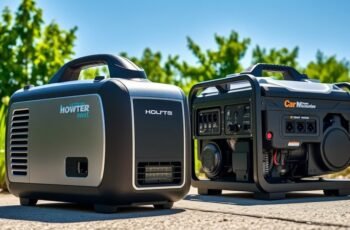
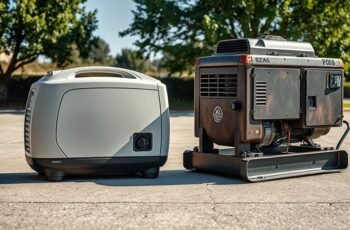
Imagine standing near a generator at night, where the difference between a whisper and a roar can mean the quiet comfort of sleep or restless disturbance. Inverter generators are often marketed as quieter than traditional silent models, but how significant is that distinction in practice? To truly understand whether inverter models deliver on this promise, we need to analyze their technology, noise factors, and real-world performance—details that reveal more than just manufacturer claims and help us make informed choices.
Key Takeaways
- Inverter generators typically operate at 50-60 dB, making them generally quieter than silent generators, which often produce slightly higher noise levels.
- Inverter technology modulates engine speed based on load, reducing noise during low-demand periods more effectively than traditional silent generators.
- Silent generators operate at constant speeds, which can result in steady noise levels higher than the variable, load-dependent operation of inverter models.
- Real-world noise levels depend on specific models, load conditions, and environmental factors, so inverter models are usually quieter in typical use.
- Both generator types benefit from sound insulation and vibration damping, but inverter generators are designed for quieter operation overall.
How Do Inverter Generators and Silent Generators Work?
While both inverter generators and silent generators produce electrical power, they do so through distinct mechanisms that influence their performance and noise levels. Inverter generators utilize advanced electronics to convert AC power to DC and then invert it back to cleaner AC, allowing for variable engine speeds based on load. This design enhances fuel efficiency by adjusting engine operation to demand, reducing fuel consumption during low loads. Silent generators, on the other hand, typically operate at constant speeds with noise-reducing enclosures, which can lead to higher fuel consumption and more frequent maintenance requirements due to continuous operation at steady RPMs. The inverter’s ability to modulate engine speed not only improves fuel efficiency but also often results in lower wear and tear, decreasing overall maintenance needs.
Are Inverter Models Really Quieter Than Traditional Generators?
When comparing noise levels, inverter models generally operate at lower decibel readings than traditional generators, but actual sound differences depend on operational conditions. Variations in engine speed and load influence the operational sounds of both types, affecting perceived quietness. Factors such as design, insulation, and load management play vital roles in determining the overall sound profile of each generator.
Noise Level Comparisons
Inverter generators are often marketed as considerably quieter than traditional models, but evaluating whether this distinction holds up requires a closer look at their noise level specifications. Typically, inverter generators operate at lower decibel levels—around 50-60 dB—compared to 65-75 dB for conventional generators. This reduced noise output stems from their advanced inverter technology, which modulates engine speed based on load, enhancing fuel efficiency and decreasing operational noise. While quieter operation may suggest better overall performance, it also correlates with lower maintenance costs, as less strain on internal components extends lifespan. However, actual noise levels can vary by model and load, so careful comparison of specifications is essential to determine if inverter models genuinely outperform traditional generators in terms of noise.
Operational Sound Differences
Although inverter generators are widely promoted for their quieter operations, the actual difference in sound levels during real-world use depends largely on load conditions and specific models. Under varying loads, inverter generators typically operate at variable speeds, reducing noise during low-demand periods, which enhances fuel efficiency. Conversely, traditional generators run at constant speed, often producing more continuous noise regardless of load. This operational variation influences not only sound levels but also maintenance costs; inverter models generally experience less wear due to their load-adaptive operation, potentially lowering maintenance expenses. However, some high-capacity inverter units can generate noise levels comparable to traditional models under heavy loads. Hence, while inverter generators often demonstrate quieter operation in typical use, the actual difference in sound depends on the specific operational context and model design.
Factors Affecting Quietness
The perceived quietness of inverter generators compared to traditional models hinges on several technical and operational factors. One key element is generator efficiency; inverter models operate with higher efficiency, reducing the need for high-speed operation that generates noise. This increased efficiency also leads to lower fuel consumption, allowing the inverter to modulate engine speed based on load demands, rather than running at full throttle constantly. As a result, inverter generators tend to produce less noise overall. Conversely, traditional generators often run at a constant, higher RPM regardless of load, contributing to increased sound levels. Hence, the combination of optimized generator efficiency and adaptive fuel consumption directly influences their relative quietness, giving inverter models a sound advantage in many use cases.
Factors That Affect Generator Noise Levels
Various factors directly influence the noise levels produced by generators, impacting their suitability for different environments. One key aspect is engine design, where more advanced, smoother-running engines tend to operate more quietly. Fuel efficiency also plays a role; efficient models often run at lower loads, reducing noise output. Maintenance costs can indirectly affect noise levels, as poorly maintained units may produce more noise due to worn components or inefficient combustion. Additionally, load capacity influences noise: operating near maximum capacity can increase sound levels, while moderate loads keep noise lower. Vibration damping and sound insulation features further modulate noise output. Recognizing these factors helps us select generators optimized for quieter operation, especially in sensitive environments where noise reduction is a priority.
Comparing Noise Levels: Inverter vs Silent Generators in Real-World Use
When comparing noise levels between inverter and silent generators in real-world settings, we focus on measurable sound levels, typically in decibels, and observe how these translate to practical differences during operation. Environmental factors and usage context profoundly influence perceived noise, highlighting the importance of analyzing actual sound data rather than theoretical ratings alone. Understanding these variables helps us assess the suitability of each generator type for specific applications where noise considerations are critical.
Noise Level Measurements
While measuring noise levels in real-world scenarios, inverter generators generally produce considerably lower decibel readings than traditional silent generators, owing to their advanced inverter technology and sound-dampening design features. These measurements reveal that inverter models typically operate within 50-60 dB, markedly reducing noise pollution in outdoor environments. In contrast, silent generators, despite their name, often register slightly higher levels due to limitations in sound insulation and cooling systems. Accurate noise level measurements highlight the importance of sound insulation components, which can substantially influence perceived loudness. Variations in measurement conditions—such as distance from the source and ambient noise—must be considered for precise comparisons. Ultimately, these data underscore the efficiency of inverter technology in minimizing noise pollution through superior sound insulation strategies.
Practical Sound Differences
In real-world usage, the practical sound differences between inverter and silent generators become evident through their impact on user experience and environmental considerations. Inverter generators typically produce a more consistent sound frequency, resulting in a smoother, less intrusive noise profile. This stability minimizes abrupt changes in volume that can be disruptive in sensitive environments. Additionally, their advanced vibration reduction mechanisms help dampen mechanical noise, further lowering perceived sound levels during operation. Silent generators, while designed for minimal noise, often rely on passive insulation, which may not effectively address all vibration-induced noise. Consequently, inverter models generally offer a more refined acoustic environment, especially during prolonged use, making them better suited for situations where comfort and noise control are critical.
Usage Environment Impact
The effectiveness of inverter and silent generators in various environments hinges considerably on their noise emissions during operation, which directly influence user comfort and compliance with noise regulations. In real-world settings, inverter generators typically produce lower noise levels due to advanced technology, enhancing their suitability for residential or quiet environments, whereas silent generators excel in highly regulated or sensitive areas. Fuel efficiency plays a role in prolonged usage, especially in remote locations, while portability benefits are critical for outdoor or mobile applications.
| Environment Type | Noise Level Impact | Suitable Generator Type |
|---|---|---|
| Residential / Quiet | Lower noise enhances comfort | Inverter generators |
| Construction sites | Higher noise tolerated | Silent generators |
| Camping / Outdoors | Portability benefits matter | Both, with inverter preferred |
When Should You Choose an Inverter Generator Over a Silent Generator?
Choosing an inverter generator over a silent generator becomes advantageous when we need cleaner, more stable power for sensitive electronics or variable loads. In such cases, inverter models provide consistent voltage regulation, reducing the risk of damage to delicate devices. Additionally, inverter generators typically offer better fuel efficiency, especially during variable power demands, which can lead to lower operational costs over time. They also tend to have reduced maintenance costs due to their advanced engineering and fewer moving parts, extending their lifespan. When constant, reliable power is essential—such as during camping trips involving electronic devices or backup power for critical equipment—an inverter generator is the most suitable choice. Overall, their efficiency and stability make them appropriate for applications demanding high-quality electricity with manageable ongoing costs.
Common Misconceptions About Generator Noise and Performance
Many assume that all generators operate quietly and perform uniformly, but this is a misconception rooted in oversimplified perceptions. In reality, noise levels vary considerably depending on design, with factors like engine type and load management influencing both generator durability and fuel efficiency. Contrary to popular belief, quieter models—such as inverter generators—do not necessarily compromise performance; they often optimize engine operation for smoother output, enhancing durability over time. However, some believe that increased noise indicates superior power output, which isn’t accurate. Performance consistency depends on engineering quality rather than noise levels alone. Understanding these nuances helps clarify that noise and performance are interconnected yet distinct, and that choosing a generator requires evaluating technical factors beyond surface impressions.
Tips to Minimize Noise Regardless of Your Generator Type
Reducing noise from generators, regardless of their type, involves targeted strategies that address both mechanical and environmental factors. Optimizing fuel efficiency minimizes engine strain, which reduces vibration and operational noise. Ensuring proper maintenance requirements—such as regular engine tuning, oil changes, and cleaning—keeps components running smoothly and decreases excessive sound emissions. Installing sound-dampening enclosures or barriers can further mitigate environmental noise, especially in sensitive settings. Proper placement—away from living spaces and on stable, level surfaces—also plays a critical role in noise reduction. By focusing on these technical elements, we can effectively lower operational noise, making generators more compatible with noise-sensitive environments without compromising performance or longevity.
Which Generator Is Best for Your Needs: Making the Right Choice
Determining the best generator for your needs requires a clear understanding of your specific power demands, operational environment, and budget constraints. For instance, high fuel efficiency is essential for extended use, while maintenance costs influence long-term affordability. To decide, consider the load capacity needed and whether portability or continuous operation is priority.
| Criteria | Suitable Generator Type |
|---|---|
| High fuel efficiency | Inverter generators for longer runtime and lower fuel use |
| Low maintenance costs | Silent generators with durable build for minimal upkeep |
| Power demands | Larger silent generators for heavy loads |
| Portability | Compact inverter models for ease of transport |
Frequently Asked Questions
How Do Inverter Generators Compare in Size and Portability to Silent Generators?
Inverter generators are typically more compact and lightweight than silent generators, enhancing portability. They offer excellent fuel efficiency and lower noise levels, making them ideal for travel or outdoor use where size, weight, and quiet operation matter most.
Are Inverter Generators More Energy-Efficient Than Silent Generators?
Like a finely tuned engine, inverter generators excel in fuel efficiency, typically outperforming silent generators, and maintain lower noise levels, making them more energy-efficient choices for extended use, especially in sensitive or quiet environments.
What Maintenance Differences Exist Between Inverter and Silent Generators?
We find inverter generators require less maintenance due to fewer moving parts and advanced electronics, which also contribute to lower noise levels. This results in better fuel efficiency and reduced wear, making them more cost-effective long-term than silent generators.
Do Inverter Generators Produce Cleaner Power Than Silent Models?
Like a skilled conductor ensuring harmony, inverter generators produce cleaner power, with lower noise levels and superior power quality, compared to silent models. Their advanced technology minimizes voltage fluctuations, making them ideal for sensitive electronics and stable operation.
Which Generator Type Is Better for Long-Term Outdoor Use?
We believe inverter generators are better for long-term outdoor use due to their superior fuel efficiency and lower noise levels, which reduce fuel consumption and environmental disturbance, making them more suitable for extended outdoor activities and continuous operation.
Conclusion
In summary, while inverter generators are generally quieter than traditional silent models due to their load-based speed modulation, the actual noise difference can vary. Factors like model design, environment, and load considerably influence sound levels. As with any technological choice, understanding these nuances helps us select the most appropriate generator—be it in the spirit of progress or a nod to days of yore. Ultimately, informed decisions guarantee enhanced performance with minimal disturbance, even in the quietest of settings.