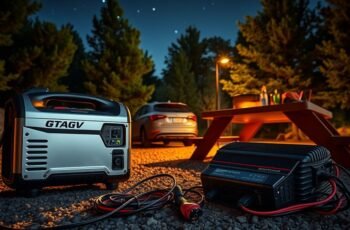
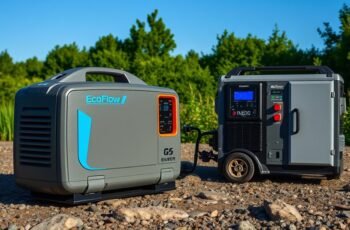
When comparing inverter and high-wattage generators, it’s essential to examine their power delivery capabilities and suitability for various applications. While inverter models excel in portability and sensitive electronics, high-wattage units are designed for demanding, multi-appliance setups. Understanding their differences helps determine which type better fits your specific needs, especially when considering factors like load capacity and operational environment. The decision ultimately hinges on balancing power requirements with practical considerations, prompting us to explore their respective strengths more closely.
Key Takeaways
- High-wattage generators typically provide more total power, enabling them to run multiple appliances simultaneously.
- Inverter generators have limited wattage capacity but deliver clean, stable power suitable for sensitive electronics.
- Large appliances and heavy-duty tools require high-wattage generators due to their higher power demands.
- Inverter generators are ideal for portable use and smaller appliances needing clean power.
- Choosing the right generator depends on the total number and type of appliances you need to power.
How Do Inverter and High-Wattage Generators Differ in Power Delivery?
While both inverter and high-wattage generators supply electrical power, they differ considerably in how they deliver that power. Inverter generators produce a stable, sine-wave output by converting DC to AC, allowing precise control over power quality. This results in improved fuel efficiency since the engine adjusts its speed to match the load, reducing unnecessary fuel consumption. Conversely, high-wattage generators operate at a constant speed, regardless of load, often leading to increased fuel use. Additionally, inverter models typically generate lower noise levels because their engine speed varies, minimizing sound output during lower demand. High-wattage generators tend to be louder due to constant operation at full speed. These differences directly influence operational efficiency and environmental impact, making inverter generators more suitable for noise-sensitive environments and fuel-conscious applications.
Which Generator Type Is Better for Powering Multiple Appliances?
When selecting a generator for multiple appliances, power stability and quality are critical factors, as fluctuations can impact device performance and longevity. Additionally, total power output capacity determines whether a generator can handle the combined load of all appliances simultaneously. Analyzing these aspects helps identify which generator type offers the most reliable and sufficient power for diverse needs.
Power Stability and Quality
In evaluating power stability and quality, inverter generators generally deliver cleaner, more consistent electricity compared to high-wattage generators. They feature advanced voltage regulation systems that maintain a steady output, reducing fluctuations that can harm sensitive appliances. This results in smoother operation and less risk of damage. Additionally, inverter generators produce markedly lower noise levels, thanks to their optimized engine design and sound-dampening enclosures, which contribute to a quieter environment and less electrical interference. High-wattage generators, while capable of producing more power, often exhibit less precise voltage regulation and generate higher noise levels, leading to potential instability for delicate electronics. Overall, inverter generators provide superior power quality, making them better suited for powering multiple sensitive appliances reliably and quietly.
Total Power Output Capacity
Typically, high-wattage generators outperform inverter models in total power output capacity, making them more suitable for powering multiple appliances simultaneously. These generators deliver higher continuous wattage, which benefits applications requiring sustained power, such as construction sites or large-scale events. While their fuel efficiency may be somewhat lower due to higher fuel consumption at maximum load, their ability to provide consistent power outweighs this drawback. Noise levels are generally higher in high-wattage units, which can be a consideration in noise-sensitive environments. In contrast, inverter generators focus on cleaner, stable power with lower noise output but often have limited wattage capacities. Therefore, for large-scale or multi-appliance setups, high-wattage generators are the more practical choice for capacity demands.
How Do Inverter and High-Wattage Generators Handle Heavy-Duty Loads?
We analyze how inverter and high-wattage generators maintain power stability under heavy loads, focusing on their ability to deliver consistent voltage and frequency. Load management capabilities are critical, as they determine how well each generator can handle sudden or sustained high demand without compromising performance. Understanding these factors helps us evaluate their suitability for demanding, real-world applications.
Power Stability and Quality
How effectively do inverter and high-wattage generators maintain power stability and quality under heavy-duty loads? Inverter generators excel with stable, sine wave output, ensuring consistent power and minimal fluctuations, essential for sensitive electronics. High-wattage models, while capable of handling larger loads, often experience voltage dips during peak demand, potentially affecting appliance performance. Fuel efficiency also impacts stability; inverter models typically consume less fuel at varying loads, improving sustainability. Noise levels differ markedly: inverter generators operate quieter, even under heavy loads, whereas high-wattage units tend to be louder, especially when strained. To analyze these differences, consider the table below:
| Feature | Inverter Generators | High-Wattage Generators |
|---|---|---|
| Power Stability | High (sine wave) | Moderate (fluctuations) |
| Noise Levels | Low | Higher |
| Fuel Efficiency | Better | Variable |
| Handling Heavy Loads | Consistent | Less consistent |
| Suitable for Sensitive Devices | Yes | Limited |
Load Management Capabilities
When evaluating load management capabilities, it’s crucial to understand how inverter and high-wattage generators respond to demanding, heavy-duty loads. Inverter generators excel here by adjusting engine speed to match load demands, optimizing fuel efficiency and reducing noise levels during high loads. This dynamic response prevents overloading and maintains stable power output. Conversely, high-wattage generators often operate at a constant speed, which can lead to increased fuel consumption and elevated noise levels under heavy loads. While they provide consistent power for large appliances, their inability to modulate output makes them less efficient in managing fluctuating demands. Overall, inverter generators offer superior load management through adaptive operation, minimizing fuel waste and noise, whereas high-wattage units rely on raw capacity, often at the expense of efficiency and noise control.
What Are the Key Factors to Consider When Choosing Between Them?
Choosing between inverter generators and high-wattage models requires careful evaluation of multiple factors that influence performance, efficiency, and suitability for specific applications. Key considerations include fuel efficiency, as inverter generators typically optimize fuel use through variable engine speeds, making them ideal for prolonged use. Noise levels also play a vital role; inverter models generally operate more quietly due to advanced muffler systems and inverter technology, which is advantageous in noise-sensitive environments. Conversely, high-wattage generators provide greater power output essential for heavy-duty applications but often at the expense of increased noise and fuel consumption. Consequently, assessing the balance between power needs, fuel efficiency, and noise levels helps determine the most appropriate generator type for your specific context.
Can You Use Inverter and High-Wattage Generators for Different Needs?
Inverter and high-wattage generators serve distinct purposes, making them suitable for different needs based on their performance characteristics. Inverter generators excel in fuel efficiency and maintaining low noise levels, making them ideal for sensitive electronics, camping, or small-scale applications where quiet operation is essential. Conversely, high-wattage generators are designed to deliver substantial power, supporting multiple appliances simultaneously, but often at the cost of increased fuel consumption and higher noise levels. Their robust output makes them suitable for construction sites, emergency backup, or large-scale events. Consequently, choosing between them depends on specific needs: if quiet operation and fuel economy are priorities, an inverter generator is preferable. For high power demands, a high-wattage generator is better suited despite its louder operation.
Which Generator Offers the Best Balance of Power, Portability, and Cost?
Balancing power, portability, and cost requires careful evaluation of generator options, as each factor influences overall suitability for specific applications. When evaluating the best compromise, we consider fuel efficiency and noise levels, vital for operational costs and environmental impact. High-wattage generators typically offer robust power but tend to be less portable and noisier, affecting usability in confined or noise-sensitive environments. Conversely, inverter generators excel in fuel efficiency and produce lower noise levels, enhancing portability and comfort but often with limited power output.
- Power output vs. portability trade-offs
- Fuel efficiency impacts operational costs
- Noise levels influence usability in quiet settings
- Cost considerations balance initial investment and ongoing expenses
Frequently Asked Questions
How Long Do Inverter and High-Wattage Generators Typically Run on a Full Tank?
Inverter generators typically run 6-12 hours on a full tank, depending on fuel capacity and load, while high-wattage generators generally provide 8-24 hours run time. Fuel efficiency varies with power demand and design.
Are Inverter Generators More Fuel-Efficient Than High-Wattage Models?
Like a modern-day Tesla, inverter generators prioritize fuel efficiency without sacrificing power output. We find they typically deliver better fuel economy than high-wattage models, making them ideal for sustained, efficient energy use during extended power needs.
Can Inverter Generators Handle Sensitive Electronic Devices Safely?
We confirm inverter generators safely handle sensitive electronics due to their superior power stability and precise voltage regulation, ensuring minimal fluctuations and protecting devices from potential damage caused by inconsistent power supply.
What Maintenance Is Required for High-Wattage Generators?
Like tending a finely tuned engine, we perform routine maintenance on high-wattage generators, including fuel stabilization and oil lubrication, to guarantee peak performance and longevity, preventing failures and maintaining efficiency over time.
Are There Noise Level Differences Between Inverter and High-Wattage Generators?
We find that inverter generators generally produce lower sound levels, making them quieter, while high-wattage generators tend to have higher noise levels; the noise comparison is significant when considering operation in noise-sensitive environments.
Conclusion
Ultimately, choosing between inverter and high-wattage generators is like selecting the right tool for a specific job. Inverter models are our precision instruments—quiet, efficient, perfect for delicate electronics. High-wattage units are the robust workhorses, capable of powering multiple large appliances simultaneously. By weighing your power needs against portability and cost, you can craft a tailored energy solution that balances performance and practicality, illuminating your path with clarity and confidence.