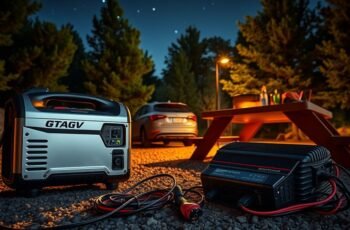
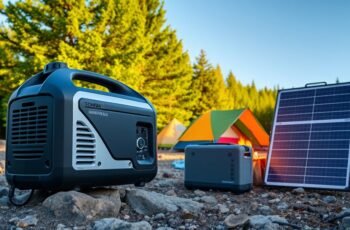
As we evaluate RV power solutions for 2026, it’s clear that both inverter generators and power stations offer distinct advantages and limitations rooted in technical performance and sustainability. With evolving technology and environmental considerations, understanding which aligns best with our energy demands and long-term goals becomes essential. The decision hinges on nuanced factors that warrant a closer, analytical look to determine the most effective choice for modern RV travel.
Key Takeaways
- Power stations offer silent, eco-friendly operation with renewable energy options, ideal for long-term and sustainable RV power needs.
- Inverter generators provide higher peak wattage suitable for short bursts of heavy loads and are better for immediate power demands.
- Power stations are lighter, more portable, and easier to set up, making them preferable for quick deployment and off-grid use.
- Inverter generators typically require ongoing fuel management and maintenance, whereas power stations have lower operational costs and simpler upkeep.
- Hybrid systems combining solar and battery technology are emerging as the most future-proof solution for versatile RV power in 2026.
Understanding the Basics: What Are Inverter Generators and Power Stations?
Although both inverter generators and power stations serve as portable sources of electrical power, they differ considerably in design and functionality. Inverter generators rely on internal combustion engines, converting mechanical energy into AC power, optimized for noise reduction and fuel efficiency. Power stations, on the other hand, primarily use advanced battery technology, integrating lithium-ion or similar batteries for energy storage. This design allows for silent operation and quick recharge, often enhanced with solar integration for sustainable energy input. Solar compatibility enables power stations to harness renewable energy, reducing reliance on fuel and improving efficiency in remote settings. While inverter generators generate power on-demand, power stations store energy for later use, offering flexibility and eco-friendliness critical for modern RV applications.
How Do Inverter Generators Work and What Are Their Benefits for RV Use?
Inverter generators operate by converting DC power stored in a battery or produced by an internal combustion engine into clean, stable AC electricity suitable for sensitive electronic devices. This process involves sophisticated electronic circuitry that modulates output frequency and voltage, ensuring minimal harmonic distortion. For RV use, this stability enhances the longevity of appliances and electronics. Additionally, inverter generators often support solar integration, allowing them to supplement power with renewable sources, which conserves fuel and improves efficiency. Battery capacity is a critical factor, as larger batteries enable longer run times and better energy management, especially when combined with solar input. Overall, inverter generators provide quiet operation, energy stability, and adaptability, making them highly beneficial for RVers seeking reliable, portable power solutions in diverse camping environments.
What Is a Power Station and Why Is It Popular Among Modern RVers?
A power station, often referred to as a portable power generator or battery system, combines advanced energy storage and power management technologies into a compact unit. Its core relies on cutting-edge battery technology, enabling high-capacity, rapid charging, and efficient energy discharge. Modern units often feature solar integration, allowing users to harness renewable energy for extended, eco-friendly power sources. This versatility appeals to RVers seeking reliable, silent, and portable power solutions that reduce dependency on fossil fuels. The integration of solar panels enhances sustainability and provides a continuous charging option, especially useful during off-grid excursions. Technical advancements in battery technology and solar compatibility make power stations increasingly popular among modern RVers, offering a practical, clean, and adaptable alternative to traditional generators.
Comparing Power Output and Performance: Which Is Better for Heavy-Duty RV Needs?
When comparing power output, we focus on capacity differences that determine how much equipment we can run simultaneously. Runtime and fuel efficiency directly impact operational endurance during extended use, especially for heavy loads. Analyzing handling capabilities for demanding appliances helps identify which option guarantees reliable performance under strenuous RV conditions.
Power Capacity Differences
While both inverter generators and power stations can provide reliable energy, their capacity to handle heavy-duty RV loads varies considerably. Inverter generators typically deliver higher peak wattage, making them suitable for powering appliances with high starting currents. Power stations, however, rely heavily on advanced battery technology, which influences their continuous power output; they often excel in steady, lower wattage demands. Additionally, solar integration enhances power station capacity by expanding energy input, allowing for larger, more sustained power reserves. This makes power stations more adaptable for extended off-grid use. Conversely, inverter generators generally offer superior peak power for short-term heavy loads but lack the scalability and integration options of modern power stations. As a result, the choice hinges on the specific power capacity needs and integration capabilities required for heavy-duty RV applications.
Runtime and Fuel Efficiency
Inverter generators generally offer shorter runtimes on a given fuel load compared to power stations, primarily due to differences in their energy conversion processes and fuel consumption efficiencies. Inverter generators tend to operate at variable speeds based on load, optimizing fuel use but often resulting in less overall runtime. Conversely, power stations use larger batteries with higher capacity, providing extended operation and improved battery longevity over time. Fuel alternatives, such as propane or hybrid systems, can enhance efficiency in both options, but the core difference remains in how each device manages energy conversion. For heavy-duty RV needs, this means power stations can sustain prolonged use with less frequent refueling, while inverter generators require more attention to fuel management, impacting their practicality for extended heavy-duty applications.
Handling Heavy-Duty Loads
Power output and performance are crucial factors when evaluating inverter generators and power stations for heavy-duty RV applications. To handle demanding loads, a power station with higher continuous wattage is essential, especially when powering multiple appliances simultaneously. Battery longevity directly impacts sustained performance, making it essential to consider units with durable batteries and efficient transfer capabilities. Solar compatibility offers an added advantage by enabling renewable energy integration, reducing reliance on fuel.
When examining options, consider:
- Consistent power delivery under high loads
- Long-lasting, resilient batteries for extended use
- Support for solar input to enhance sustainability
- Ability to maintain performance during peak demands
Choosing the right device hinges on balancing power capacity with reliability, ensuring your RV can handle heavy-duty loads smoothly and efficiently.
Portability and Ease of Use: Which Device Fits Your Travel Style?
When evaluating portability and ease of use, we focus on weight and size, which directly impact mobility and storage. Setup complexity and user controls also influence how seamlessly these devices integrate into different travel routines. By analyzing these factors, we can determine which device aligns best with your specific travel style.
Weight and Size
How do the sizes and weights of inverter generators and power stations influence their portability for different travel scenarios? Inverter generators tend to be heavier and bulkier, often requiring sturdy handling, yet they offer robust power output. Conversely, modern power stations leverage advanced battery technology, making them considerably lighter and more compact, ideal for minimalistic setups. Their lightweight design enhances portability, especially when combined with solar integration, allowing easy recharging without added weight. For travelers prioritizing ease of transport and quick setup, power stations provide a distinct advantage. However, inverter generators excel where higher power demands and longer runtime are necessary.
- Lightweight power stations for effortless mobility
- Compact size fits tight spaces easily
- Battery technology reduces weight without sacrificing capacity
- Solar integration supports sustainable, lightweight power solutions
Setup and Portability
Choosing between inverter generators and power stations often depends on the ease of setup and overall portability in various travel contexts. Power stations excel here due to their compact design, often featuring integrated handles and lightweight construction, facilitated by advanced battery technology. Their plug-and-play nature requires minimal assembly, making them ideal for quick deployment. In contrast, inverter generators, while portable, typically need fuel refills and more space for setup. Additionally, power stations often support solar integration, enhancing portability by allowing recharging via portable solar panels, reducing reliance on fuel and extending usability in remote locations. This integration simplifies off-grid operation, making power stations a more adaptable choice for travelers prioritizing ease of use and sustainable energy sources.
User-Friendly Controls
In regards to user-friendly controls, power stations generally offer more straightforward operation due to their digital interfaces and simplified setup processes. Their intuitive displays facilitate real-time monitoring of solar integration and battery management, allowing users to optimize power output effortlessly. This enhances reliability and reduces user error, especially in remote settings. Additionally, power stations often include features like one-touch start buttons and integrated app controls, streamlining the user experience. Conversely, inverter generators tend to have manual controls, which can be more complex for casual users.
- Effortless solar integration for seamless charging
- Intuitive digital displays for real-time battery management
- Simplified setup minimizes setup time and errors
- Mobile app controls enhance accessibility and monitoring
Cost and Value: Which Option Offers Better Long-Term Investment for RV Power?
While both inverter generators and power stations serve as reliable sources of RV power, their long-term value hinges on initial costs, operational expenses, and durability. Power stations, with integrated energy storage and the ability to utilize renewable sources like solar, often present lower operational costs over time, reducing fuel and maintenance expenses. In contrast, inverter generators require ongoing fuel purchases and regular maintenance, increasing lifetime costs. Although inverter generators may have a lower upfront price, their durability and energy storage capabilities are limited compared to power stations, which are designed for extended use and scalability. For long-term investment, power stations offer greater value through enhanced energy storage options, compatibility with renewable sources, and overall lower total cost of ownership.
Eco-Friendliness and Noise Levels: Which Is More Environmentally Friendly?
Because of their design, power stations generally have a lower environmental impact compared to inverter generators, primarily due to their ability to integrate renewable energy sources like solar panels. This solar integration markedly enhances emission reduction, making power stations more eco-friendly. They produce minimal noise, often operating silently, which reduces noise pollution and disturbance. In contrast, inverter generators, while quieter than traditional models, still rely on fuel combustion, contributing to greenhouse gas emissions.
- Reduced carbon footprint through renewable energy use
- Notably quieter operation minimizes noise pollution
- Lower emissions support sustainable practices
- Less environmental disruption during use
Maintenance and Durability: What Do You Need to Know for Reliability on the Road?
Maintenance and durability are essential considerations for ensuring reliable power supply during travel, especially when comparing inverter generators and power stations. Battery longevity plays a critical role in the overall reliability of power stations, requiring regular checks to prevent capacity loss. Proper maintenance tips include keeping batteries charged within recommended levels, avoiding deep discharges, and storing units in cool, dry environments. For inverter generators, routine oil changes, air filter replacements, and spark plug inspections extend operational life and prevent unexpected failures. Durability also depends on build quality; ruggedized cases and corrosion-resistant components enhance on-road resilience. Both systems benefit from scheduled inspections and prompt repairs, ensuring consistent performance. Ultimately, understanding maintenance needs and focusing on component longevity are essential for dependable power on the road.
Which Power Source Is More Future-Proof for 2026 and Beyond?
As technology advances and energy sustainability becomes increasingly critical, the question of which power source is more future-proof hinges on several evolving factors. Solar energy and battery technology are central to this evolution. Solar panels are becoming more efficient, compact, and affordable, making solar energy a viable, renewable option for RV power. Meanwhile, advancements in battery technology—such as higher energy density and faster charging—are extending the lifespan and reliability of power storage systems.
Consider these key points:
- Solar energy’s decreasing costs and increased efficiency
- Rapid innovations in battery technology improving durability
- Growing integration of renewable sources into mainstream power solutions
- The potential for hybrid systems combining solar and batteries for resilience
Both options are trending toward sustainability, but a hybrid approach may offer the most future-proof solution.
Making Your Choice: Should You Go With an Inverter Generator or a Power Station for Your RV?
Choosing the right power source for your RV depends on evaluating specific needs, usage patterns, and the benefits each option offers. An inverter generator provides reliable power, often with good solar compatibility, but may have shorter battery lifespan and higher noise levels. Conversely, a power station often features integrated batteries, offering silent operation and enhanced solar compatibility, with longer battery lifespan when properly maintained. Consider your typical usage, portability preferences, and energy demands.
| Feature | Inverter Generator | Power Station |
|---|---|---|
| Solar Compatibility | Moderate | High |
| Battery Lifespan | Shorter | Longer |
| Portability | Moderate to heavy | Usually lightweight |
Frequently Asked Questions
Can Inverter Generators Run Sensitive Electronic Devices Safely?
Inverter generators safely run sensitive electronics due to their stable, clean power output, and lower noise levels. They also offer better fuel efficiency, reducing operational costs and minimizing electrical interference, making them ideal for delicate RV devices.
Are Power Stations Compatible With Solar Charging Options?
Power stations are fully compatible with solar charging options, enhancing solar panel compatibility and boosting charging efficiency. We analyze their integration, ensuring ideal energy transfer, reliable performance, and maximizing renewable energy utilization for efficient, sustainable RV power solutions.
How Do Inverter Generators Perform in Extreme Weather Conditions?
In extreme weather, inverter generators maintain fuel efficiency and operate quietly, thanks to advanced cooling systems and inverter technology, though performance may decline in severe cold or heat, requiring proper maintenance and protective measures for consistent operation.
What Are the Maintenance Requirements for Portable Power Stations?
Think of a portable power station like a smartphone; its battery lifespan depends on charging cycles. Regular maintenance involves monitoring for firmware updates, avoiding over-Discharge, and ensuring proper storage, which prolongs performance and maximizes lifespan.
Which Device Offers Better Scalability for Future Power Needs?
We believe power stations offer better scalability through modular expansions and increased battery capacity, enabling us to adapt to future power needs efficiently. Their design allows seamless upgrades, unlike inverter generators, which lack flexible scalability options.
Conclusion
Ultimately, choosing between an inverter generator and a power station is like selecting the right compass for uncharted waters—we must weigh each tool’s strengths against our journey’s demands. As the horizon of technology shifts, power stations’ eco-friendly, scalable nature offers a resilient beacon for sustainable exploration. Our decision shapes not just our RV experience, but our stewardship of the environment, guiding us toward a future where innovation fuels our adventures responsibly.