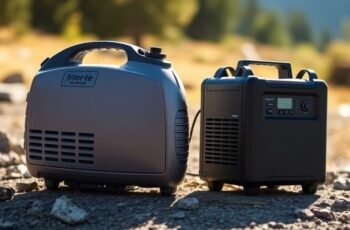
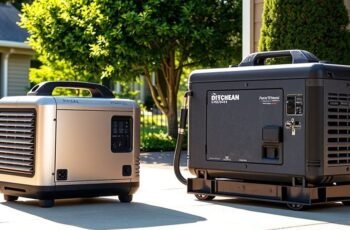
When selecting a portable power source, understanding the fundamental differences between inverter and dual fuel generators is essential. Both types offer distinct advantages and limitations that influence performance, fuel options, noise levels, and portability. As we explore these differences, we’ll uncover critical factors to weigh for your specific needs—whether for sensitive electronics, outdoor projects, or emergency backup—making it crucial to assess which generator best aligns with your operational requirements.
Key Takeaways
- Inverter generators produce stable, clean power with quieter operation, ideal for sensitive electronics and outdoor activities.
- Dual fuel generators can run on gasoline or propane, offering greater fuel flexibility and longer storage life.
- Inverter models are more fuel-efficient at partial loads due to engine speed modulation, while dual fuel units typically consume more fuel.
- Inverter generators are lighter, more portable, and environmentally friendly with lower emissions; dual fuel units are heavier and more robust.
- Choose inverter generators for quiet, clean power needs; select dual fuel models for extended runtime and fuel versatility.
What Are Inverter Generators and How Do They Work?
Inverter generators are a specialized type of portable power source designed to produce stable, clean electricity suitable for sensitive electronic devices. They operate by converting DC power into AC power through high-speed switching, then using a sophisticated inverter to produce consistent, pure sine wave output. This process guarantees minimal harmonic distortion, making them ideal for delicate electronics. Their eco-friendly operation stems from variable speed technology, which adjusts engine speed based on power demand, reducing fuel consumption and emissions. Maintenance requirements are generally low, involving routine oil changes, filter replacements, and inspection of electrical connections. The compact design, combined with efficient fuel use and minimal emissions, makes inverter generators an environmentally conscious choice for portable power needs.
Comparing Performance: Power Output and Efficiency
We will now compare the power output capabilities of inverter and dual fuel generators, focusing on their maximum wattage and load stability. Additionally, we’ll analyze fuel efficiency metrics, highlighting how each generator type optimizes energy consumption under different conditions. This comparison aims to clarify which option provides superior performance for specific applications.
Power Output Capabilities
Power output capabilities are crucial when evaluating inverter and dual fuel generators, as they directly impact performance and suitability for various applications. The alternator design critically influences power output, with inverter models typically featuring advanced, lightweight alternators optimized for stable, clean power delivery. Dual fuel generators often have more robust alternator configurations to handle higher surge capacities, especially when operating on gasoline. Voltage regulation plays a fundamental role in maintaining consistent power, preventing fluctuations that could damage sensitive electronics. Inverter generators excel in producing stable, sinusoidal output even at varying load levels, ensuring efficient operation. Conversely, dual fuel generators may prioritize higher wattage output, which can result in less precise voltage regulation but greater overall power capacity for heavy-duty tasks.
Fuel Efficiency Comparison
How do inverter and dual fuel generators compare regarding fuel efficiency when considering their performance and power output? In terms of fuel consumption, inverter generators typically achieve higher efficiency due to their advanced inverter technology that modulates engine speed based on load demands. This results in lower fuel consumption at partial loads, enhancing cost efficiency over prolonged use. Conversely, dual fuel generators, while versatile in fuel options, often have higher fuel consumption rates because their engines run at a consistent speed regardless of load. When evaluating overall performance, inverter models optimize fuel use for smaller to medium loads, offering better cost efficiency. Dual fuel units excel in providing flexibility but may compromise fuel efficiency under continuous operation. Consequently, for consistent power with minimal fuel costs, inverter generators are generally more efficient.
Fuel Options and Usage: Inverter vs Dual Fuel Generators
We analyze how inverter and dual fuel generators differ in fuel compatibility and flexibility, affecting operational versatility. Efficiency in fuel consumption and overall costs also play a critical role in evaluating their suitability for specific applications. Understanding these factors helps determine which generator type ideally balances performance and expense.
Fuel Compatibility and Flexibility
While inverter generators typically operate exclusively on gasoline, dual fuel generators offer the significant advantage of compatibility with multiple fuel types, such as gasoline and propane. This fuel versatility enhances refueling convenience, allowing users to switch fuels based on availability or cost. Dual fuel units provide operational flexibility, especially during emergencies or outdoor use where fuel options may be limited.
| Fuel Type | Advantages | Limitations |
|---|---|---|
| Gasoline | Widely available, easy to store | Shorter shelf life, fluctuating prices |
| Propane | Longer shelf life, cleaner burn | Requires additional equipment, less portable |
| Both | Flexibility, increased convenience | Slightly higher initial cost |
This table highlights how dual fuel generators accommodate diverse fuel options, optimizing operational flexibility and convenience.
Consumption Efficiency and Cost
When comparing consumption efficiency and operational costs, it’s essential to recognize that inverter and dual fuel generators differ considerably in fuel usage patterns and overall expense. Inverter generators typically feature advanced electronic controls that enhance fuel consumption, resulting in higher cost efficiency during low to moderate loads. Conversely, dual fuel generators offer flexibility with fuel options but may have less precise fuel management, leading to variable fuel consumption rates.
- Inverter generators generally have lower fuel consumption at partial loads due to precise control.
- Dual fuel units can switch fuels, but inconsistent consumption impacts cost efficiency.
- Fuel costs considerably influence long-term operational expenses.
- Ideal fuel efficiency depends on load management and fuel type, affecting overall cost efficiency.
Noise Levels and Portability: What Matters Most?
Understanding the importance of noise levels and portability is essential when choosing between an inverter generator and a dual fuel generator. Inverter generators typically feature advanced sound insulation, considerably reducing operational noise, which is vital in noise-sensitive environments. Conversely, dual fuel models often produce more sound due to less emphasis on soundproofing. Weight considerations are also key; inverter generators usually have a lighter, compact design, enhancing portability, especially for outdoor or emergency use. Dual fuel generators tend to be heavier, impacting ease of transport and storage. When prioritizing quiet operation and ease of movement, inverter generators excel due to their sound insulation and lower weight. In contrast, dual fuel units may sacrifice some portability for fuel versatility, but at the cost of increased noise and bulk.
Best Use Cases for Inverter Generators and Dual Fuel Models
Choosing the right generator depends heavily on its intended application. For emergency preparedness, dual fuel models excel due to fuel versatility and extended runtime, ensuring reliable power during outages. In contrast, inverter generators are ideal for camping essentials, providing clean, quiet power suitable for sensitive electronics. Consider these use cases:
- Emergency power backup: Dual fuel generators adapt to fuel availability, making them suitable for prolonged outages.
- Remote work sites: Dual fuel models offer flexibility in fuel sources for extended use.
- Camping trips: Inverter generators deliver stable, portable power with low noise, perfect for electronics and small appliances.
- Tailgating or outdoor events: Inverter models provide quiet, lightweight power for electronics without disturbing others.
Both types serve critical roles depending on the context, emphasizing their specific strengths for different applications.
How to Choose the Right Generator for Your Needs
Determining the right generator for your needs requires evaluating your power requirements, operational environment, and fuel preferences. Consider the total wattage load, guaranteeing the generator can handle peak and continuous demands. For frequent use, low maintenance costs are vital, so select models with durable components and accessible service. Environmental impact also plays a significant role; inverter generators typically produce cleaner emissions and are more energy-efficient, reducing carbon footprint. Dual fuel generators offer flexibility with fuel choice but may have higher maintenance costs due to complex fuel systems. Assess where you’ll operate the generator—outdoors, indoors, or in sensitive environments—to determine the noise level and emissions standards. A precise evaluation of these factors ensures you select a generator optimized for longevity, efficiency, and environmental compliance.
Frequently Asked Questions
Which Generator Type Is More Environmentally Friendly?
We believe inverter generators are more eco-friendly, adhering to stricter emission standards and utilizing eco-friendly technology that reduces pollutants. Dual fuel generators can switch fuels but often produce higher emissions, making inverter models the greener choice overall.
How Long Do Inverter and Dual Fuel Generators Typically Last?
Inverter and dual fuel generators typically last 1,000 to 3,000 hours, with fuel efficiency and noise levels affecting longevity; well-maintained units often exceed expected lifespan, making them reliable for extended use.
Are Dual Fuel Generators More Cost-Effective Long-Term?
We find dual fuel generators more cost-effective long-term due to their enhanced fuel efficiency and flexibility, which lead to significant cost savings, especially when switching between fuel sources, optimizing operational costs and extending overall lifespan.
Can Inverter Generators Run Sensitive Electronics Safely?
Yes, inverter generators safely power sensitive electronics due to their stable power output, minimizing power fluctuation, and they operate quietly, with lower noise levels, making them ideal for delicate devices and noise-sensitive environments.
What Maintenance Differences Exist Between These Two Generator Types?
We find that inverter generators generally require less maintenance due to their simpler, more efficient fuel systems, while dual fuel generators demand additional checks for fuel lines and carburetor cleanliness, especially considering their different startup procedures and fuel efficiency considerations.
Conclusion
Ultimately, choosing between an inverter and dual fuel generator depends on your specific needs. Inverter generators excel in providing clean power quietly and efficiently, perfect for sensitive electronics and portability. Meanwhile, dual fuel models offer versatility and longer runtime, ideal for heavy-duty or remote applications. As the saying goes, “Better safe than sorry”—by understanding these key differences, you can select a generator that guarantees reliable power when it matters most.