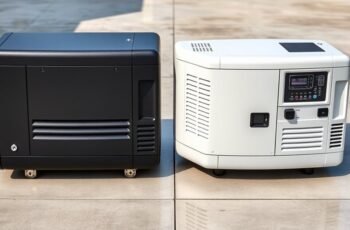
Inverter generators differ from traditional models primarily through their power conversion process, which involves transforming AC to DC and then back to AC. This method results in cleaner, more stable electricity with minimal harmonic distortion. Advanced electronics and microprocessors constantly adjust engine speed to match load demands, ensuring consistent voltage and frequency. Understanding these technical distinctions reveals why inverter generators are often preferred for sensitive electronics and portable applications, prompting us to explore their key design features further.
Key Takeaways
- Converts AC to DC and then back to AC for cleaner, more stable power output.
- Uses advanced electronics and microprocessors for real-time power regulation.
- Produces minimal harmonic distortion and maintains consistent voltage and frequency.
- Operates more quietly and efficiently by modulating engine speed based on load.
- Offers portable, reliable power suitable for sensitive electronics and emergency backup.
How Inverter Generators Produce Cleaner, Stable Power
Although traditional generators produce fluctuating power output, inverter generators utilize advanced power conversion technology to generate cleaner and more stable electricity. This process involves converting raw AC power to DC, then inverting it back to AC with precise control. The result is markedly improved power quality, characterized by minimal harmonic distortion and consistent voltage regulation. These features ensure sensitive electronic devices operate safely and efficiently. Additionally, inverter generators are designed to meet strict emission standards, reducing pollutants compared to conventional units. The stable output not only enhances device performance but also ensures compliance with environmental regulations. Overall, the combination of superior power quality and adherence to emission standards makes inverter generators a reliable choice for clean, stable, and environmentally responsible power generation.
The Key Design Differences Between Inverter and Conventional Generators
The primary distinctions between inverter and conventional generators lie in their core design and power management systems. Inverter generators utilize advanced electronics to convert AC power into DC and then invert it back to AC, guaranteeing superior waveform stability. This process allows for precise power regulation, adapting output in real-time to match load demands. Unlike conventional models, which rely on mechanical components like brushes and voltage regulators for power control, inverters use microprocessors to maintain consistent voltage and frequency. This design results in cleaner, more stable power with minimal fluctuation. The emphasis on waveform stability and dynamic power regulation ensures inverter generators deliver consistent, reliable electricity, making them ideal for sensitive electronic devices. These key design differences substantially impact performance, efficiency, and the quality of power supplied.
Why Inverter Generators Are Quieter and More Fuel-Efficient
Inverter generators operate more quietly and efficiently because their advanced power management systems adapt output to match load demands in real-time. This dynamic adjustment results in significant noise reduction, as the engine only runs at necessary speeds rather than full throttle constantly. Consequently, the noise profile is markedly lower than traditional generators. Additionally, this precise regulation enhances fuel economy; by modulating engine speed based on power requirements, inverter generators consume less fuel overall. This efficiency not only extends runtime but also reduces emissions, making them more environmentally friendly. The combination of noise reduction and improved fuel economy stems directly from their sophisticated inverter technology, which optimizes performance without sacrificing power quality or operational stability.
The Versatility and Ideal Uses for Inverter Generators
Inverter generators stand out for their adaptability across a wide range of applications, thanks to their compact design, clean power output, and adjustable performance features. They excel in providing portable power for outdoor activities, camping, and job sites, where size and noise levels matter. Their stable power output makes them suitable for sensitive electronics, making them ideal for emergencies or backup power during outages. The following table highlights key uses:
| Application | Feature Advantage | Typical Scenario |
|---|---|---|
| Portable Power | Lightweight, easy to transport | Camping, tailgating |
| Emergency Preparedness | Reliable, stable power supply | Power outages, storms |
| Sensitive Electronics | Clean sine wave output | Laptops, medical devices |
This versatility ensures inverter generators are indispensable in both recreational and critical situations.
Factors to Consider When Choosing an Inverter Generator
When selecting an inverter generator, it’s essential to evaluate several technical factors to guarantee it meets your specific power needs. Key considerations include:
- Power output – Make sure the generator provides sufficient wattage for your appliances or devices, including starting watts versus running watts.
- Efficiency and fuel consumption – A highly efficient generator minimizes fuel costs and extends runtime.
- Maintenance requirements – Opt for models with straightforward maintenance routines to reduce downtime and operational costs.
Understanding these factors allows you to choose a generator aligned with your power demands while maintaining ease of care. Prioritizing correct power output ensures reliable performance, and evaluating maintenance needs guarantees long-term durability and cost-effectiveness.
Frequently Asked Questions
How Long Do Inverter Generators Typically Last With Regular Use?
Inverter generators typically last 10,000 to 20,000 hours with regular use, thanks to their high fuel efficiency and low noise levels, which reduce strain on components and extend overall lifespan, making them reliable for long-term applications.
Are Inverter Generators More Environmentally Friendly Than Traditional Models?
Inverter generators are more environmentally friendly because they offer superior fuel efficiency, reducing emissions, and feature noise reduction technology, which minimizes noise pollution. These advancements make them a sustainable choice for eco-conscious users.
Can Inverter Generators Be Linked Together for Increased Power?
Yes, inverter generators can be linked together using parallel kits, enhancing fuel efficiency and reducing noise levels while providing increased power output, ideal for demanding applications and ensuring consistent performance without sacrificing eco-friendliness or quiet operation.
What Maintenance Is Required to Keep an Inverter Generator Running Efficiently?
To maintain efficiency, we regularly change the oil, clean air filters, and inspect spark plugs, ensuring ideal fuel efficiency and low noise levels; these routine checks prolong the inverter generator’s lifespan and consistent performance.
Do Inverter Generators Perform Well in Extreme Weather Conditions?
Inverter generators handle extreme weather like a seasoned athlete, providing reliable cold starts and weather resilience. We’ve tested models in freezing conditions, and their smart technology guarantees efficient performance even when temperatures plummet.
Conclusion
Inverter generators stand as the lighthouse guiding us through the storm of unreliable power. Their advanced electronics and adaptive technology symbolize resilience and precision, ensuring our devices remain steady amid chaos. As a beacon of efficiency and quiet strength, they represent a reliable partner in every adventure and emergency. Choosing an inverter generator means trusting a finely tuned engine of stability—our steadfast companion illuminating the path forward with clean, stable energy.