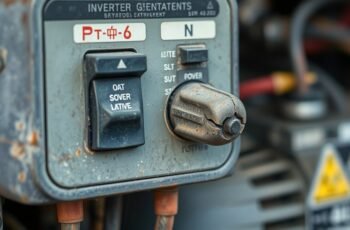
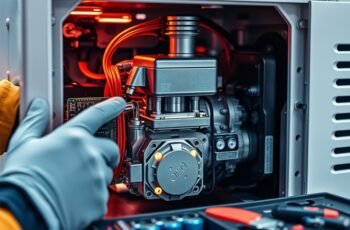
Maintaining an inverter generator requires systematic attention to its vital components to guarantee consistent performance and durability. Regular inspections of oil levels, air filters, spark plugs, and electrical connections are necessary steps. Proper upkeep not only prevents unexpected failures but also maximizes efficiency and lifespan. Developing a detailed maintenance plan tailored to your generator’s specifications is essential. Understanding these processes can greatly impact your operational reliability—so, let’s explore the key procedures that keep your inverter generator running at its best.
Key Takeaways
- Follow the manufacturer’s recommended maintenance schedule, including regular oil, air filter, and spark plug checks.
- Use high-quality fuel with stabilizers and store fuel properly to prevent degradation and engine issues.
- Regularly inspect and clean electrical connections, batteries, and wiring for corrosion or damage.
- Calibrate inverter circuits and ensure exhaust systems are free of blockages for stable power output.
- Keep accessories compatible and perform routine checks to ensure reliable, efficient, and eco-friendly operation.
How Often Should You Service Your Inverter Generator?
Regular maintenance is crucial to guarantee peak performance and longevity of your inverter generator. Typically, servicing should occur every 50 to 100 hours of operation, depending on usage intensity and environmental conditions. Consistent checks help optimize generator noise levels, ensuring quieter operation, and maintain fuel efficiency by preventing carbon buildup or fuel system issues. Frequent inspections allow us to identify potential problems early, such as clogged filters or worn components, which could lead to increased noise or reduced fuel economy if neglected. Precise adherence to the manufacturer’s recommended service intervals ensures that the inverter runs smoothly, conserving fuel and minimizing disruptive noise. Regular servicing is a proactive measure essential for sustaining both the efficiency and quiet operation of your inverter generator over its lifespan.
Checking and Changing the Oil for Reliable Performance
Maintaining proper oil levels and quality is fundamental to guaranteeing your inverter generator operates reliably and efficiently. We recommend verifying oil viscosity according to the manufacturer’s specifications, as using the correct viscosity ensures ideal lubrication and temperature stability. When checking oil, inspect the level and color; low or dirty oil can cause increased wear. Regularly change the oil to prevent degradation, which can impair engine performance. During oil changes, guarantee proper filter placement, as the oil filter removes contaminants that could otherwise circulate and cause engine damage. Use the designated filter type and confirm its secure placement before refilling with fresh oil. Consistent oil management minimizes engine stress and prolongs generator lifespan, maintaining peak operational reliability.
Cleaning and Inspecting the Air Filter and Spark Plug
Since the air filter and spark plug directly affect engine performance and fuel efficiency, inspecting and cleaning these components is essential for peak operation. Regular air filter maintenance involves removing the filter and cleaning it with compressed air or replacing it if it’s excessively dirty or damaged. This prevents debris from entering the engine, ensuring ideal airflow. For the spark plug, inspection entails checking for carbon buildup, wear, or corrosion. Cleaning with a wire brush may suffice, but spark plug replacement is often necessary if the electrode is worn or damaged. Proper maintenance of these components maintains combustion efficiency and prevents misfires. Consistent inspection and timely replacement of the spark plug, combined with thorough air filter maintenance, maximize generator performance and extend its service life.
Ensuring Proper Fuel Storage and Handling
Proper fuel storage and handling are critical to guaranteeing the inverter generator operates reliably and efficiently over time. Maintaining fuel stability prevents degradation that can impair engine performance, while container safety minimizes risks associated with leaks or spills. To optimize these factors, consider the following:
- Use approved, airtight containers designed for fuel storage
- Store fuel in a cool, well-ventilated area away from heat sources
- Regularly inspect containers for cracks, leaks, or corrosion
- Limit stored fuel duration, utilizing stabilizers if necessary
- Label containers clearly to prevent mishandling or cross-contamination
Adhering to these practices ensures fuel remains stable and containers remain safe, ultimately extending the lifespan of your inverter generator and safeguarding operational integrity.
How to Test and Maintain the Battery and Electrical Components
Regularly checking the battery voltage guarantees the electrical system remains within ideal operating parameters. Inspecting wiring connections for corrosion or looseness prevents potential electrical failures. Adhering to precise testing and maintenance protocols helps sustain generator reliability and performance.
Check Battery Voltage Regularly
Monitoring the battery voltage of your inverter generator is essential for ensuring reliable performance and preventing unexpected failures. Regular voltage monitoring provides insights into battery health, enabling early detection of issues like sulfation or diminished capacity. By consistently measuring voltage, you can confirm that the battery maintains ideal charge levels and identify potential deterioration before it affects operation. Proper voltage checks involve using a multimeter to record voltage readings under various conditions, including rest and load states.
Key points to contemplate include:
- Ensuring the voltage remains within manufacturer-specified ranges
- Recognizing signs of low voltage indicating battery degradation
- Comparing measurements over time to track battery health trends
- Verifying consistent voltage during operation
- Scheduling periodic voltage assessments to maintain electrical system reliability
Inspect Wiring Connections Carefully
Since loose or corroded wiring can lead to electrical failures and reduce the overall efficiency of your inverter generator, it’s essential to carefully inspect all wiring connections regularly. Ensuring wiring safety and connection stability prevents potential malfunctions and enhances operational reliability. When inspecting, look for signs of corrosion, frayed insulation, or loose fittings. Tighten any loose connections and replace damaged wires immediately. Use a multimeter to test continuity and verify proper voltage flow across connections. The table below summarizes key inspection points:
| Inspection Focus | Action Required |
|---|---|
| Corrosion | Clean and apply protective spray |
| Loose connections | Tighten securely |
| Insulation damage | Replace compromised wiring |
| Voltage consistency | Test with multimeter |
| Overall wiring | Confirm stability and safety |
Troubleshooting Common Inverter Generator Issues and Fixes
When an inverter generator encounters operational issues, diagnosing the root cause requires systematic analysis and precise troubleshooting. Power surges can cause voltage instability, while noise issues often indicate mechanical or electrical faults. To address these problems, we focus on identifying the source of irregularities and implementing targeted fixes. Common troubleshooting steps include:
- Checking for overloaded circuits or improper connections
- Inspecting cooling fans and ventilation for noise reduction opportunities
- Testing voltage output stability during load variations
- Verifying the integrity of the wiring connections and circuit components
- Resetting or replacing faulty sensors or control boards
Best Practices for Storage During Off-Season Periods
Proper storage during off-season periods is essential to maintain an inverter generator’s performance and extend its lifespan. Effective seasonal storage minimizes corrosion, fuel degradation, and component deterioration. To guarantee off season protection, store the generator in a clean, dry, and well-ventilated area, away from extreme temperatures. Regularly inspect and clean internal components, and perform battery maintenance if applicable. Use the following table to visualize key storage practices:
| Storage Environment | Maintenance Activities | Storage Duration Tips |
|---|---|---|
| Dry, cool space | Clean, inspect, lubricate | Short-term: cover; long-term: winterization |
| Well-ventilated area | Check for corrosion | Use protective covers |
| Temperature stable | Battery removal if needed | Periodic startup checks |
Implementing these best practices guarantees maximum off season protection and preserves inverter generator readiness.
Using the Correct Fuel and Accessories for Optimal Upkeep
Selecting the appropriate fuel type guarantees ideal engine performance and prevents damage from ethanol or fuel degradation. Compatibility of accessories, such as filters and oil types, directly influences efficiency and longevity. Adhering to manufacturer specifications for fuel and accessories is essential for maintaining inverter generator reliability and operational integrity.
Choosing Proper Fuel Types
Have you considered how the choice of fuel considerably impacts the performance and longevity of your inverter generator? Selecting the appropriate fuel type guarantees peak combustion, reduces engine wear, and maintains fuel stability over time. Using stabilized fuel or fuel with suitable additives prevents degradation, phase separation, and gum formation, which can clog components and impair operation.
- Use fresh, high-quality gasoline with ethanol content no greater than 10%
- Incorporate fuel stabilizers or additives to improve fuel stability
- Avoid prolonged storage with stale fuel to prevent clogging
- Opt for cleaner, additive-enhanced fuels for smoother operation
- Regularly drain and replace fuel to maintain peak performance
Choosing the correct fuel type and additives is essential for reliable, efficient, and durable inverter generator operation.
Selecting Compatible Accessories
Ever wondered how the right combination of fuel and accessories can extend your inverter generator’s lifespan and guarantee peak performance? Proper accessory compatibility guarantees ideal operation and prevents potential damage. When selecting accessories, verify compatibility with your specific generator model, including voltage, wattage, and connector types. Battery maintenance is essential; using manufacturer-recommended batteries ensures reliable starting and long-term durability. Avoid generic or incompatible parts that could lead to electrical faults or reduced efficiency. Regularly inspecting and maintaining accessories—such as fuel filters, spark plugs, and battery terminals—maximizes functionality and minimizes downtime. Precise matching of accessories not only enhances performance but also safeguards investment, assuring your inverter generator operates safely and efficiently under various conditions.
Creating a Maintenance Schedule to Keep Your Generator in Top Shape
Establishing a thorough maintenance schedule is essential for guaranteeing your inverter generator operates reliably and efficiently over time. Regular inspections prevent issues such as increased generator noise and ensure eco-friendly operation. A structured schedule allows us to monitor critical components, maximize fuel efficiency, and extend lifespan. Key tasks include:
- Checking and replacing air filters to maintain ideal airflow and noise reduction
- Inspecting and cleaning spark plugs for efficient combustion
- Monitoring oil levels to prevent engine wear
- Testing and calibrating inverter circuits for stable power output
- Examining exhaust systems to minimize noise and emissions
Implementing these routines promotes consistent performance, reduces environmental impact, and preserves quiet operation, ultimately guaranteeing your generator remains in top condition.
Frequently Asked Questions
Can Inverter Generators Run Continuously Without Breaks?
Inverter generators can run continuously if properly maintained, ensuring ideal fuel efficiency and low noise levels. However, regular breaks are recommended to prevent overheating and mechanical stress, maintaining consistent performance and prolonging the generator’s lifespan.
What Safety Precautions Should I Take During Maintenance?
We prioritize safety during maintenance by disconnecting power, wearing protective gear, and working in well-ventilated areas to prevent fuel leaks and guarantee noise reduction, which enhances overall fuel efficiency and minimizes hazards.
How Do Temperature Changes Affect Generator Performance?
Temperature changes challenge inverter generator performance, disrupting temperature regulation and reducing fuel efficiency. As ambient temperatures fluctuate, components strain to maintain ideal operation, emphasizing the need for careful monitoring to guarantee consistent power output and longevity.
Are There Eco-Friendly Maintenance Options Available?
We believe green maintenance options exist, utilizing eco-friendly fuels like biodiesel or propane, which reduce emissions. These sustainable practices enhance performance while minimizing environmental impact, aligning with responsible usage and supporting broader eco-conscious energy solutions.
What Signs Indicate My Inverter Generator Needs Professional Servicing?
We notice our inverter generator needs professional servicing when fuel efficiency drops by over 15%, noise levels increase, or irregular vibrations occur; these signs indicate potential issues affecting peak performance, warranting expert inspection to maintain reliability and efficiency.
Conclusion
Think of our inverter generator as a finely tuned orchestra—each component must perform in harmony for ideal output. Regular maintenance acts as the conductor, ensuring all parts stay synchronized and efficient. By adhering to scheduled inspections and timely repairs, we prevent dissonance that could lead to failure. Proper upkeep transforms a complex system into a reliable partner, much like a well-conducted symphony, delivering quiet, efficient power when we need it most.