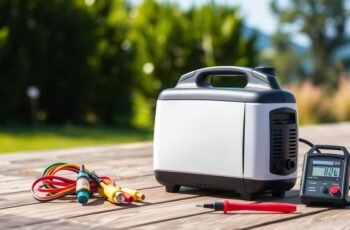
Did you know that not all inverter generators produce clean power suitable for sensitive electronics? Understanding the nuances of inverter technology, such as harmonic distortion reduction, can make a significant difference in safeguarding your devices. As we explore the best options for various needs—whether for backup power, outdoor use, or renewable integration—finding the right fit requires careful consideration of features, efficiency, and reliability. Let’s examine how to choose a generator that truly aligns with your requirements.
Key Takeaways
- Assess your power needs by calculating essential device wattage and considering surge capacity with at least 15% margin.
- Choose models with solar compatibility and battery backup for renewable energy integration and off-grid use.
- Prioritize quiet operation, fuel efficiency, and advanced inverter technology for sensitive electronics safety.
- Evaluate portability features like weight, size, and noise levels for camping, outdoor, or residential backup applications.
- Balance budget and premium options based on durability, performance, and additional features like corrosion resistance and support.
How to Choose the Right Inverter Generator for Your Needs
When selecting an inverter generator, understanding your specific power requirements is essential to making an informed choice. Key considerations include evaluating whether you need a reliable battery backup system for emergency power or continuous operation. Additionally, solar compatibility is critical if you plan to integrate renewable energy sources; generators with this feature can efficiently connect to solar panels, reducing dependency on grid power. Precise wattage calculations for your essential devices help determine the appropriate inverter size, ensuring stable, clean power output. Safety features and inverter technology that minimize harmonic distortion are also essential for sensitive electronics. By focusing on these technical aspects—battery backup capabilities and solar compatibility—you can select an inverter generator that aligns with your energy needs and sustainability goals.
Top Features to Look for in an Inverter Generator
Selecting the right inverter generator requires careful attention to key features that guarantee peak performance and reliability. A critical factor is inverter lifespan, which indicates the durability of the generator’s core components, assuring long-term operation under varying loads. We also prioritize brand reputation, as established manufacturers typically offer better quality control, reliable customer support, and consistent product updates. Look for models with advanced inverter technology that stabilizes power output, minimizing surges that could damage sensitive electronics. Noise levels and fuel efficiency are also essential, impacting usability in different environments. Finally, a robust build quality, with corrosion-resistant materials and secure wiring, enhances longevity. By focusing on inverter lifespan and brand reputation, you assure a dependable investment tailored to your specific power needs.
Comparing Portable Inverter Generators: Which Is Best for Camping and Outdoors?
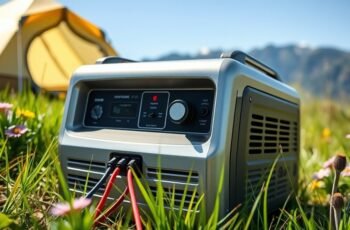
Choosing the right portable inverter generator for camping and outdoor activities involves evaluating features that enhance portability, power stability, and fuel efficiency. Key considerations include solar integration capabilities, which enable charging via solar panels, reducing reliance on fuel and increasing sustainability. Battery storage integration allows for stored energy to power devices during low or no sunlight periods, providing consistent power. The best models offer a combination of lightweight design, high inverter efficiency, and robust power output suitable for sensitive electronics. Additionally, units with solar compatibility and battery storage options provide flexibility in off-grid environments, ensuring prolonged operation. These features make certain inverter generators especially well-suited for outdoor applications where renewable energy sources and energy storage are critical for reliable, eco-friendly power.
Best Quiet Inverter Generators for Home Backup Power
Inverter generators are increasingly popular for home backup power due to their efficiency and cleaner operation. When selecting a quiet inverter generator, consider models with advanced noise reduction technologies to minimize sound levels during operation. Many top models offer solar compatibility, allowing integration with photovoltaic systems for sustainable energy use. Battery integration is also a key feature, enabling seamless connection to home battery storage systems, which enhances power continuity during outages. These generators often include inverter technology that provides stable, clean power suitable for sensitive electronics. By focusing on models with low decibel ratings, solar compatibility, and battery integration, homeowners can guarantee reliable, quiet backup power that aligns with eco-friendly energy solutions and modern home electrical demands.
Fuel Efficiency: How to Find an Inverter Generator That Saves You Money
Ever wondered how to maximize your savings while guaranteeing reliable power? Fuel efficiency is essential. Selecting an inverter generator with advanced fuel management features—like Eco mode or variable speed technology—reduces fuel consumption, lowering operating costs. Efficient models adapt their output based on load, which minimizes waste and extends fuel life. Additionally, considering renewable energy integration options, such as hybrid systems, can further enhance fuel efficiency and reduce environmental impact. A generator’s fuel consumption directly influences its environmental footprint, making energy-efficient choices vital for eco-conscious users. By prioritizing these technical features, you guarantee not only cost savings but also a smaller ecological footprint, aligning your power needs with sustainable practices.
Evaluating Power Output: Matching Your Devices to the Right Generator
To select the appropriate inverter generator, we first conduct a power needs assessment to determine the total wattage of your devices. We then consider device compatibility factors, such as startup surges, to make certain the generator can handle initial loads. By analyzing surge power requirements, we can match the generator’s capacity precisely to your equipment’s operational demands.
Power Needs Assessment
Evaluating your power needs begins with identifying the total wattage required by your devices. To do this accurately, list each device’s running wattage and surge wattage, then sum these figures to determine the generator’s minimum capacity. This precise calculation ensures the selected inverter generator can handle peak loads without overload. During this process, consider maintenance tips such as regularly inspecting connections and keeping vents clear to prolong generator lifespan. Additionally, conduct brand comparisons to evaluate reliability, warranty, and customer reviews, helping you choose a model with consistent performance. Understanding your power requirements thoroughly prevents undersizing, which can cause shutdowns, or oversizing, which leads to unnecessary expense. A meticulous assessment guarantees that your generator will meet your operational demands reliably and efficiently.
Device Compatibility Factors
After determining your total wattage requirements, the next step involves evaluating device compatibility to guarantee your inverter generator can safely and efficiently power your equipment. Proper assessment of device compatibility hinges on understanding the generator’s power output and its ability to handle power surges. Key considerations include:
- Confirm that the continuous wattage rating exceeds your device’s running wattage.
- Ensure the generator can accommodate initial startup or surge wattage for devices with high inrush currents.
- Verify that sensitive electronics receive clean, stable power without voltage fluctuations.
- Check whether the inverter’s power surge capacity aligns with your most demanding devices to prevent overload or damage.
Matching your devices to the generator’s power output guarantees reliable operation and minimizes risk of failure or damage due to improper device compatibility.
Surge Power Requirements
Understanding your inverter generator’s surge power capacity is essential because many devices draw considerably higher current during startup than they do during normal operation. Surge power, or peak load, reflects the maximum power a generator must handle briefly. Matching this with your device’s startup requirements prevents overloads and ensures reliable operation.
| Device Type | Typical Surge Power (W) | Continuous Power (W) |
|---|---|---|
| Refrigerator | 600 | 200 |
| Laptop Charger | 100 | 100 |
| Power Tools | 1500 | 1000 |
| HVAC System | 4000 | 3000 |
| Small Appliances | 300 | 150 |
Accurately evaluating peak load ensures your generator can handle startup surges effectively.
Budget-Friendly vs. Premium Inverter Generators: What to Expect
When choosing between budget-friendly and premium inverter generators, it’s essential to understand the key differences in performance, durability, and features. Budget models typically offer basic functionality, limited brand reputation, and standard warranty coverage, making them suitable for occasional use. Premium generators, however, deliver enhanced performance, greater durability, and advanced features such as noise reduction and fuel efficiency. They often come from reputable brands known for reliability and extended warranty coverage, providing peace of mind during prolonged use.
- Higher build quality and component durability
- Superior noise and emissions standards
- Extended warranty periods and better customer support
- Advanced safety and convenience features
Understanding these differences helps align your investment with your specific needs and expectations.
Tips for Maintaining and Extending the Life of Your Inverter Generator
Proper maintenance is key to guaranteeing your inverter generator performs reliably and has a long service life. Regular battery maintenance involves inspecting terminals for corrosion, ensuring proper charge levels, and replacing the battery when capacity diminishes. This prevents starting issues and maintains peak operation. Storage tips are equally critical; always store the generator in a clean, dry environment, ideally with the fuel tank empty or stabilized to prevent gum formation. Before long-term storage, run the generator briefly to circulate oil and then shut it down properly. Periodic checks during storage, such as inspecting for corrosion or damage and verifying fuel stability, help prevent deterioration. Following these precise maintenance practices extends your inverter generator’s lifespan and ensures readiness when needed.
Final Checklist: Selecting the Perfect Inverter Generator for Your Lifestyle
When selecting an inverter generator, we must carefully evaluate power requirements to guarantee it supports all essential devices without overloading. We also consider portability and size to match our mobility needs, along with noise levels to minimize disturbance in various environments. Addressing these key points guarantees an informed choice aligned with our specific lifestyle demands.
Power Needs Assessment
Have you accurately determined the total power output required for your specific applications? Conducting a thorough power needs assessment is essential to select an inverter generator that meets your demands efficiently. Consider the peak and steady wattage of devices, including those for battery backup systems and renewable energy setups. Key factors include starting surges for motors and sensitive electronics.
- Calculate total wattage for all essential appliances
- Account for startup surges, especially for inductive loads
- Prioritize energy sources: grid, solar, or hybrid systems
- Guarantee generator capacity exceeds your maximum load by at least 15%
This precise evaluation ensures reliable operation, ideal fuel efficiency, and compatibility with your renewable energy systems, ultimately delivering a tailored solution for your lifestyle.
Portability and Size
Choosing an inverter generator that fits your lifestyle requires careful consideration of portability and size, as these factors directly impact ease of use and transportation. Modern models leverage advanced battery technology, enabling lightweight designs while maintaining power output. Smaller units are ideal for remote applications or renewable energy integration, where mobility is critical. To visualize, consider the following:
| Size Category | Portability Features | Power & Battery Tech |
|---|---|---|
| Compact | Lightweight handles | Lithium-ion batteries, quick recharge |
| Mid-size | Built-in wheels | High-capacity batteries, efficient power output |
| Large | Heavy-duty frame | Larger batteries, renewable energy compatibility |
Balancing size with power ensures you select a generator that aligns with your mobility and energy needs.
Noise Level Considerations
Noise levels are a key factor to take into account when selecting an inverter generator, especially if you’ll be using it in noise-sensitive environments or close to living spaces. Effective sound insulation and noise reduction features are essential for minimizing disturbance. To evaluate noise levels, consider the decibel ratings provided by manufacturers—lower decibels indicate quieter operation. Additionally, look for models with the following features:
- Built-in soundproof enclosures
- Vibration damping technology
- Variable speed operation for load-dependent noise reduction
- Mufflers designed for enhanced sound insulation
These features collectively contribute to a quieter experience, ensuring your inverter generator operates efficiently without disrupting your environment or violating noise ordinances. Prioritizing noise level considerations guarantees a balance between performance and comfort.
Frequently Asked Questions
How Long Do Inverter Generators Typically Last?
Inverter generators typically last 10,000 to 20,000 hours with proper maintenance, balancing fuel efficiency and noise levels. Regular servicing guarantees longevity, peak performance, and consistent power output, making them reliable over their extended operational lifespan.
Are Inverter Generators Safe for Sensitive Electronics?
Certainly, inverter generators are safe for sensitive electronics because they minimize electromagnetic interference and power fluctuation, ensuring your devices receive clean, stable power—unlike the chaotic, unpredictable energy from traditional generators, which might ruin your delicate gadgets.
Can Inverter Generators Be Used Indoors Safely?
Inverter generators should not be used indoors due to indoor ventilation requirements and carbon monoxide risk. Always operate them outdoors in well-ventilated areas to guarantee safety, as indoor use can lead to dangerous carbon monoxide buildup.
Do Inverter Generators Require Special Maintenance?
Inverter generators require regular maintenance, including oil changes and filter checks, to optimize fuel efficiency and noise reduction. Proper upkeep guarantees consistent performance, prolongs lifespan, and maintains the technical precision of your inverter generator.
What Is the Typical Weight of Portable Inverter Generators?
Ever wondered about inverter generator weight? They typically weigh between 30-60 pounds, balancing fuel efficiency and noise levels. This lightweight design makes them portable and ideal for various outdoor applications, ensuring ease of transport and operation.
Conclusion
Choosing the right inverter generator balances power and portability, noise and efficiency, budget and durability. It’s about aligning technical specifications with your specific needs—whether for emergency backup, outdoor adventures, or eco-friendly energy. While premium models offer advanced features, budget options deliver reliable performance. Ultimately, the perfect generator isn’t just about specs; it’s about seamlessly integrating into your lifestyle, providing dependable power with minimal fuss—an investment in both convenience and peace of mind.