Exploring the landscape of inverter generators is akin to charting a course through a complex map—each feature and specification serves as a critical coordinate. Selecting the right unit requires a precise understanding of power needs, fuel efficiency, noise constraints, and budget constraints, all of which shape your long-term investment. To guarantee you make an informed decision that balances performance with practicality, it’s essential to examine these elements carefully before you move forward.
Key Takeaways
- Assess your total power needs by listing devices and accounting for startup surges and future expansion.
- Consider fuel types, runtime, and fuel efficiency to optimize operational costs and runtime duration.
- Prioritize noise levels, portability features, and compliance with local regulations for suitable outdoor or residential use.
- Choose reputable brands with durable build quality, advanced inverter technology, and positive customer reviews.
- Maintain regular inspections and essential components like oil, filters, and spark plugs to ensure reliable, long-term performance.
What Are Inverter Generators and How Do They Work?
Although traditional generators produce electricity with a constant voltage and frequency, inverter generators utilize advanced power electronics to convert raw AC power into DC, then invert it back to a stable AC output. This process results in cleaner, more consistent power suitable for sensitive electronics. Inverter generators support various fuel types, including gasoline, propane, and dual-fuel options, enhancing versatility. Their design also emphasizes safety features such as automatic shutdowns for low oil levels, overload protection, and ground-fault interrupters, ensuring user safety and equipment protection. The use of sophisticated inverters allows for precise regulation of voltage and frequency, minimizing power fluctuations. Overall, inverter generators’ combination of adaptable fuel options and robust safety features makes them reliable, efficient power sources for a range of applications.
Key Features to Look for in an Inverter Generator
When selecting an inverter generator, we focus on key features such as power output capacity, noise level management, and portability. These factors directly impact performance, user experience, and suitability for specific applications. Evaluating these elements guarantees we choose a unit that meets both operational and logistical requirements.
Power Output Capacity
Determining the appropriate power output capacity is essential for guaranteeing your inverter generator meets your energy needs efficiently. We evaluate this based on the total wattage of devices you plan to operate simultaneously. Understanding fuel types—gasoline, propane, or dual-fuel—affects runtime and efficiency, influencing your capacity requirements. Accurate assessment prevents overloads and guarantees stable power delivery. Maintenance tips, such as regular oil changes and filter checks, help sustain peak performance, especially for generators running near their maximum output. Higher capacity models tend to have larger fuel tanks, extending runtime, but may require more rigorous maintenance. Selecting a generator with the right power output capacity balances operational demands with fuel efficiency and longevity, guaranteeing reliable performance during critical applications.
Noise Level Management
Have you considered how noise levels impact the functionality and convenience of an inverter generator? Lower noise levels enhance operational discretion, especially in sensitive environments. When evaluating models, look for advanced noise reduction features such as sound enclosures or variable-speed operation, which adapt the engine’s RPM to load demands. Noise management also intersects with solar integration; quieter generators facilitate seamless coexistence with solar systems, reducing disturbance during off-grid or backup power scenarios. Additionally, remote operation capabilities can mitigate noise concerns, allowing users to start or stop the generator remotely, minimizing on-site noise during startup or shutdown. Precise noise level specifications and adjustable settings are critical for ensuring the inverter generator’s operation aligns with both technical requirements and environmental considerations.
Portability Features
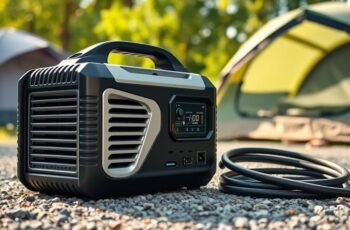
Portability features considerably influence the practicality of an inverter generator, especially for users who require mobility or need to transport the unit frequently. Essential attributes include lightweight construction, compact design, and integrated handles or wheels that facilitate ease of movement. Advanced models often incorporate energy storage systems, enabling seamless integration with renewable sources such as solar panels, enhancing off-grid capabilities. These features allow the generator to function efficiently in remote locations or during power outages, while maintaining minimal size and weight. Robust portability guarantees quick deployment and removal, optimizing usability for camping, emergency backup, or renewable power setups. Precise attention to these features ensures that the inverter generator remains adaptable, efficient, and suited for diverse environments where mobility and renewable integration are priorities.
How to Determine the Right Power Output for Your Needs
When selecting an inverter generator, accurately evaluating your power requirements is essential for ensuring reliable performance without overspending on unnecessary capacity. Proper assessment helps optimize fuel efficiency and aligns with your budget planning. To determine the appropriate power output, consider the total wattage of all devices you intend to run simultaneously, including startup surges. Account for future needs to avoid underpowered units. Prioritize essential appliances and avoid overestimating, which could lead to higher costs and unnecessary fuel consumption.
Evaluate your total wattage needs carefully to choose the right inverter generator for efficient, reliable power.
- List all devices and their wattages
- Add startup surge requirements
- Include a buffer for future expansion
- Focus on essential appliances first
- Balance capacity with fuel efficiency and budget constraints
Comparing Fuel Efficiency and Runtime Across Models
How efficiently a generator consumes fuel directly impacts its overall runtime and operational costs. Comparing models requires analyzing efficiency metrics like fuel consumption rates under specified loads. Lower fuel consumption indicates higher efficiency, extending runtime per tank. For example:
| Model | Fuel Consumption (gallons/hour) | Runtime at 1/2 load |
|---|---|---|
| Model A | 0.5 | 8 hours |
| Model B | 0.3 | 13 hours |
| Model C | 0.4 | 10 hours |
This table highlights that even small differences in fuel consumption considerably influence operational efficiency and cost-effectiveness. When evaluating inverter generators, focus on efficiency metrics to guarantee ideal runtime while minimizing fuel costs, especially for prolonged or remote use.
Noise Levels and Why They Matter for Portable Power
Understanding noise levels is vital for selecting a portable inverter generator, as quieter operation enhances usability in sensitive environments. Compliance with noise regulations can influence model choices, especially in residential or outdoor settings. Evaluating these factors guarantees ideal balance between performance and community considerations.
Quiet Operation Benefits
Quiet operation is a critical factor in selecting an inverter generator, as noise levels directly influence usability and comfort in various environments. Lower noise levels enhance the user experience by reducing fatigue and minimizing disturbance to others. Effective noise mitigation relies on advanced soundproofing techniques, such as insulated enclosures and vibration dampening. These methods help contain sound emissions and prevent noise pollution, especially in residential or camping settings. Additionally, inverter generators with optimized engine design and mufflers contribute to quieter operation. Noise management is essential for maintaining focus, safety, and harmony with surroundings. By prioritizing soundproofing techniques and noise mitigation strategies, we can guarantee portable power solutions that are both efficient and unobtrusive.
Noise Regulations Impact
Regulations governing noise levels considerably influence the design and selection of portable inverter generators, as compliance guarantees legal operation and community safety. Urban noise concerns and zoning restrictions impose strict limits on acceptable sound emissions, particularly in residential and commercial zones. These restrictions often specify maximum decibel levels, necessitating generators with advanced noise reduction features. Ignoring such regulations can lead to fines, equipment confiscation, or operational bans. Understanding local noise ordinances ensures that portable power solutions meet legal standards while minimizing community disturbance. Consequently, selecting a generator with sound attenuation capabilities becomes essential in densely populated areas. Adherence to these regulations not only ensures legal compliance but also fosters positive relations with neighbors, making noise regulation considerations a critical factor in inverter generator choice.
Portability and Design: Choosing a Compact, Lightweight Model
When selecting an inverter generator, prioritizing portability and design guarantees ease of transport and efficient space utilization. A compact, lightweight model enhances mobility, especially when frequent relocation is necessary. Consider units with integrated handles or wheels to facilitate movement. Solar compatibility is essential for eco-conscious users aiming to integrate renewable energy sources seamlessly. Additionally, eco-friendly materials in construction reduce environmental impact and may improve durability. Key features include:
Prioritize lightweight, compact, and solar-compatible inverter generators with eco-friendly materials for easy, sustainable power on the go.
- Lightweight construction with ergonomic handles
- Compact footprint for tight storage spaces
- Built-in wheels for effortless transport
- Compatibility with solar panels for sustainable operation
- Use of eco-friendly, durable materials for longevity and environmental safety
Focusing on these aspects ensures a practical, efficient, and environmentally conscious choice tailored to portable power needs.
Understanding Price Ranges and Budget Considerations
Understanding how to allocate your budget effectively is essential when selecting an inverter generator, as higher prices often correlate with enhanced performance and durability. We need to analyze the trade-offs between cost and functionality to guarantee ideal value, rather than simply opting for the most expensive model. Conducting a thorough cost-benefit analysis allows us to make data-driven decisions aligned with specific power requirements and long-term reliability.
Budget Allocation Strategies
Charting the price landscape of inverter generators requires a clear grasp of how different features and power capacities correlate with cost. To optimize budget allocation, we focus on balancing initial investment with long-term efficiency, energy conservation, and environmental impact. Higher-priced models typically offer advanced fuel efficiency and quieter operation, reducing operational costs and emissions. Conversely, lower-cost units may lack these efficiencies but suit basic power needs.
Consider these factors:
- Power output aligned with intended use
- Fuel efficiency ratings for energy conservation
- Noise levels reducing environmental impact
- Build quality for durability and lifespan
- Additional features like eco-mode for optimized performance
Allocating budget thoughtfully guarantees maximum value, supporting sustainable operation and minimizing environmental footprint.
Price Versus Performance
Price ranges for inverter generators vary considerably, reflecting differences in power output, technological features, and build quality. Higher-priced models typically offer enhanced performance, including increased wattage, quieter operation, and advanced features like solar compatibility, which reduces reliance on fossil fuels. These models often have a lower environmental impact due to improved efficiency and eco-friendly components. Conversely, budget options may deliver sufficient power for basic needs but often lack integration with renewable energy sources or advanced noise and emissions controls. When evaluating price versus performance, it’s vital to consider your specific power demands, environmental priorities, and potential for future upgrades. By understanding these factors, consumers can select a generator that aligns with both their operational requirements and long-term sustainability goals.
Cost-Benefit Analysis
Analyzing the cost-benefit relationship of inverter generators requires examining how different price ranges correspond to performance, features, and long-term value. Higher-priced models often include advanced energy storage options, enhancing their capacity for renewable integration and consistent power output. Lower-cost units may lack these features but can suffice for basic needs, offering immediate affordability. When evaluating, consider the generator’s efficiency, durability, and ability to support renewable energy sources. Additionally, the initial investment should be weighed against potential savings in fuel and maintenance over time.
- Energy storage capabilities improve resilience and renewable integration
- Higher price models typically offer superior durability and efficiency
- Lower-cost generators may require more frequent maintenance
- Long-term savings often offset higher upfront costs
- Performance consistency is vital for reliable energy management
Top Brands and What Sets Them Apart
When selecting an inverter generator, understanding what distinguishes leading brands is vital for making an informed purchase. Top brands like Honda, Yamaha, and Briggs & Stratton prioritize advanced features such as battery compatibility, allowing seamless integration with battery banks for extended power backup. They also focus on solar integration, enabling efficient use of renewable energy sources, which is essential for off-grid applications. These brands typically implement precise inverter technology that guarantees stable, clean power suitable for sensitive electronics. Additionally, they emphasize durability, fuel efficiency, and noise reduction. Recognizing each brand’s strengths in these areas helps consumers evaluate models that meet specific needs, whether for portable use, renewable energy compatibility, or long-term reliability. Such technical distinctions set these brands apart in the competitive inverter generator market.
Common Mistakes to Avoid When Buying an Inverter Generator
Have you contemplated the potential pitfalls that can occur during the purchasing process of an inverter generator? Common mistakes include neglecting to evaluate power capacity, overlooking noise levels, and ignoring compatibility with your intended devices. Failing to consider maintenance tips can lead to operational inefficiencies, while neglecting safety precautions during setup risks injury or damage. Additionally, choosing a model without proper voltage regulation may cause voltage fluctuations harmful to sensitive electronics.
To avoid these issues, make sure you thoroughly assess your power needs, verify noise specifications, and prioritize safety features. Avoid impulsive decisions driven solely by price, and always review the manufacturer’s maintenance and safety recommendations. Proper planning ensures longevity, reliability, and safe operation of your inverter generator.
Tips for Maintaining and Extending the Lifespan of Your Generator
To guarantee your inverter generator operates reliably over the long term, regular maintenance is essential. Effective generator maintenance involves routine inspections, such as checking oil levels, air filters, and spark plugs, to prevent component wear. Regularly cleaning cooling vents and ensuring proper ventilation reduces overheating risks, directly impacting lifespan extension. Additionally, performing load tests and monitoring fuel quality can identify potential issues early, minimizing unexpected failures. Following manufacturer guidelines for maintenance intervals ensures ideal performance and durability. Proper storage during off-seasons, with fuel stabilization and battery care, further preserves key components. Consistent, precise generator maintenance not only enhances operational reliability but also considerably prolongs the overall lifespan of your inverter generator, maximizing your investment and ensuring long-term functionality.
Frequently Asked Questions
Can Inverter Generators Run Sensitive Electronic Devices Safely?
Yes, inverter generators can safely run sensitive electronic devices due to their stable power output and low noise levels, ensuring minimal voltage fluctuations and interference, which protects delicate electronics like laptops, phones, and medical devices effectively.
How Do Inverter Generators Compare to Traditional Portable Generators?
Inverter generators outperform traditional models like a finely-tuned engine, offering superior fuel efficiency and lower noise levels, making them ideal for sensitive electronics and quiet environments. They provide cleaner power with precise, reliable performance.
Are Inverter Generators Suitable for Heavy-Duty or Commercial Use?
We find inverter generators generally unsuitable for heavy-duty or commercial use due to their lower noise levels and higher fuel efficiency, which often limit their power output and durability under demanding conditions, making them less ideal for such applications.
What Are the Best Ways to Store an Inverter Generator Long-Term?
We recommend storing inverter generators long-term by stabilizing the fuel to prevent degradation and maintaining the battery’s charge to guarantee reliable starts. Proper ventilation and dry conditions also protect components and extend the generator’s lifespan.
Do Inverter Generators Require Special Maintenance or Extra Parts?
Inverter generators don’t require special maintenance or extra parts if we follow manufacturer guidelines, focusing on fuel efficiency and noise levels; regular oil changes and air filter checks guarantee ideal performance, extending lifespan and maintaining efficiency.
Conclusion
In summary, selecting the appropriate inverter generator is a vital investment that can power your needs reliably and efficiently. By carefully evaluating key features like power output, fuel efficiency, noise levels, and brand reputation, we guarantee peak performance and longevity. Avoiding common pitfalls and adhering to maintenance tips will keep your unit running like a well-oiled machine for years to come—making it an indispensable, almost superhero-like asset in your portable power arsenal.