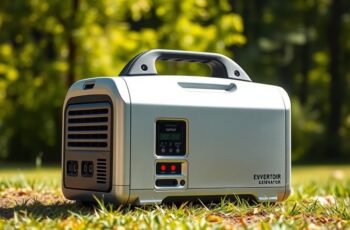
While traditional portable generators produce rough, uneven power, inverter generators deliver clean, stable electricity, making them essential for sensitive electronics. Yet, understanding how they operate and what sets them apart isn’t always straightforward. As we explore the core components, benefits, and applications, you’ll gain clarity on whether an inverter generator aligns with your power needs and how to select the right model for your specific situations.
Key Takeaways
- Inverter generators convert DC to clean, stable AC power using high-speed switching technology.
- They adjust engine speed based on load, improving fuel efficiency and reducing noise.
- Key components include the power inverter module, control systems, and cooling mechanisms.
- They provide reliable, quiet power suitable for sensitive electronics and outdoor activities.
- Maintenance involves regular checks of filters, oil, and spark plugs to ensure optimal performance.
What Are Inverter Generators and How Do They Work?
Have you ever wondered how inverter generators produce clean, stable power suitable for sensitive electronics? They operate with a sophisticated process that involves converting DC power into AC power through high-speed switching. This method allows the inverter to adjust engine speed based on load demand, notably enhancing fuel efficiency. By modulating engine output, inverter generators consume less fuel and produce less exhaust. Additionally, the high-frequency switching technology reduces noise levels, leading to quieter operation compared to conventional generators. The inverter’s ability to produce a consistent, stable sine wave minimizes electrical noise, ensuring safe power for delicate devices. Overall, this combination of advanced power conversion, load-dependent operation, and noise reduction makes inverter generators highly efficient and suitable for sensitive electronic equipment.
Key Components of an Inverter Generator Explained
The power inverter module converts DC power into stable AC electricity, ensuring clean output suitable for sensitive electronics. Control systems regulate engine speed and power output, maximizing efficiency and safety. Cooling systems maintain ideal operating temperatures, preventing overheating and ensuring consistent performance.
Power Inverter Module
What precisely makes the power inverter module essential to an inverter generator’s function? The power inverter is the core component responsible for converting the raw DC power generated by the engine into stable AC power suitable for sensitive electronics. The inverter module within the generator meticulously controls this process, employing advanced electronics to produce a pure sine wave output. It utilizes high-speed switching transistors and filters to regulate voltage and frequency, guaranteeing consistent power delivery. Without the inverter module, the generator would produce fluctuating, unreliable power that could damage delicate devices. This component’s precision and efficiency directly impact the quality of power output, making it indispensable for applications requiring clean, stable electricity. In this way, the power inverter ensures the inverter generator’s reliability and performance.
Control and Cooling Systems
How do control and cooling systems guarantee the reliable operation of an inverter generator? Control mechanisms regulate engine speed and power output, ensuring peak performance and stability across varying loads. These systems continuously monitor parameters such as voltage, current, and temperature, adjusting operation accordingly to prevent overloads and overheating. Cooling systems, typically comprising fans and heat exchangers, dissipate excess heat generated during operation, maintaining components within safe temperature ranges. This prevents thermal stress and component failure, enhancing durability. Together, control mechanisms provide precise regulation of electrical and mechanical functions, while cooling systems sustain thermal equilibrium. This synergy ensures the inverter generator operates efficiently, reliably, and safely over extended periods, even under demanding conditions.
Benefits of Choosing an Inverter Generator for Home and Outdoors
Choosing an inverter generator offers significant advantages for both home use and outdoor activities, primarily due to its ability to produce stable and clean power. This stability enhances energy efficiency by minimizing power wastage and protecting sensitive electronics. Additionally, inverter generators incorporate advanced noise reduction technologies, resulting in quieter operation compared to traditional models. This lower noise profile makes them suitable for environments requiring minimal disturbance, such as camping sites or residential neighborhoods. Their precise control systems optimize fuel consumption, further improving energy efficiency and reducing operational costs. Overall, inverter generators deliver reliable, clean power with reduced noise levels, making them an ideal choice for versatile applications where efficiency and quiet operation are priorities.
How to Determine the Right Inverter Generator Size for Your Needs
Selecting the appropriate inverter generator size involves accurately determining your power requirements to guarantee ideal performance and efficiency. First, list all essential devices and their startup and running wattages. Add these figures to establish your total continuous load. Consider peak demands during startup to avoid undersizing. Fuel efficiency is optimized when you match the generator size closely to your load, preventing unnecessary fuel consumption. Noise levels are also affected by size; smaller units generally produce less noise, which is advantageous in residential or outdoor settings. An appropriately sized inverter generator ensures stable power delivery without overloading, maintaining efficiency and minimizing noise. Precise calculation of your power needs is vital for selecting a generator that balances performance, fuel efficiency, and noise levels effectively.
Comparing Inverter Generators to Traditional Portable Generators
While both inverter generators and traditional portable generators serve the purpose of providing electrical power on the go, they differ markedly in design and performance characteristics. Inverter generators operate with advanced electronic circuitry that adjusts engine speed based on load demand, resulting in higher fuel efficiency and reduced fuel consumption. They produce cleaner, stable power suitable for sensitive electronics. Noise levels are considerably lower, often around 50-60 decibels, due to their inverter technology and noise-dampening enclosures. In contrast, traditional generators run at constant, higher speeds, which can lead to increased noise and fuel wastage during partial loads. Overall, inverter generators offer superior fuel efficiency and quieter operation, making them ideal for discreet, portable power needs.
Tips for Maintaining and Operating Your Inverter Generator Safely
Proper maintenance and safe operation are key to guaranteeing your inverter generator performs reliably and efficiently over time. Regularly check and replace air filters, oil, and spark plugs to maximize fuel efficiency and prevent unnecessary strain on the engine. Operate the generator within the recommended load capacity to minimize noise levels and avoid overheating. Ensure proper ventilation during use to reduce exhaust buildup and maintain safe operating conditions. Use high-quality fuel and keep the fuel system clean to enhance performance and extend lifespan. Always follow manufacturer safety guidelines, including grounding procedures and shutdown protocols, to prevent electrical hazards. Consistent maintenance not only sustains peak fuel efficiency but also keeps noise levels low, promoting safer and more economical operation.
Common Uses and Best Applications for Inverter Generators
Inverter generators are highly effective as portable power solutions, providing reliable electricity in various settings. They are especially valuable for camping and outdoor activities where quiet operation and clean power are essential. Additionally, their compact design makes them ideal for emergency backup power during outages, ensuring critical devices remain operational.
Portable Power Solutions
Have you ever needed reliable power in remote locations or during emergencies? Inverter generators offer versatile portable power solutions, ideal for sensitive electronics and renewable integration. Their design minimizes noise, making them suitable for residential areas or quiet environments. These generators excel in delivering stable, clean power with low harmonic distortion, supporting renewable energy setups like small solar or wind systems. They are compact, lightweight, and easy to transport, enabling rapid deployment wherever power is required. To visualize their use:
| Application Type | Key Features |
|---|---|
| Emergency backup | Quiet operation, portability |
| Remote work sites | Stable output, renewable support |
| Recreational events | Low noise, easy transport |
These attributes make inverter generators essential for modern portable power needs.
Camping and Outdoor Activities
When heading outdoors for camping or other recreational activities, having a reliable power source becomes increasingly important for comfort and safety. Inverter generators excel in these settings due to their quiet operation and stable power output, ideal for wildlife photography equipment that requires consistent voltage. They are also perfect for campfire cooking appliances, ensuring safe and efficient operation without disrupting the natural environment. Their portability allows for easy setup at remote sites, and their ability to produce clean energy minimizes risk to sensitive electronics like cameras or GPS devices. This makes inverter generators a practical choice for outdoor enthusiasts seeking dependable power during extended stays. Overall, their efficiency and quiet performance enhance the camping experience while supporting essential activities like wildlife observation and outdoor cooking.
Emergency Backup Power
How can inverter generators serve as reliable emergency backup power sources during outages? They provide stable, clean electricity essential for sensitive devices, guaranteeing minimal disruption. Inverter generators are especially effective when integrated with renewable energy systems, as they can optimize power output and support battery storage solutions. During power failures, they can seamlessly supplement or replace grid power, maintaining critical functions. Their inverter technology ensures consistent voltage and frequency, protecting electronics from damage. Additionally, their compatibility with renewable energy and battery storage allows for sustainable, off-grid operation, reducing reliance on traditional fuel sources. This adaptability makes inverter generators a precise, reliable choice for emergency backup power, guaranteeing continuous operation of essential appliances and systems during outages.
Troubleshooting Typical Issues With Inverter Generators
While inverter generators are generally reliable, issues can arise that disrupt their performance. Voltage fluctuation is a common concern, often caused by a failing voltage regulator or inconsistent load demand, leading to unstable power output. This instability can compromise sensitive electronics; thus, regular inspection of connections and regulator components is vital. Fuel efficiency problems are also prevalent, frequently resulting from clogged air filters, dirty carburetors, or improper fuel mixture. Addressing these issues involves cleaning or replacing filters and carburetor parts to maintain ideal combustion. Monitoring fuel consumption and ensuring proper maintenance routines help sustain both voltage stability and fuel efficiency. Identifying and resolving these typical issues promptly ensures the inverter generator operates smoothly, providing consistent power and conserving fuel.
How to Choose the Best Inverter Generator Brand and Model
Choosing the right inverter generator brand and model requires careful evaluation of key factors such as power output, reliability, and additional features. Focus on inverter efficiency to maximize fuel consumption and performance, ensuring peak energy conversion. Noise reduction is critical for quiet operation, especially in residential or camping environments. Reliable brands typically offer consistent inverter efficiency and enhanced noise suppression technologies.
Consider these points:
- Inverter efficiency ratings to gauge performance and fuel economy
- Noise reduction features for quieter operation
- Durability and warranty support for long-term reliability
- Additional features like smart controls and portability
Frequently Asked Questions
How Long Do Inverter Generators Typically Last With Regular Use?
Inverter generators typically last 10,000 to 20,000 hours with regular use, depending on fuel efficiency and maintenance. Proper upkeep, including oil changes and cleaning, extends lifespan by reducing wear and tear on critical components.
Are Inverter Generators More Environmentally Friendly Than Traditional Generators?
Compared to traditional generators, inverter generators are more environmentally friendly, meeting strict emission standards and utilizing renewable energy sources, reducing harmful emissions, and promoting cleaner air while maintaining efficient power output with advanced technology.
Can Inverter Generators Be Used for Large-Scale Industrial Applications?
Inverter generators can support large-scale industrial power and heavy-duty applications when equipped with high-capacity units. They provide stable, clean energy essential for sensitive equipment, but may require multiple units or specialized models for extensive industrial demands.
What Safety Features Should I Look for in an Inverter Generator?
We look for inverter generators with safety features like automatic shutdown for overload, low oil shutoff, and ground fault interrupters, ensuring fuel efficiency and power stability while protecting both the device and users during operation.
How Noisy Are Inverter Generators Compared to Conventional Models?
They say “knowledge is power,” and inverters exemplify this with markedly lower noise levels, thanks to superior sound insulation and advanced muffler technology, making them quieter than conventional models—perfect for sensitive environments and peaceful operation.
Conclusion
Inverter generators are like precision instruments, delivering clean, reliable power tailored to our needs. Their advanced technology guarantees efficiency, quiet operation, and safe use with sensitive devices. By understanding their components and proper maintenance, we optimize performance and longevity, much like tuning a finely crafted instrument. Choosing the right model aligns with our specific requirements, ensuring we’re always prepared—whether for outdoor adventures or emergency power—making inverter generators an indispensable tool in our energy arsenal.