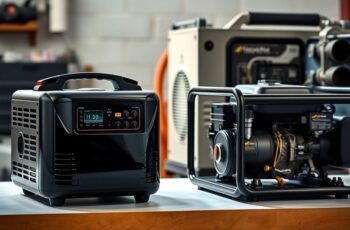
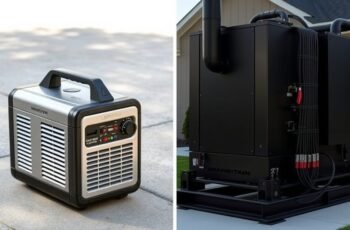
When choosing a portable power source, understanding the differences between inverter and open frame generators is critical for ensuring quiet operation and long-term reliability. While inverter models are often praised for their noise reduction and stable output, open frame units tend to be more robust but louder. To make an informed decision, it’s essential to examine their technical distinctions, performance characteristics, and suitable applications—factors that can markedly impact your power needs and overall satisfaction.
Key Takeaways
- Inverter generators are generally quieter, producing around 50-60 dB, compared to open frame generators’ 70-80 dB.
- Inverter models offer more consistent power output, enhancing reliability, especially for sensitive electronics.
- Open frame generators are less quiet and may require more maintenance due to exposure to demanding environments.
- Inverter generators have advanced, durable components and better cooling systems, increasing their long-term reliability.
- Open frame generators are typically less expensive but may have shorter lifespans and more frequent maintenance needs.
What Are Inverter Generators and How Do They Work?
Although inverter generators are often compared to open frame generators, they operate using a distinct technology that enhances power quality and efficiency. They convert AC power into DC, then invert it back to AC with sophisticated electronic circuitry. This process allows for precise control of engine speed, optimizing fuel efficiency by adjusting output to meet actual load demands. As a result, inverter generators consume less fuel and produce fewer emissions. Additionally, their design inherently reduces noise levels through advanced vibration dampening and controlled engine operation. This noise reduction is achieved because the engine runs at variable speeds rather than a constant high RPM. Overall, inverter generators provide a combination of improved fuel efficiency and quieter operation, making them suitable for sensitive environments and portable power needs.
Noise Levels Compared: Inverter vs Open Frame Generators
Inverter generators are renowned for their quiet operation, a feature that substantially distinguishes them from open frame generators. Their sound insulation design minimizes noise generated during operation, enabling effective noise reduction. Typically, inverter models produce sound levels between 50-60 dB, comparable to normal conversation, whereas open frame generators often emit 70-80 dB, similar to heavy traffic noise. This difference results from integrated noise dampening components and optimized cooling systems in inverter units. The table below summarizes these distinctions:
| Generator Type | Typical Noise Level (dB) | Sound Insulation & Noise Reduction Features |
|---|---|---|
| Inverter | 50-60 | Enhanced sound insulation, quieter cooling systems |
| Open Frame | 70-80 | Basic shielding, less emphasis on noise reduction |
Reliability and Performance: Which Generator Types Are More Dependable?
When evaluating reliability and performance, we consider durability, build quality, and how consistently each generator maintains stable power output. Maintenance requirements and overall service life also influence dependability, affecting long-term operational costs. Comparing these factors helps determine which generator type offers superior dependability for demanding applications.
Durability and Build Quality
Durability and build quality are critical factors in determining a generator’s reliability and long-term performance. High materials quality ensures resistance resilience against environmental stressors, reducing wear and tear over time. When evaluating inverter and open frame generators, consider these key aspects:
- Materials used—robust metals and high-grade plastics enhance structural integrity.
- Frame design—reinforced structures improve resistance to impacts and vibrations.
- Corrosion resistance—coatings and materials prevent degradation in harsh conditions.
- Component assembly—precision manufacturing minimizes weak points, extending lifespan.
Both inverter and open frame generators can exhibit excellent resistance resilience, but the overall build quality and material selection are decisive for sustained performance and dependability.
Consistency of Power Output
How reliably can each generator type maintain a steady power output under varying loads? Inverter generators excel in this aspect due to their advanced power modulation, providing consistent output even during fluctuating demands. Their rapid startup time ensures quick responsiveness, maintaining stability from startup through operation. Open frame generators, while robust, often exhibit less precise voltage regulation, leading to minor fluctuations under load changes. Fuel efficiency also impacts reliability; inverter models typically optimize fuel use, contributing to stable performance over extended periods. In contrast, open frame generators may consume more fuel and experience less stable power delivery when load varies. Overall, inverter generators offer superior consistency and reliability, making them ideal for sensitive electronics and critical applications requiring stable power.
Maintenance and Service Life
In regard to maintenance and service life, inverter generators generally demonstrate higher reliability due to their advanced design and components engineered for longevity. Their superior fuel efficiency reduces fuel-related wear, extending operational lifespan. Additionally, noise reduction features minimize vibration and mechanical stress, improving durability. Key factors include:
- Engine Design: Inverter generators utilize modern, electronically controlled engines that require less frequent maintenance and resist wear better.
- Component Quality: Their high-quality, sealed components reduce contamination and corrosion, enhancing reliability.
- Cooling Systems: More efficient cooling prevents overheating, prolonging service life.
- Ease of Maintenance: Simplified access and diagnostics allow quicker, more precise servicing, supporting ideal performance over time.
Ideal Use Cases for Inverter Generators
Inverter generators excel in applications requiring portability and clean power, such as camping trips or remote worksites. They are particularly suitable for sensitive electronics, ensuring stable voltage with minimal harmonic distortion. Additionally, their quiet operation and reliability make them ideal for emergency home backup situations.
Portable Power for Camping
When camping in remote locations, reliable and portable power sources are essential for safety, comfort, and convenience. Inverter generators excel for this purpose due to their superior fuel efficiency and compact portability features. They provide clean, stable power ideal for sensitive devices like smartphones and GPS units.
Key use cases include:
- Charging electronic devices efficiently during extended stays.
- Powering small appliances such as mini-fridges or lights.
- Supporting outdoor cooking equipment requiring consistent power.
- Ensuring emergency communication devices remain operational.
Their lightweight design and fuel efficiency reduce operational costs over long trips, while portability features like ergonomic handles and compact size facilitate easy transport and setup. These attributes make inverter generators a reliable choice for outdoor enthusiasts seeking safe, efficient power in remote environments.
Sensitive Electronics Compatibility
Have you ever wondered why inverter generators are the preferred power source for sensitive electronics? The key lies in their advanced voltage regulation, which delivers a stable and consistent power output, minimizing fluctuations that could damage delicate devices. Unlike open frame generators, inverter models produce cleaner power with less harmonic distortion, essential for sensitive electronics like laptops, medical equipment, and audio gear. Additionally, inverter generators are designed for superior fuel efficiency, allowing continuous operation with less fuel consumption, which is critical during extended use. Their precise control mechanisms ensure that voltage remains steady regardless of load changes, offering reliable performance. This combination of stable voltage regulation and fuel efficiency makes inverter generators the perfect choice for protecting and powering sensitive electronic equipment safely.
Emergency Home Backup
During power outages, inverter generators provide a reliable and stable energy source essential for emergency home backup. Their fuel efficiency guarantees prolonged operation, reducing the need for frequent refueling during extended outages. Additionally, their lower environmental impact makes them a responsible choice for sustainable backup power. Here are key considerations:
- Stable Power Output: Suitable for sensitive electronics, preventing damage.
- Fuel Efficiency: Optimizes fuel consumption, extending runtime.
- Environmental Impact: Produces fewer emissions due to cleaner combustion.
- Portability and Quiet Operation: Easy to move and operate quietly during emergencies.
Inverter generators’ combination of efficiency, reliability, and reduced environmental footprint makes them ideal for emergency backup, ensuring critical devices remain operational while minimizing ecological concerns.
When Open Frame Generators Are the Better Choice
Open frame generators are the ideal choice when the primary requirement is durability and ease of maintenance in demanding environments. Their robust construction allows them to withstand harsh conditions, making them suitable for construction sites, industrial applications, and outdoor heavy-duty use. Fuel efficiency is a key advantage, as open frame models typically consume less fuel under continuous operation, reducing long-term costs. Additionally, their straightforward design facilitates easier startup procedures, often requiring minimal effort and fewer components that could fail. This simplicity enhances reliability, especially in remote locations where quick, dependable power is essential. Overall, open frame generators excel in scenarios demanding ruggedness, consistent performance, and straightforward maintenance, ensuring dependable operation over extended periods.
Cost Differences Between Inverter and Open Frame Generators
While open frame generators excel in durability and ease of maintenance, their initial costs tend to be lower compared to inverter models. The pricing trends reflect this, with open frame units generally costing 30-50% less upfront. Inverter generators, however, tend to include more advanced technology, which influences their higher price point. Warranty coverage also varies: open frame models often come with standard 1-year warranties, whereas inverter generators may offer extended coverage, reflecting their higher cost and perceived reliability.
Open frame generators are more durable and affordable, while inverter models offer advanced tech and longer warranties.
Key cost considerations include:
- Initial purchase price
- Pricing trends over time
- Warranty coverage duration and scope
- Total cost of ownership, considering features and durability
These factors are essential for making an informed investment decision.
Maintenance and Longevity: Which Generator Lasts Longer?
Have you considered how maintenance requirements and build quality influence the lifespan of inverter versus open frame generators? Inverter generators typically feature advanced engineering with more durable components, which enhances longevity. Their fuel efficiency reduces wear by optimizing combustion, minimizing engine strain and extending service life. Conversely, open frame generators often have simpler designs that may require more frequent maintenance due to exposure to dust and debris, potentially reducing their lifespan. Noise mitigation features in inverter models not only improve operation comfort but also decrease vibrations that can accelerate component fatigue. Overall, inverter generators tend to offer longer service lives thanks to their efficient operation and robust construction, whereas open frame units, while more rugged, may need more regular upkeep to maintain reliability over time.
Key Factors to Consider When Choosing Your Generator
Choosing the right generator requires careful consideration of several critical factors to guarantee it meets your specific needs. Key factors include efficiency, environmental impact, power output, and durability.
- Fuel efficiency: Select models with optimized fuel consumption to reduce operational costs and extend runtime.
- Environmental impact: Opt for generators with low emissions and eco-friendly features to minimize pollution.
- Power capacity: Ensure the generator supplies sufficient wattage for your devices without overload.
- Build quality: Prioritize robust construction for longevity, especially under frequent or heavy use.
Assessing these factors helps you balance performance, sustainability, and reliability, ensuring your choice aligns with your energy demands and environmental responsibilities.
Final Tips for Picking the Quieter and More Reliable Option
When selecting between inverter generators and open frame generators, prioritizing noise levels and reliability can considerably impact your experience. Focus on models with proven noise reduction features, such as sound-dampening enclosures or advanced mufflers, to guarantee quieter operation. Additionally, assess fuel efficiency; inverter generators typically optimize fuel consumption, extending runtime and reducing operational costs. Reliability depends on build quality and component durability, so choose reputable brands with positive maintenance records. Consider the inverter’s ability to maintain stable output, essential for sensitive electronics. Ultimately, balance these factors with your specific needs, aiming for a model that offers ideal noise reduction without compromising fuel efficiency or reliability. This approach ensures a quieter, dependable power source tailored to your requirements.
Frequently Asked Questions
How Do Inverter Generators Affect Fuel Efficiency Compared to Open Frame Models?
Inverter generators improve fuel economy by adjusting engine speed to power demand, reducing unnecessary fuel consumption, and lowering emission impact due to more efficient combustion; open frame models often run at constant speeds, decreasing efficiency.
Are Inverter Generators More Environmentally Friendly Than Open Frame Generators?
We find inverter generators more environmentally friendly, as they meet strict emission standards and incorporate eco-friendly design features, reducing harmful emissions and fuel consumption, making them a better choice for sustainable power solutions compared to open frame generators.
Can Inverter Generators Power Heavy-Duty Appliances Reliably?
Inverter generators can power heavy-duty appliances reliably, thanks to their high power capacity and excellent voltage stability. We find that their precise regulation guarantees consistent performance, making them suitable for demanding, sensitive, or large electrical loads.
What Safety Features Are Typically Included in Inverter Generators?
We find inverter generators include safety mechanisms like overload protection, automatic shutoff, and ground fault interrupters, combined with noise reduction features, ensuring safe, reliable operation while minimizing environmental and user disturbance during use.
How Do Portable and Stationary Inverter Generators Compare in Noise and Reliability?
Surprisingly, portable inverter generators often boast lower noise levels and comparable durability factors to stationary models, making them reliable even in challenging environments. Their compact design enhances durability, proving that size doesn’t compromise performance or quiet operation.
Conclusion
Ultimately, choosing between inverter and open frame generators hinges on our needs for quiet operation and reliability. We find it intriguing that the latest inverter models, with their advanced noise reduction and durable components, often align perfectly with our demand for efficient, long-lasting power sources. Coincidentally, as technology advances, the quieter, more reliable inverter generators become increasingly accessible, making our decision easier when prioritizing minimal noise and dependable performance.