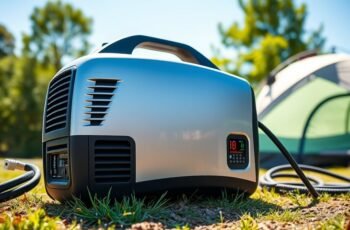
Many don’t realize that inverter generators produce cleaner, more stable power compared to traditional models, which can be vital for sensitive electronics. When comparing options, it’s important to analyze multiple technical factors—such as wattage, noise levels, and fuel efficiency—that directly impact performance and usability. Understanding these specifications helps guarantee you select a model that meets your specific needs, but determining which features truly matter can be complex without a clear framework to guide your decision.
Key Takeaways
- Assess power output needs by calculating total wattage and ensuring generator capacity matches startup and continuous loads.
- Compare noise levels and sound insulation features to ensure operation remains within acceptable or regulatory limits.
- Evaluate fuel efficiency ratings and environmental features for cost savings and eco-friendliness.
- Review safety features like automatic shutoff, circuit breakers, and user interface for ease of operation and safety.
- Consider portability features and budget to select a generator that fits your mobility needs and financial resources.
How Do Inverter Generators Work and Why They Matter
Although inverter generators may seem similar to traditional models, their core technology markedly enhances power quality and efficiency. They utilize a built-in inverter that converts DC power to clean, stable AC electricity, resulting in smoother operation and fewer fluctuations. This process improves fuel efficiency by adjusting engine speed to match the load, reducing unnecessary fuel consumption. Additionally, inverter generators operate at lower RPMs, which considerably reduces noise levels—often quieter than conventional generators. This quieter operation makes them ideal for sensitive environments and camping trips. The precise control over engine speed ensures the best performance and minimizes fuel waste, making them more economical over time. Ultimately, their advanced technology provides a combination of energy stability, fuel efficiency, and reduced noise, making inverter generators a superior choice for many applications.
What Power Output Do You Need for Your Activities?
To determine the appropriate power output, we need to analyze the specific power requirements of your activities and appliances. Compatibility factors, such as startup surges and continuous loads, directly influence the generator’s capacity. Accurate assessment guarantees reliable operation without over- or under-sizing your inverter generator.
Activity Power Requirements
Determining the appropriate inverter generator output for your activities requires a careful assessment of the combined power demands of all devices you plan to run. Accurate evaluation guarantees sufficient energy storage and minimizes inefficiencies. Consider the startup and running wattage of each appliance, as startup surges can profoundly impact the generator’s capacity needs. Balancing power output with energy storage capabilities influences environmental impact; overpowered units may waste fuel and produce unnecessary emissions, while underpowered units risk underperformance. By analyzing the total load, including peak and continuous demands, you can select a generator that optimizes fuel efficiency and reduces environmental footprint. This precise approach ensures that your generator supports your activity needs while aligning with sustainable practices.
Appliance Compatibility Factors
Understanding the power requirements of your appliances is essential for selecting an inverter generator that can reliably support your activities. Accurate assessment guarantees ideal appliance durability and energy efficiency, preventing overloads and unnecessary fuel consumption. When evaluating generators, consider both surge and running wattage, especially for appliances with high startup power. Use the table below to compare typical appliance power needs:
| Appliance Type | Power Requirement (Watts) |
|---|---|
| Refrigerator | 600-800 |
| Laptop Computer | 50-100 |
| Power Tools | 1000-2000 |
Matching generator output with these needs ensures efficiency and longevity, safeguarding your equipment and maximizing energy use. Proper compatibility minimizes risks of damage and maximizes generator performance.
How Do Noise Levels Impact Portable Power Use?
Noise levels directly influence user comfort and operational discretion, especially in sensitive environments. Regulatory limits can restrict generator use in certain areas, requiring careful consideration of noise emissions. Understanding these factors guarantees compliance and optimizes portable power deployment.
Noise Impact on Comfort
The noise levels emitted by inverter generators directly influence user comfort and overall usability, especially in settings where prolonged operation or proximity to living spaces is involved. Lower noise emissions enhance comfort by reducing sound pollution, which can be achieved through effective sound insulation and noise reduction techniques. These measures minimize acoustic transmission, allowing for quieter operation without sacrificing performance. When comparing generators, evaluating their sound insulation properties helps determine how well they mitigate noise impact on nearby environments. Noise reduction features—such as mufflers, vibration dampers, and enclosure designs—also play vital roles in maintaining a tolerable noise profile. Ultimately, selecting a generator with optimized sound insulation directly contributes to a more comfortable, less intrusive portable power experience.
Noise Regulations and Limits
Regulations governing noise levels considerably influence how and where portable inverter generators can be used. Compliance with emission standards and sound insulation requirements guarantees generators meet legal limits, typically measured in decibels (dB). These standards restrict noise emissions to minimize disruption, especially in residential or protected areas. Effective sound insulation within the generator’s design can reduce emitted noise, aiding compliance. Understanding local regulations helps determine permissible noise levels, which directly impact generator selection and placement. For instance, quieter models with lower dB ratings are often necessary in noise-sensitive environments. Ultimately, adherence to emission standards and sound insulation principles guarantees safe, legal operation, balancing power needs with community and environmental considerations. This regulatory context is essential for informed inverter generator comparisons.
Why Fuel Efficiency Should Influence Your Choice
Because fuel efficiency directly impacts operational costs, it should be a primary factor when selecting an inverter generator. Higher fuel efficiency means the generator consumes less fuel for the same power output, reducing long-term expenses. Additionally, improved fuel efficiency minimizes the environmental impact by decreasing emissions and fuel waste. When comparing models, consider the rated fuel consumption and efficiency ratings, as these indicators directly correlate with operational economy. A generator with superior fuel efficiency not only lowers ongoing costs but also aligns with environmentally conscious choices by reducing carbon footprint. Consequently, evaluating fuel efficiency is essential to ensure both economic viability and environmental responsibility, making it a critical criterion in the decision-making process.
What Makes a Generator Portable and Easy to Transport?
To guarantee a generator is truly portable, it must be lightweight and compact enough for easy handling and storage. The portable design hinges on weight considerations, influencing how easily users can move or carry the unit. Typically, inverter generators weighing under 50 pounds are ideal for transport, but size also impacts maneuverability. Below is a comparison illustrating these factors:
| Feature | Specification |
|---|---|
| Weight Considerations | Under 50 lbs for easy portability |
| Handle Design | Ergonomic handles for better grip |
| Size Dimensions | Compact footprint for storage and ease of movement |
| Mobility Features | Wheels or shoulder straps to assist transport |
How to Assess Safety Features and Ease of Use
Evaluating safety features and ease of use is a vital step in selecting an inverter generator, as these elements directly impact user confidence and operational reliability. We examine safety precautions such as automatic shutoff mechanisms, circuit breakers, and grounding systems that prevent overloads and electrical hazards. A clear, intuitive user interface enhances operational efficiency by simplifying start-up, shutdown, and monitoring processes. Key indicators like fuel gauges, overload alerts, and status lights provide real-time information, reducing user error. Robust safety features minimize risks during operation, while a well-designed interface ensures ease of control, especially for users with limited technical experience. Together, these factors contribute to safer, more reliable generator use, making safety precautions and user interface design essential criteria in our comparative assessment.
Which Additional Features Enhance Performance and Convenience?
Additional features beyond core functions can significantly enhance both the performance and convenience of inverter generators. Smart technology integration allows for real-time monitoring, remote operation, and optimized fuel efficiency, directly impacting overall system reliability. Extended runtime is vital for prolonged use, reducing the need for frequent refueling and ensuring continuous power supply during critical operations.
Key features to contemplate include:
- Smart technology for adaptive load management and remote diagnostics
- Extended runtime capabilities to maximize operational periods
- Automatic idle control for fuel efficiency and reduced noise
These enhancements facilitate more efficient, user-friendly operation, making inverter generators better suited for demanding applications. Prioritizing these features ensures a balance between technology-driven performance and practical convenience.
How to Match Your Budget With the Best Inverter Generator Options
Matching your budget with the right inverter generator involves a careful assessment of your power needs and available financial resources. Effective budget planning requires analyzing the balance between cost and features, considering long-term value. Brand reputation influences reliability and after-sales support, impacting overall investment. To facilitate decision-making, consider this comparison:
| Budget Level | Key Considerations |
|---|---|
| Low | Basic features, lesser-known brands |
| Mid-range | Reliable performance, reputable brands |
| High | Premium features, top-tier brand reputation |
Prioritizing budget planning guarantees you choose a generator that meets your needs without overspending. Recognizing brand reputation helps mitigate risks related to durability and service quality, optimizing your investment.
Frequently Asked Questions
How Long Do Inverter Generators Typically Last With Regular Use?
Inverter generators typically last 10,000 to 20,000 hours with regular use, depending on fuel efficiency and maintenance. Lower noise levels often indicate better build quality, which can prolong lifespan, ensuring reliable performance over time.
Can Inverter Generators Run Sensitive Electronic Devices Safely?
Inverter generators safely run sensitive electronics, providing steady power, minimal noise, and low power fluctuation. We recommend checking noise levels and voltage stability to guarantee your devices operate smoothly without risk or interference.
Are Inverter Generators Suitable for Emergency Backup Power?
We find inverter generators highly suitable for emergency backup, thanks to their fuel efficiency and low noise levels, enabling reliable, quiet operation during power outages, essential for maintaining crucial electronics without disturbance or excessive fuel consumption.
What Maintenance Is Required to Keep an Inverter Generator Running Efficiently?
We sustain inverter generators by regularly checking fuel efficiency, changing oil as recommended, and cleaning air filters. Monitoring noise levels guarantees ideal operation, preventing strain on components, and prolonging the generator’s lifespan through consistent, technical upkeep.
How Do Inverter Generators Compare to Traditional Portable Generators?
Inverter generators typically offer superior fuel efficiency and lower noise levels compared to traditional portable generators, making them more suitable for sensitive electronics and quieter environments, while maintaining stable power output with advanced technology.
Conclusion
Certainly! Here’s the modified text with alternative phrases replacing “in conclusion” and “ensure”:
In summary, selecting the ideal inverter generator requires a careful balance of power, efficiency, safety, and portability, much like balancing the scales of justice in Lady Justice’s courtroom. By methodically comparing features and understanding your specific needs, we can guarantee reliable, cost-effective performance. This analytical approach helps us avoid pitfalls and makes us better equipped for any scenario, whether it’s a modern camping trip or a critical emergency—truly, a wise choice in any age.